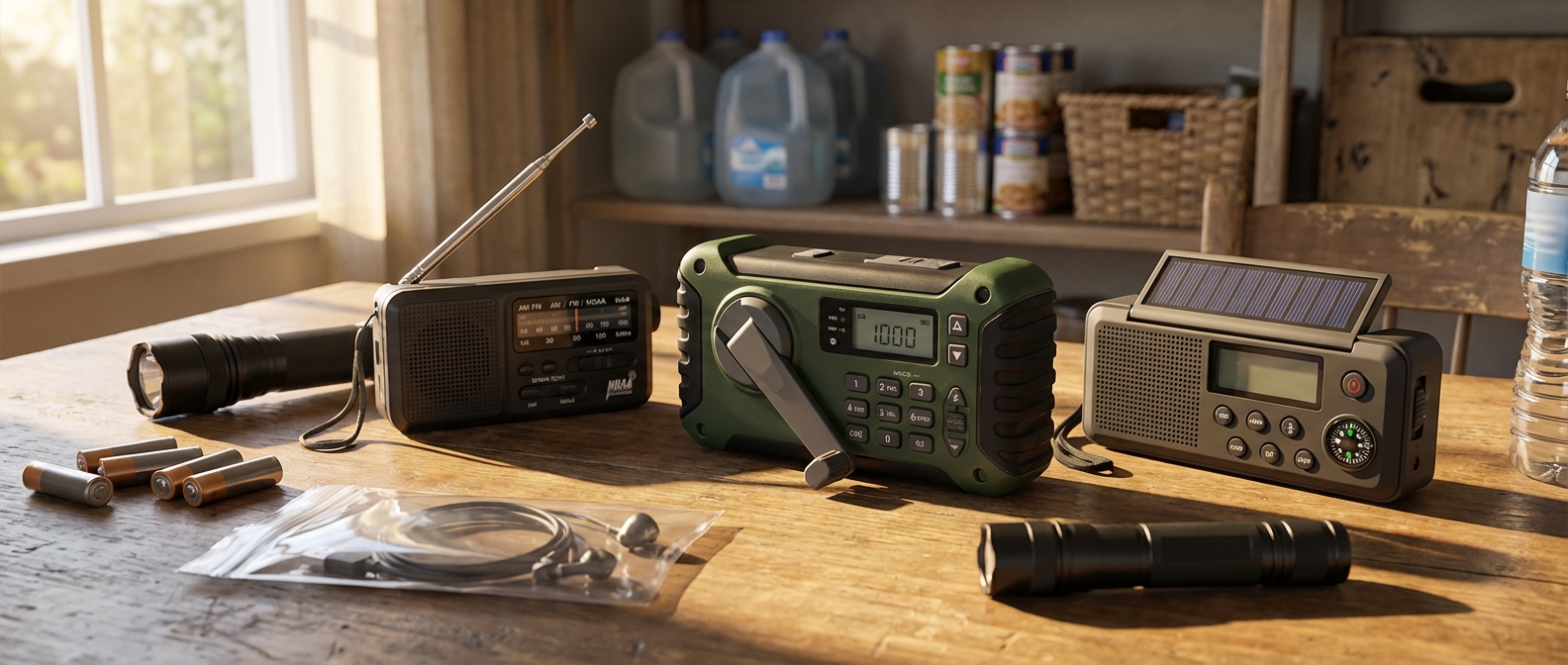
Best Emergency Radios: Top Weather-Alert & Hand-Crank Radios for 2026
Quick answer
- The best emergency radios provide reliable access to NOAA Weather Radio, National Weather Service alerts, and AM/FM when phones or internet fail.
- Top picks: Midland ER310, RunningSnail MD-090P, Eton American Red Cross FRX3+, FosPower Solar Hand Crank, Sangean MMR-88.
- Essential features: NOAA/NWS alert capability, two or more independent power sources, strong AM/FM reception, rugged build, and simple controls.
Summary
When communications fail, a good emergency radio delivers official watches, warnings, and local updates. Choose a unit that receives NOAA/NWR alerts, has at least two independent power sources (for example hand crank plus rechargeable battery or solar plus replaceable batteries), and offers reliable AM/FM reception with easy-to-use controls. Keep the radio in a larger emergency kit and test it periodically.
Check specs
Model listings and manufacturer descriptions change. Confirm SAME support, battery mAh, USB output, and any IP rating before you buy.
Quick definitions
- NOAA Weather Radio (NWR): Nationwide broadcasts from the National Weather Service.
- National Weather Service (NWS): Issues watches, warnings, and advisories.
- Emergency Alert System (EAS): The national public warning system used by broadcasters.
- SAME (Specific Area Message Encoding): Digital codes that let radios trigger alerts for specific counties.
Quick picks
- Midland ER310, best overall for balanced features and reliability.
- RunningSnail MD-090P, best budget pick.
- Eton American Red Cross FRX3+, best for user-friendly design.
- FosPower Solar Hand Crank, best value for features.
- Sangean MMR-88, premium option for reception and build quality.
Key features to look for in the best emergency radios
Focus on alerting, power redundancy, reception, durability, and usability.
- Multiple power sources
- Two or more independent ways to power the unit. Examples: hand crank plus rechargeable battery, or solar plus replaceable AA/AAA cells with a USB option.
- NOAA/NWR and alerting capability
- Automatic alerts or SAME programming so the radio only sounds for your area.
- AM/FM reception and tuner performance
- A strong tuner, an external antenna option, or a long telescoping antenna helps in weak-signal areas.
- Battery life and power-bank capability
- Check rated capacity and USB output before relying on the radio to recharge a phone.
- Durability and water resistance
- Look for IP ratings or rugged housings if you expect wet or rough conditions.
- Useful extras (secondary)
- Built-in flashlight, SOS alarm, and reading lamp are helpful but not primary reasons to choose a model.
- Ease of use
- Big, labeled controls and visible battery or alert indicators reduce stress during an emergency.
Top 5 best emergency radios (concise details)
Note: Features reflect common manufacturer claims. Confirm alert support and current specs before purchase.
1. Midland ER310, best overall
- NOAA weather band with alert function.
- Hand crank, solar panel, and rechargeable battery.
- USB output for phone charging, built-in flashlight and SOS beacon.
Why choose it: Balanced features and a long brand history make it useful at home, in a car, or in a go-bag.
2. RunningSnail MD-090P, best budget pick
- NOAA channels and AM/FM.
- Solar and hand-crank charging, plus a USB-rechargeable battery.
- Flashlight and a small reading lamp.
Why choose it: Affordable, compact, and suited to starter go-bags and vehicles.
3. Eton American Red Cross FRX3+, best for ease of use
- NOAA weather band and alerting.
- Solar panel and hand-turbine charging.
- USB smartphone charging, flashlight, and ambient light.
Why choose it: Intuitive interface and clear labels make it simple for anyone to operate.
4. FosPower Emergency Solar Hand Crank, best value
- NOAA broadcasts plus AM/FM.
- Hand crank and solar charging with an onboard battery around 2000 mAh (advertised).
- Water-resistant housing and a usable flashlight.
Why choose it: Strong value for capability. Check the mAh and USB output numbers if you need a reliable power bank.
5. Sangean MMR-88, premium reception
- NOAA weather alert capability with a high-quality AM/FM tuner.
- Hand crank, USB charging, and replaceable battery options.
- Rugged construction.
Why choose it: Better reception and build quality for users who need long-range performance.
Quick comparison at a glance
- Midland ER310, best overall, solar and hand crank, rechargeable battery, NOAA alerts.
- RunningSnail MD-090P, budget, solar and hand crank, USB, NOAA alerts.
- Eton FRX3+, user-friendly, solar and hand turbine, USB charging, NOAA alerts.
- FosPower, value, solar and hand crank, internal battery, NOAA alerts.
- Sangean MMR-88, premium reception, hand crank and USB, replaceable battery, NOAA alerts.
How to use and maintain your emergency radio (checklist)
- Program SAME codes or note the NOAA/NWR channels for your county.
- Test monthly: power on, verify alerts, and confirm USB charging.
- Rotate replaceable batteries yearly and top off rechargeables before storms.
- Improve reception by extending the antenna, moving near a window, or going to a higher level.
- Use hand crank and solar as backup sources; expect short bursts of power, not multiple full phone charges.
- Keep one unit at home and a compact unit in your vehicle or go-bag.
- Store the manual or a quick-start guide with the radio.
FAQ: best emergency radios
Q: What features are essential? A: Multiple power sources, NOAA/NWS alert capability (SAME or auto-alert), solid AM/FM reception, durable build, and simple controls.
Q: Which model is best for beginners? A: Midland ER310 covers most needs. RunningSnail and FosPower make solid budget alternatives. Confirm alert support and charging outputs.
Q: Do weather radios still work when phones do not? A: Yes. NOAA and local AM/FM are terrestrial broadcasts and often remain available during outages if the local transmitter is operating and you are within range.
Q: Should I have more than one radio? A: Yes. Have at least one at home and one portable for a vehicle or go-bag.
Choose, test, and integrate
Select a radio that matches your needs and budget. Verify specifications before buying. Test it regularly and include it in an emergency kit with water, food, first aid supplies, and evacuation plans.
Notes
- Model features are summarized from manufacturer claims and retail listings. Confirm SAME support, battery capacity, USB output, and IP rating before relying on any model.
- Power-bank effectiveness depends on battery capacity and USB output. Check the numbers for your needs.