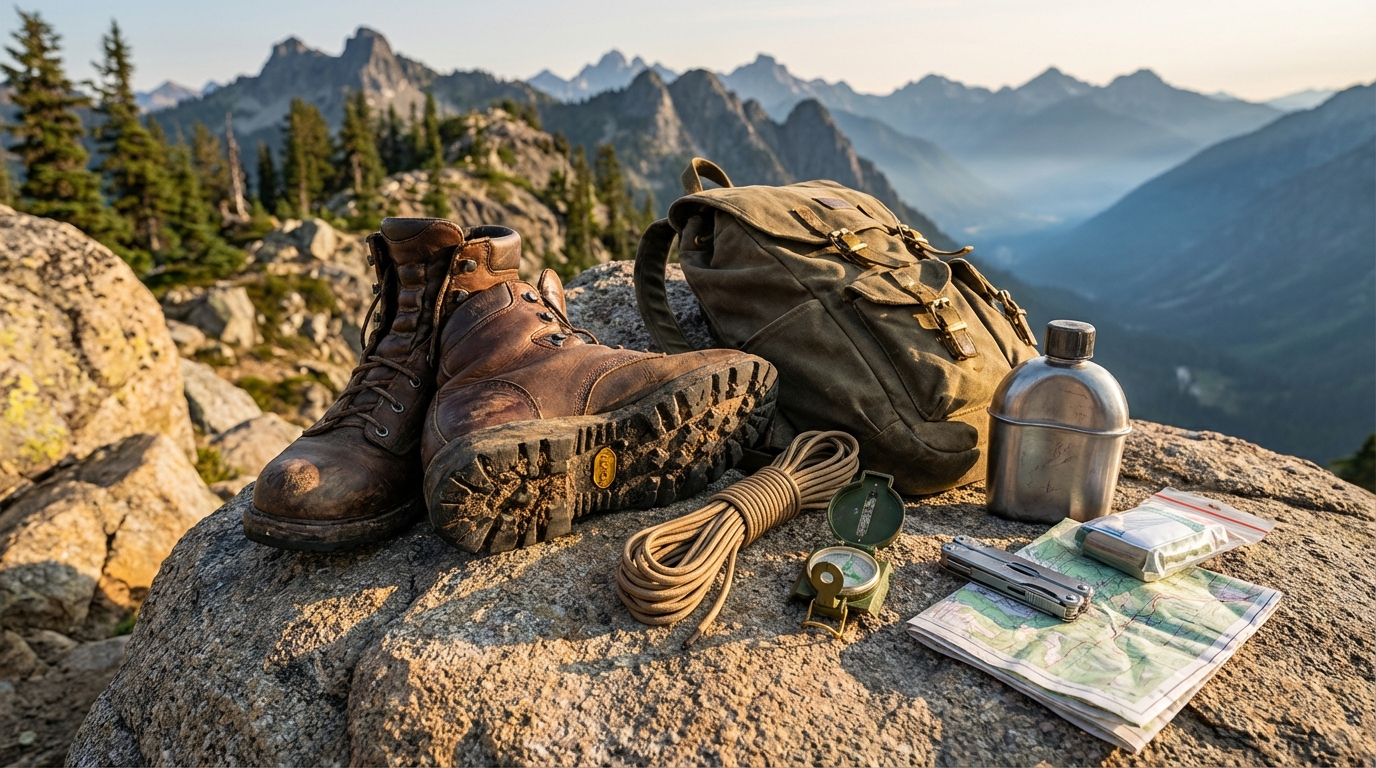
Best hiking boots for survival: Top picks & buying guide
Quick answer
Choose a mid- or high-cut hiking boot that fits. Secure fit matters most. Look for strong traction, ankle support, a protective midsole or rock plate for sharp terrain, and waterproofing or breathability matched to your climate. Try boots on with the socks and pack weight you’ll use, and break them in gradually.
At a glance
The best hiking boots for survival offer concrete protection and performance: a secure fit, ankle support, a weather-appropriate upper, a stiff midsole or rock plate for puncture resistance, and an outsole with deep, multi-directional lugs in a sticky rubber compound. Choose features based on where you will travel: wet, cold, hot, or rocky terrain.
Definitions
- Waterproof membrane: an internal liner such as Gore-Tex or eVent that blocks liquid water while letting some vapor escape.
- Midsole: the cushioning layer, commonly EVA or polyurethane, that affects comfort and underfoot protection.
- Rock plate or shank: a stiff insert that shields the foot from sharp rocks and stabilizes the footprint under load.
- Outsole lugs: raised patterns that determine grip; deeper, multi-directional lugs work better on loose or wet ground.
- Break-in: wearing new boots progressively so they form to your feet without causing blisters.
Why the right boots matter
Your feet are your primary means of mobility in a survival situation. Blisters and foot pain slow you down. Injuries can stop you entirely.
Good survival boots deliver stable footing on varied surfaces. They protect your soles from sharp rocks and roots. They keep your feet dry or cool depending on the climate. They reduce the risk of ankle rolls when you carry a heavy pack.
Fit, comfort, and traction should guide every buying decision.
Quick buying checklist
- Fit first: secure heel, roomy toe box, no pressure points. Try them late in the day when feet are swollen.
- Cut: choose mid or high for ankle support when carrying a pack; low-cut for speed on easy trails.
- Waterproofing: membrane or leather for wet and cold; breathable synthetics for hot and dry.
- Outsole: deep, multi-directional lugs with a sticky rubber compound for wet rock and mud.
- Midsole: cushioning plus a rock plate or stiffer shank if you expect sharp terrain.
- Weight: balance protection against fatigue.
- Durability: look for full-grain leather, reinforced seams, and solid hardware.
- Break-in plan: start with short hikes, then add distance and pack weight.
Critical features
- Fit and comfort: most important. Try boots on with the exact socks and orthotics you use.
- Ankle support: mid and high cuts with a good lacing system reduce roll risk.
- Waterproofing versus breathability: match this to the climate you will operate in.
- Outsole traction: aggressive lug patterns and a sticky compound improve grip on mud, wet rock, and steep ground.
- Midsole protection: EVA or PU for cushioning; add a shank or rock plate for sharp rocks.
- Upper material: leather offers durability and water resistance; synthetic uppers dry faster and weigh less.
Top picks: best hiking boots for survival
Note model specs change from year to year. Confirm the current build before you buy.
-
Salomon Quest 4 GTX
- Strengths: reliable ankle support, secure heel lock, Gore-Tex option, stable platform.
- Best for: long days with heavier packs and varied terrain.
-
Merrell Moab 3 Mid Waterproof
- Strengths: comfortable out of the box, good grip, affordable.
- Best for: beginner training hikes and everyday walks.
-
Lowa Renegade GTX Mid
- Strengths: durable construction, long-distance comfort.
- Best for: users who want a long-lasting, dependable boot.
-
KEEN Targhee III Waterproof Mid
- Strengths: roomy toe box, comfortable for wider feet, solid traction.
- Best for: wide-footed users who prioritize comfort.
-
Danner Mountain 600
- Strengths: classic leather build with a capable trail outsole.
- Best for: city-to-trail crossover use.
-
Scarpa Zodiac Plus GTX
- Strengths: precise fit and stability on technical ground, suede with Gore-Tex.
- Best for: rugged, rocky environments where edging and foot placement matter.
Shortlist:
- Best overall: Salomon Quest 4 GTX
- Best beginner/budget: Merrell Moab 3 Mid Waterproof
- Best premium: Lowa Renegade GTX Mid
- Best for wide feet: KEEN Targhee III Waterproof Mid
- Best technical/rugged: Scarpa Zodiac Plus GTX
- Best everyday-to-trail: Danner Mountain 600
How to choose
- Define the environment: wet and cold, hot and dry, rocky, or mixed.
- Choose cut by use: mid or high for ankle protection with uneven terrain or heavy packs.
- Prioritize fit: try multiple sizes and widths with your hiking socks. Check heel hold and toe clearance.
- Inspect the outsole: deep, multi-directional lugs and a sticky compound are ideal for slippery ground.
- Check the midsole and shank: pick a rock plate or a stiffer shank if you expect sharp rocks.
- Balance weight and protection: heavier boots protect more; lighter boots reduce fatigue.
- Buy and break in: start with short hikes, then increase distance and pack weight.
Maintenance
- After use: brush off mud and grit. Rinse lightly with lukewarm water if needed.
- Drying: dry slowly at room temperature. Remove insoles and loosen laces to speed drying.
- Waterproofing: reapply wax for leather or spray/wash-in products for synthetics per the manufacturer instructions.
- Conditioning: use leather conditioners sparingly to avoid over-softening.
- Inspection: check for tread wear, delamination, split seams, and broken hardware.
- Storage: store in a cool, dry place out of direct sun.
- Rotation: keep a second pair to allow full drying and to reduce overall wear.
FAQ
Q: What features matter most? A: Fit, traction, ankle support, appropriate waterproofing, and underfoot protection.
Q: Are waterproof boots always better? A: No. Waterproof liners help in wet or cold conditions but reduce breathability in hot climates. Pick based on where you go.
Q: How long do hiking boots last? A: Lifespan depends on materials, terrain, use, and care. Many users get hundreds to thousands of miles. Inspect boots regularly and replace when protection or fit degrades.
Q: One pair or multiple pairs? A: Start with a dependable all-around pair. Add specialized shoes later: lighter trail runners for speed, insulated boots for cold.
Notes
Hiking organizations emphasize fit, comfort, and traction as primary factors when choosing boots. Model-specific technologies such as membranes and rubber compounds change each year. Always check the exact specifications for the model you plan to buy.
Put fit first. Match waterproofing, midsole protection, and outsole traction to the environment you will face. Try multiple pairs with the socks and pack you will use, break them in, and maintain them. A well-chosen, well-maintained pair of hiking boots is one of the most important items in any survival kit.