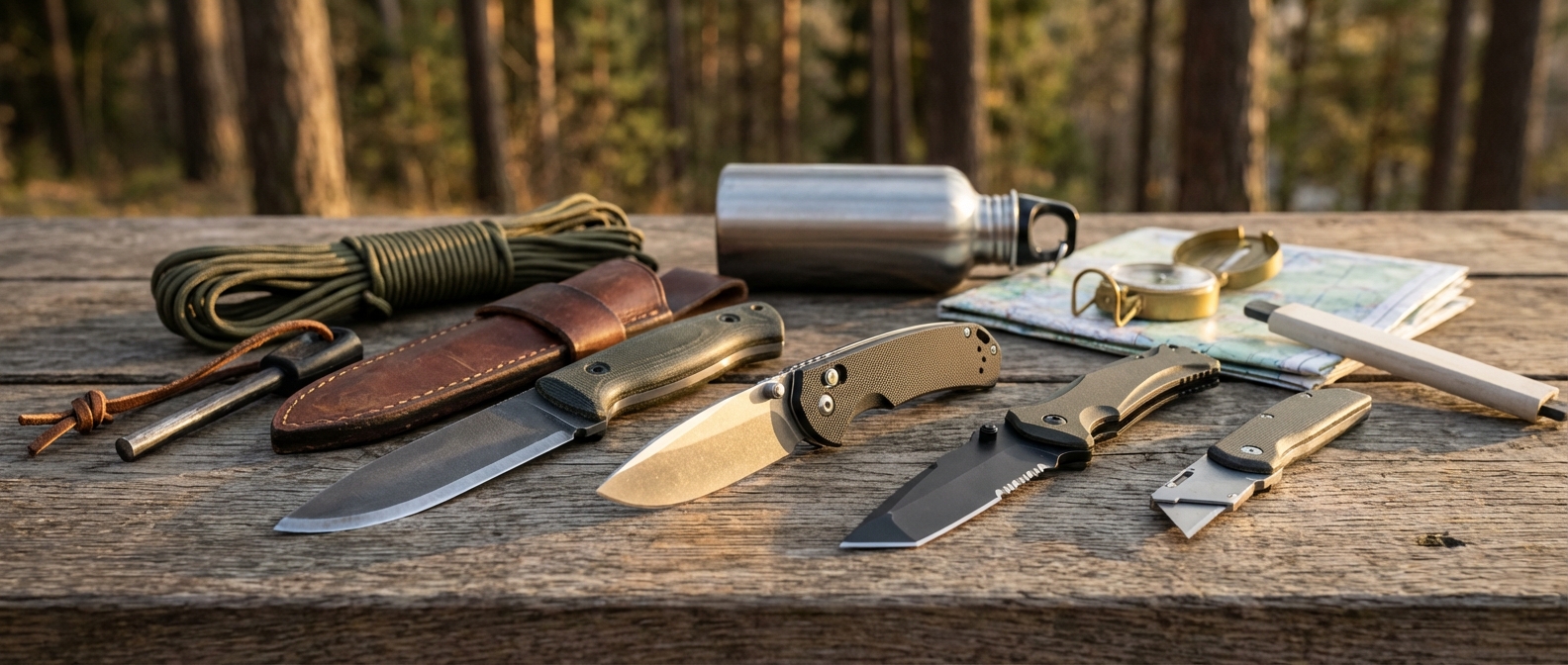
Best Knives for Preppers: Practical Guide to Choosing Survival Blades
Quick answer
The best knives for preppers: a medium fixed-blade (4-7 inches, full-tang if possible) as your primary survival knife, plus a compact folding knife or multi-tool for everyday carry and repairs. Match steel and handle materials to your climate and how much maintenance you will do.
Summary
Choose knives that stay sharp after hard use, resist corrosion in your environment, and perform common tasks: cutting cordage, preparing food, carving shelter components, and light batoning. For most preppers the simplest setup is one medium fixed blade and one small folder or multi-tool.
Practical definitions
- Fixed blade: Non-folding blade that is stronger for heavy work.
- Folding knife: Blade folds into the handle; convenient for daily carry.
- Full tang: Blade steel extends through the handle for maximum strength.
- Sheath: Carrying system. Common materials: leather, Kydex, molded polymer.
What to prioritize when shopping for the best knives for preppers
- Blade type. Primary tool: fixed blade. Secondary: folding knife or multi-tool.
- Blade length. 4-7 inches covers most cutting, chopping, and moderate batoning jobs.
- Construction. Full tang reduces breakage risk under heavy load.
- Steel choice, based on climate and maintenance habits:
- Carbon steels like 1095 and 5160 are tough and easy to sharpen in the field. They require a light coat of oil to prevent rust.
- Stainless steels like 440C, 154CM, CPM-S30V, and AUS-8 resist corrosion and need less daily upkeep.
- Handle. Use materials that grip when wet, such as Micarta, G10, textured rubber, or FRN.
- Blade shape. Drop point handles general tasks. Clip point gives finer control. Tanto works well for piercing.
- Sheath. Pick secure retention and good edge protection. Kydex or molded polymer handles wet conditions well.
- Maintenance. Choose steels and tools you can sharpen and protect where you live.
Fixed blade vs folding knife
Fixed blade. Strong and simple. Good for batoning and sustained tasks.
Folding knife. Handy for EDC and urban preparedness. Not a substitute for a robust fixed blade.
Recommended kit. One medium fixed blade plus one folder or multi-tool.
Ideal blade length and construction
- 4-7 inches: Versatile for camp chores, shelter work, and baton tasks.
- Under 4 inches: Better for fine work and easier legal carry in many places.
- Over 7 inches: Extra chopping power, but heavier and harder to carry.
- Full tang: Reduces failure risk. Go full tang for survival use.
Steel and corrosion guidance
- Carbon steel (1095, 5160): Excellent toughness and straightforward field sharpening. Oil after use to prevent rust.
- Stainless steel (440C, 154CM, CPM-S30V, AUS-8): Strong corrosion resistance and lower daily maintenance.
- Match steel to the environment. Coastal or humid climates favor stainless. Dry or temperate climates allow carbon steel if you maintain it.
Top starter models
-
Morakniv Companion - Budget fixed blade
- Blade about 3.5-4.1 in. Available in stainless and carbon versions. Lightweight and excellent for camp chores and bug-out bags.
- Tradeoff: Many versions are not full tang and are not built for extreme batoning.
-
KA-BAR Becker BK2 - Heavy-duty use
- Blade about 5.25 in, full tang, thick stock. Handles batoning and heavy outdoor work.
- Tradeoff: Heavier and less nimble for fine cutting.
-
ESEE 4 - All-around survival knife
- Blade about 4.5 in, full tang. Offered in carbon and coated stainless. Proven in many field reports.
- Tradeoff: Carbon versions need rust prevention care.
-
Gerber Paraframe - Folding EDC backup
- Lightweight frame/liner-lock folder, blade about 2.5-3.5 in. Good for everyday carry and quick tasks.
- Tradeoff: Not a substitute for a heavy-duty fixed blade.
-
Leatherman Wave+ - Multi-tool for repairs
- Pliers, screwdrivers, saw, and a knife blade. Ideal for vehicle kits and mechanical repairs.
- Tradeoff: Heavier, and the blade is smaller than a dedicated survival knife.
Why consider premium makers
Brands such as Benchmade, Spyderco, Buck, and higher-end ESEE use higher-grade steels, tighter tolerances, and refined ergonomics. Expect better fit and finish and longer service life, at higher cost. Buy premium only after you know what features matter to you.
Quick reference list
- Morakniv Companion - Budget fixed blade
- KA-BAR Becker BK2 - Heavy-duty full-tang fixed blade
- ESEE 4 - Full-tang all-around survival knife
- Gerber Paraframe - Budget folding EDC
- Leatherman Wave+ - Multi-tool for repairs and vehicle kits
Specialty knives by scenario
- Fixed-blade survival knives. Primary tools for bug-out bags and wilderness emergencies.
- Folding knives. Backups for EDC and light jobs.
- Multi-tools. Best for mechanical repairs and vehicle kits.
- Bushcraft knives. Carving, feather-sticking, and campcraft precision.
- Machetes and choppers. Trail clearing and processing large volumes of wood.
Match knives to common prepper kits
- Home emergency kit: compact fixed blade or multi-tool.
- Bug-out bag: medium fixed blade (4-7 in) plus a compact multi-tool.
- Vehicle kit: multi-tool and a reliable folder.
- Wilderness prep: sturdy fixed blade primary plus a folder or multi-tool backup.
Knife maintenance: field-friendly steps
- Cleaning
- Remove dirt and moisture after use. Wash with mild soap when needed and dry thoroughly.
- Lubrication and rust prevention
- Apply a light coat of oil to carbon-steel blades. Stainless benefits from occasional oiling too.
- Sharpening
- Use a sharpening stone, guided sharpener, ceramic rod, or pocket sharpener. Keep a consistent bevel angle, commonly 20-25 degrees per side.
- Storage
- Avoid storing knives long-term in damp sheaths, especially leather. Keep knives in a cool, low-humidity place.
- Sheath check
- Verify retention and edge protection before you rely on the kit.
Legal and safety reminders
Laws vary. Check local blade-length limits, carry restrictions, and rules about fixed blades. Practice safe handling, secure storage, and get training if you plan to use knives for survival tasks.
FAQ about the best knives for preppers
Q: What type of knife is best for beginner preppers? A: A medium fixed-blade knife, 4-7 inches, is the most useful single starting knife.
Q: How much should a beginner spend? A: Plan on $50-150 for a reliable prepper knife. Budget options exist below that, but quality typically improves above $50.
Q: Carbon or stainless? A: Carbon for toughness and easy field sharpening. Stainless for corrosion resistance and lower maintenance.
Q: Is a folding knife enough? A: Not as the only tool. Folders are great backups and EDC. Most preppers benefit from a robust fixed blade as the primary tool.
Q: Knife or multi-tool? A: Both. Fixed blade for cutting and survival tasks. Multi-tool for repairs and mechanical needs.
Concise buying checklist
- Primary: fixed blade 4-7 inches. Full tang recommended.
- Secondary: folder around 2.5-3.5 inches or a multi-tool.
- Match steel to environment: stainless for wet/humid, carbon if you will oil and sharpen in the field.
- Check handle comfort and wet grip.
- Confirm sheath retention and material.
- Budget: aim for $50-150 for a reliable starter setup.
- Check local laws before carrying a fixed blade.
Actionable summary
Pick a medium fixed blade as your primary survival knife. Add a folding knife or multi-tool for everyday carry and repairs. Try a few entry-level models to learn what fits your grip, then invest in premium gear if those specific features matter to you.
[INTERNAL_LINK: Becoming a Prepper: The Beginner’s Guide to Survival Readiness] [INTERNAL_LINK: How to Build a Bug Out Bag: Essentials for a Quick Getaway] [INTERNAL_LINK: Gadgets and Gizmos Aplenty: Tech Tools for the Modern Prepper] [INTERNAL_LINK: Water, Water Everywhere: How to Store H2O Without Losing Your Sanity] [INTERNAL_LINK: Canned Goods and Other Edibles: Your First Steps to Stockpiling Food]