Food Stockpiling Tips: Beginner Guide to Canned Goods, Staples & Storage
Quick Answer / TL;DR: food stockpiling tips
- Start small. Build a 3-day to 2-week supply per person, then expand to a month as space and budget allow.
- Store foods you already eat: canned goods, dry staples, and ready-to-eat items. Label purchase dates and rotate using FIFO (first in, first out).
- Prioritize water (1 gallon per person per day), calories, protein, fats, and easy-to-prepare items.
Practical food stockpiling tips: what to buy, how to store, and how to rotate supplies.
Quick definition: What is food stockpiling?
Food stockpiling means keeping an extra supply of shelf-stable food and water at home to cover short disruptions, from three days up to several weeks. Shelf-stable items do not need refrigeration until opened and include canned foods, dry grains and beans, and many packaged ready-to-eat items.
FIFO means putting new purchases behind older stock so the oldest items get used first.
Why food stockpiling matters
Stockpiles provide a short buffer for power outages, severe weather, or times when shopping is difficult. FEMA and the Red Cross recommend at least a three-day supply per person as a baseline.
Good stockpiles cut stress and make emergencies easier to handle.
Baseline plan (action-first)
- Start goal: three days to two weeks per person. Expand to one month as budget and space allow.
- Store what you already eat so rotation stays realistic and waste stays low.
- Build gradually: add two to five shelf-stable items each shopping trip. Buy on sale and use coupons.
- Label purchase dates and rotate with FIFO.
Start small. Keep it manageable.
Core principles
- Keep familiar foods your household will actually eat.
- Aim for meals that include calories, protein, healthy fat, and some vitamin sources such as canned or dried vegetables and fruit.
- Plan meals, not just items. For example, rice plus canned chicken plus canned vegetables makes a complete meal.
- Keep essential tools: a manual can opener, basic cookware, and a backup cooking method.
Why canned goods matter
Canned foods are affordable, widely available, and often ready to eat. Combine them with dry staples to make complete meals.
Priority canned items:
- Proteins: tuna, salmon, canned chicken, sardines, canned beans
- Vegetables: canned tomatoes, corn, green beans, peas
- Fruits: peaches, pineapple, applesauce in juice
- Ready meals: soups, chili, stews, ravioli
Shelf-life notes:
- Low-acid canned goods such as beans, meats, and vegetables often remain usable for roughly two to five years if cans are undamaged.
- High-acid items like tomatoes and fruits usually keep optimal quality for about 12 to 18 months.
- Freeze-dried foods can last many years depending on the manufacturer. MRE shelf life also varies. Check product labels.
Storage and safety: conditions, gear, and discard rules
Ideal storage conditions:
- Temperature: 50 to 70 F (10 to 21 C). Avoid attics and uninsulated garages.
- Environment: cool, dry, and dark with low humidity.
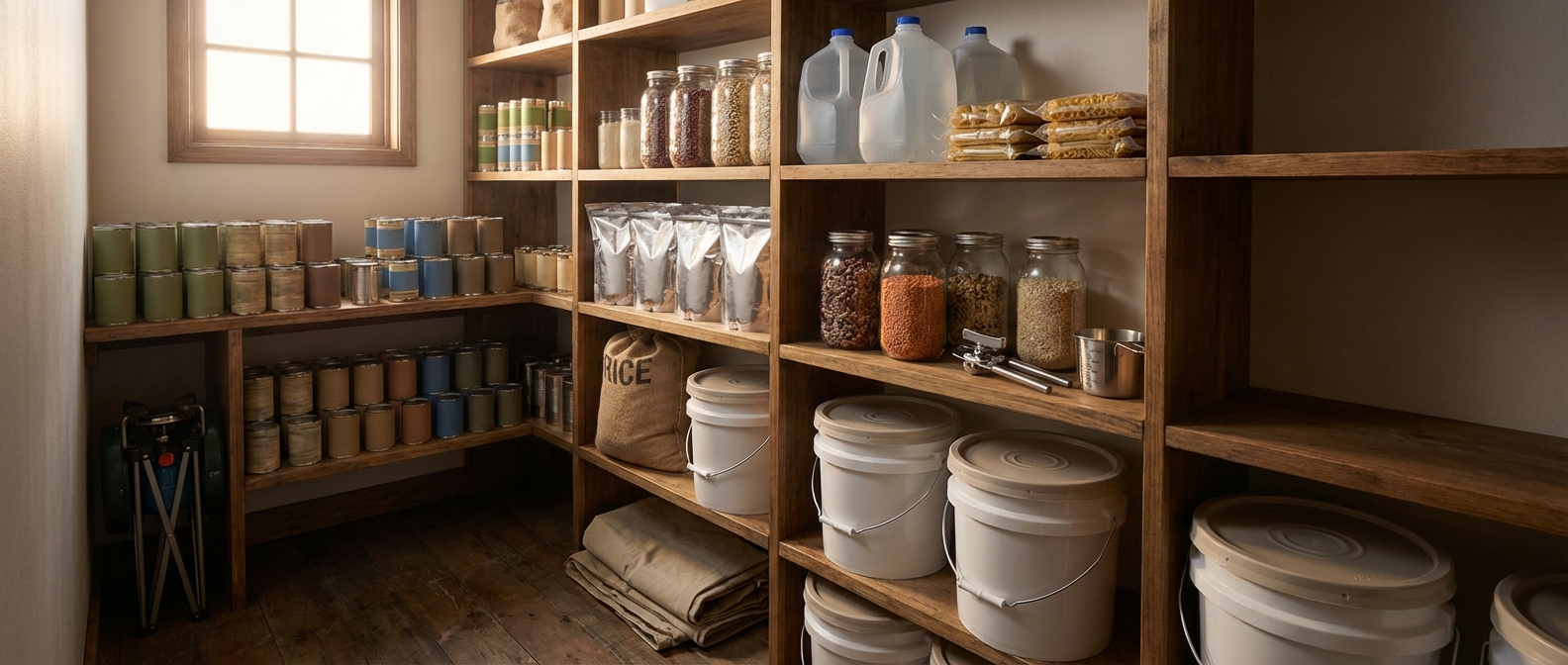
- Keep food off the floor on shelves or pallets to prevent moisture and pests.
- Water guideline: store 1 gallon per person per day for drinking and basic sanitation.
Helpful gear:
- Permanent marker or date labels
- Manual can opener
- Basic cookware and a backup cooking method such as a camp stove or small propane stove
- Airtight containers, Mylar bags with oxygen absorbers, or food-grade buckets for bulk dry staples
Discard if:
- Cans are bulging, leaking, or have heavy rust near seams
- There are deep dents at seams or on lids
- Contents spray out or smell bad when opened
When in doubt, throw it out. Safety first.
Building a balanced stockpile (categories and examples)
- Pantry staples: white rice, pasta, oats, flour, sugar, salt, dry beans
- Protein: canned meat and fish, dried beans, nut butters, jerky
- Fats and calories: peanut butter, cooking oil, nuts
- Ready-to-eat: granola bars, trail mix, pull-tab meals, shelf-stable milk
- Comfort and morale items: coffee, tea, chocolate, favorite spices
Rule of thumb: make sure you can assemble simple, familiar meals and have the tools and fuel to prepare them.
Budget-friendly food stockpiling tips
- Add two to five shelf-stable items to each regular shopping trip to build slowly.
- Prioritize water, calories, protein, and a manual can opener.
- Buy canned goods, rice, and pasta on sale. Buy bulk dry staples when you can store them safely.
- Use a deep-pantry method: keep an extra rotated supply of foods you already buy.
Starter shopping list (sample quantities for one person, 1 to 2 week)
- Canned tuna or chicken: 6 to 12 cans
- Canned beans (variety): 6 to 12 cans
- Canned tomatoes: 4 to 8 cans
- Canned vegetables: 6 to 12 cans
- Pasta or rice: 5 to 10 pounds total
- Oats or cereal: 2 to 4 containers
- Peanut butter: 1 to 2 jars
- Cooking oil: 1 bottle (about 48 ounces)
- Ready-to-eat bars or snacks: 12 to 24 items
- Shelf-stable or powdered milk: 1 to 2 containers
- Manual can opener and basic cookware
Multiply quantities by household size and desired days of coverage.
First-week action plan (step-by-step)
- Choose a cool, dry storage area and clear a shelf.
- Assemble three to seven days of basics from the starter list.
- Label purchase dates and put new items behind older stock using FIFO.
- Cook one meal from your stockpile to confirm utensils, fuel, and taste preferences.
Do the test. It will reveal gaps.
Common pitfalls and simple fixes
- Buying foods you do not eat: stock household favorites first.
- Too many snacks and simple carbs: add canned proteins and healthy fats.
- Items that need lots of water or long cooking: include ready-to-eat items and a backup cooking plan.
- Poor storage conditions: move stock indoors, off the floor, and away from heat and humidity.
- No rotation system: label dates and practice FIFO.
- Going too big too fast: build in layers and test what you buy.
Maintaining and rotating your stockpile
- Monthly: inspect for damage, pests, or humidity problems.
- Quarterly: move older items to the front. Use or donate items near their best-by dates.
- Annual: complete an inventory, replace expired items, and update for changing dietary needs.
Rotation steps:
- Label purchase dates.
- Put new items behind older ones.
- Check monthly and replenish used items.
FAQ (brief)
Q: How much should a beginner stockpile?
A: Start with three days to two weeks per person and work toward a month. FEMA and the Red Cross recommend at least a three-day supply.
Q: Are canned goods enough?
A: They form a strong foundation. Pair canned goods with dry staples, ready-to-eat items, fats, and water for balance.
Q: What lasts longest?
A: Properly stored white rice, dry beans, sugar, salt, many canned goods, and some freeze-dried foods last a long time. Check product labels for exact shelf life.
Q: Is freeze-dried food necessary?
A: Not for beginners. Freeze-dried foods and MREs help for long-term plans, but you can start affordably with cans and dry staples.
Practical next steps (3 actions)
- Choose a storage space and assemble a three-day to two-week starter stockpile of canned goods, dry staples, and ready-to-eat items.
- Add a few shelf-stable items each shopping trip, label them, and rotate with FIFO.
- Gradually expand into water storage, backup cooking methods, and longer-term foods as budget allows.
Notes and verification
- “Canned items can keep for years” is clarified here: shelf life varies. Many low-acid cans are often good two to five years, while high-acid foods have shorter optimal quality. Check manufacturer guidance.
- The water guideline of 1 gallon per person per day and the three-day recommendation reflect FEMA and CDC guidance.
- Shelf life for freeze-dried foods and MREs varies by manufacturer and storage conditions. Verify labels.
Small, steady steps build a useful, affordable stockpile over time.