Emergency Sanitation Tips: Practical Guide to Hygiene, Waste, and Water During Disasters
Summary
- Contain human waste. Seal it, store it, and keep it away from food and water.
- Wash hands regularly with soap and water; use alcohol-based sanitizer (60%+ alcohol) when hands are not visibly dirty.
- Protect drinking water by storing it in clean, labeled containers and treating it when needed.
- Disinfect high-touch surfaces according to label instructions.
- Keep simple routines and privacy to preserve dignity and reduce illness.
These emergency sanitation tips focus on actions you can take without plumbing.
Key definitions
- Sanitation: practices that prevent contact with human waste and reduce disease spread.
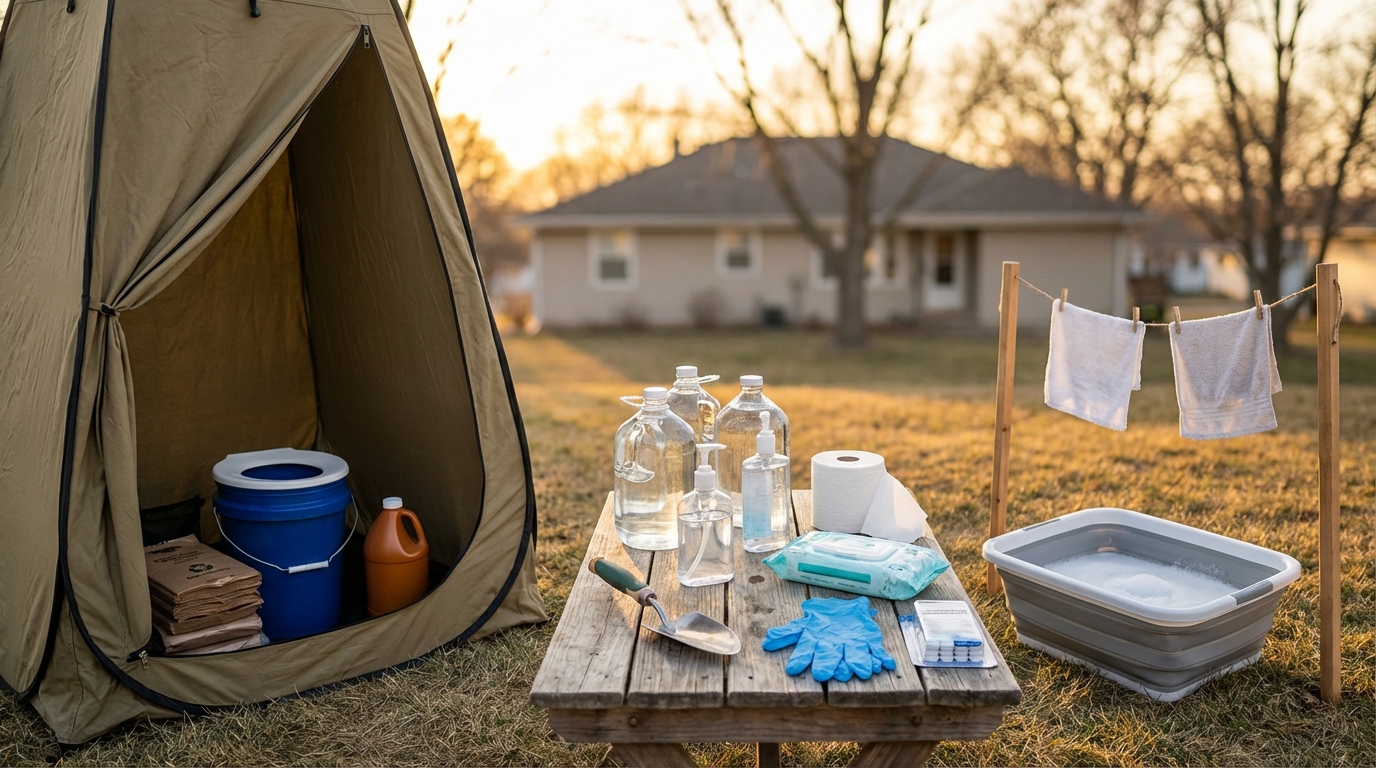
- Emergency sanitation kit: supplies for waste containment, hand hygiene, surface disinfection, and water treatment.
- Bucket toilet: a 5-gallon bucket fitted with a seat and a liner. Add absorbent material to control liquids and odor.
- Portable toilet: a mobile unit with sealed cartridges or waste bags for easy emptying.
- Composting toilet: a setup that processes waste over time. Useful long-term but requires training and maintenance.
- Latrine: a dug pit for remote or rural use. Site it away from water sources.
- Handwashing station: a container with a controllable spigot and a basin to catch wastewater.
Why sanitation matters
Without functioning plumbing, waterborne and fecal-oral diseases increase quickly. Proper sanitation protects drinking water, reduces household transmission, and keeps minor hygiene problems from becoming medical emergencies.
Top 5 priorities: emergency sanitation tips (quick checklist)
- Contain human waste in sealed bags, buckets, or portable toilets until you can dispose of it safely.
- Keep hands clean. Use soap and water when available. Use sanitizer (60%+ alcohol) for hands that are not visibly dirty.
- Protect drinking water. Store it in clean, sealed containers and label potable versus nonpotable.
- Disinfect frequently touched surfaces following product labels and public-health guidance.
- Maintain simple routines and privacy for toilet and bathing areas to preserve dignity and lower stress.
Emergency sanitation kit (essentials)
- 5-gallon bucket with a tight lid and a snap-on toilet seat, or a portable camping toilet
- Heavy-duty trash bags, waste liner bags, and ties
- Absorbent material such as kitty litter, sawdust, peat moss, or gelling powder
- Toilet paper in waterproof packaging; biodegradable wipes
- Soap (bar or liquid) and alcohol-based hand sanitizer (60%+ alcohol)
- Household bleach and empty spray bottles, plus written dilution instructions
- Rubber or nitrile gloves; paper towels or reusable cleaning cloths
- Feminine hygiene supplies, diapers, or incontinence items as needed
- Water-purification tablets and extra clean water containers clearly labeled
- Portable privacy shelter (tarps or a small tent) and lidded trash cans
- Baking soda or other simple odor-control options
Useful upgrades
- Gravity-fed or foot-pedal handwashing station
- Solar shower bag or camp shower
- Water filter rated for protozoa and bacteria
- Composting toilet for long-term off-grid use (practice before relying on it)
- Laundry kit and clothesline
Storage and readiness
Store the kit in a labeled, waterproof tote near your emergency water supply. Include printed instructions for handwashing steps, bleach dilutions, and bucket-toilet procedures. Check seals and rotate consumables at least once a year.
Waste management: containment, handling, disposal
Goal: contain waste, keep it away from food and water, and minimize direct contact.
Bucket toilet: step-by-step
- Line a 5-gallon bucket with a sturdy waste bag.
- Add an absorbent like kitty litter, sawdust, peat moss, or gelling powder to control liquids and smell.
- Tie the liner after use. Keep sealed waste away from living areas and water.
- Dispose of the sealed liners according to local rules when safe and allowed.
Portable and composting toilets
Portable camping toilets are straightforward to empty and sanitize. Composting toilets work long-term but require correct operation. Practice before relying on them during an emergency.
Waste-handling rules that matter
- Keep toilet and waste areas separate from food and water storage.
- Seal solid waste in durable bags. Do not leave waste exposed.
- Wear gloves when handling waste containers and wash hands afterward.
- Ventilate and provide privacy to reduce odor and stress.
- Follow local disposal rules and instructions from emergency managers.
Latrines: when and where
Use latrines mainly in rural or wilderness settings when other systems are not available. Site latrines at least 30 meters (about 100 feet) from water sources and downhill from living areas. Keep them away from gardens. In urban settings, contained systems are usually safer.
Handwashing and bathing when water is limited
Handwashing best practices
Wash hands with soap and water for at least 20 seconds when possible. If you have no running water, use a jug with a spigot and a catch basin. Provide soap and single-use towels or rotate clean towels. Use alcohol-based sanitizer (60%+ alcohol) when hands are not visibly dirty.
Low-water technique: wet hands briefly, turn off the water, lather thoroughly, then turn water back on to rinse. Dry with a clean towel or air-dry.
Bathing and body hygiene options
- Sponge baths with a basin and washcloth
- No-rinse body washes and shampoos
- Biodegradable wipes for quick cleaning
- Solar shower bags or camp showers outdoors
Laundry
Separate heavily soiled items. Wash contaminated laundry first. Wear gloves when handling items with bodily fluids. Dry clothing completely, using sunlight when possible.
Disease prevention and water protection
- Disinfect high-touch surfaces regularly. Follow manufacturer and CDC/EPA instructions. Do not mix bleach with other cleaners.
- Store drinking water in clean, clearly labeled containers. Keep waste and trash sealed and away from water sources.
- Isolate ill household members when feasible. Use separate utensils, towels, and bedding if possible.
- Control pests by sealing trash and cleaning spills promptly.
Red flags — seek medical attention immediately
Severe dehydration, persistent vomiting or diarrhea, bloody stool, high fever, confusion, or signs of wound infection.
Water quantities and planning
FEMA recommends at least 1 gallon of drinking water per person per day for short-term planning. Add water for cooking, cleaning, and hygiene. As a simple starting point, aim to store an extra gallon per person per day for basic sanitation needs when possible. Adjust based on household size, climate, and health conditions.
Routine, dignity, and mental well-being
Keep simple, repeatable tasks: regular handwashing rounds, scheduled waste-bag replacement, and surface wipe-downs. Assign responsibilities so everyone knows what to do. Provide privacy with tarps or tents for toilets and bathing. Routine reduces stress.
Frequently asked questions about emergency sanitation tips
Q: Why is sanitation important during emergencies? A: Sanitation prevents disease spread, protects drinking water, and keeps small hygiene issues from worsening.
Q: What belongs in a basic sanitation kit? A: A bucket or portable toilet, heavy-duty waste bags, toilet paper, soap, hand sanitizer, bleach, gloves, wipes, clean water containers, and water-purification tablets.
Q: How do I manage waste without plumbing? A: Use contained systems such as a bucket with liners and absorbent, or a portable toilet. Seal waste and store it away from food and water until you can dispose of it.
Q: What low-water handwashing options work best? A: Gravity-fed jugs with spigots, a clean-towel rotation or single-use towels, and sanitizer for hands that are not visibly dirty.
Q: How much water do I need for sanitation? A: Start with FEMA’s 1 gallon per person per day for drinking, and add additional water for hygiene. Tailor quantities to your household.
Next steps
- Contain waste, maintain hand hygiene, protect drinking water, disinfect surfaces, and keep simple routines.
- Assemble a basic sanitation kit now and store it with your emergency supplies.
- Practice your backup toilet plan and handwashing routine so they become second nature.
Local rules and safety
Local disposal rules for sealed waste bags and portable-toilet cartridges vary. Check with municipal or emergency-management authorities. Latrine siting and permitted methods differ by jurisdiction. Follow product-specific disinfectant dilution and contact-time instructions from manufacturers and the CDC or EPA.