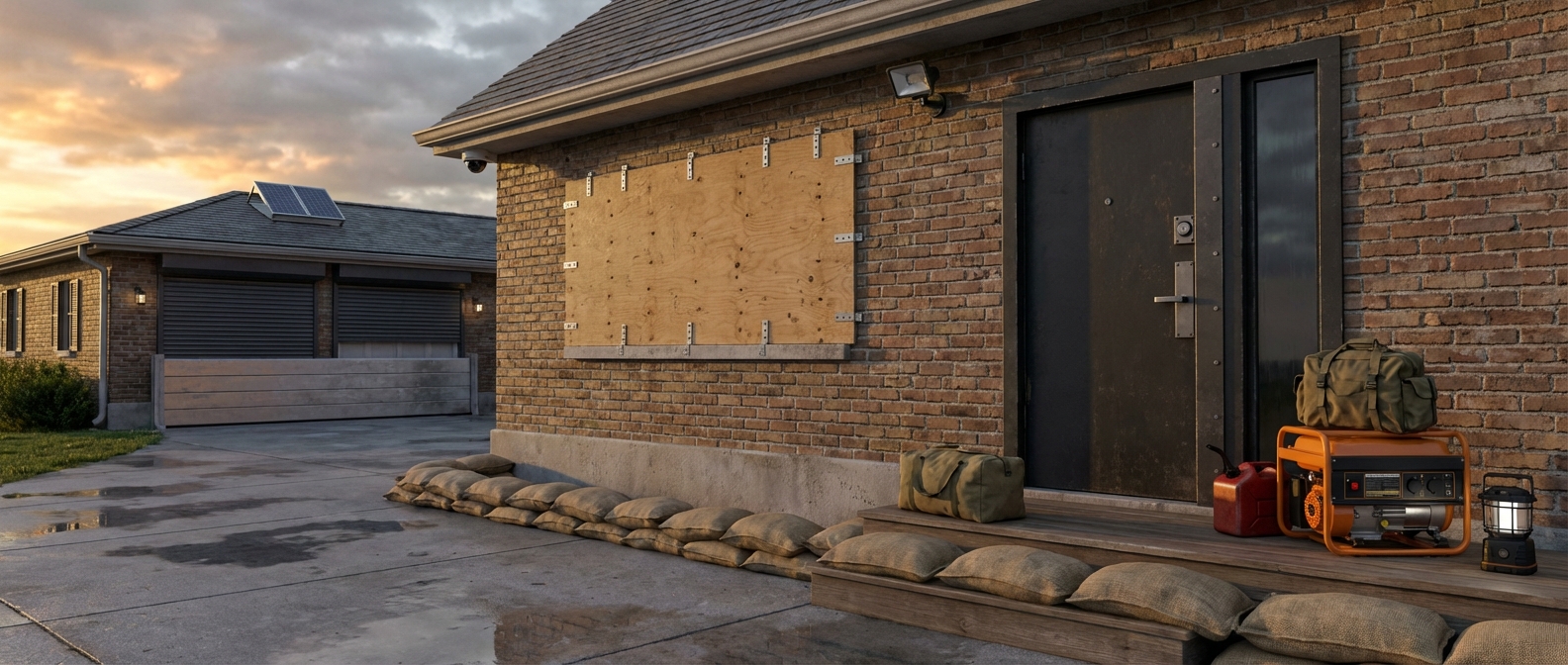
Home Fortification for Preppers: Essential Beginner Tips to Secure Your Home
Quick guide
- Home fortification for preppers means making a residence harder to breach, more resilient to storms, and effective for sheltering in place.
- Start with low-cost, high-impact steps: long screws for door hardware, a quality deadbolt, motion lights, dowels for sliding openings, and a designated safe room.
- Next priorities are detection and power resilience: sensors, a visible camera, and backup charging or portable power.
What home fortification looks like
Think in concrete terms: improve visibility with lighting and trimmed landscaping to deter someone from approaching, reinforce door frames and hinges to delay forced entry, add sensors and a doorbell camera to detect activity, and choose a safe interior room stocked with supplies so you can respond without leaving the house.
Key terms
- Home fortification: strengthening a residence to reduce unauthorized entry, limit storm damage, maintain power and communications, and enable safe sheltering.
- Framework with examples: deter (lighting and clear sightlines), delay (reinforced jambs and long screws), detect (contact sensors and video), respond (safe room supplies and a communication plan).
- Safe room: an interior room with a solid-core door, few or no windows, a way to communicate, and emergency supplies.
- CPTED: Crime Prevention Through Environmental Design, using lighting and landscaping to reduce opportunities for crime.
Verify local risks
Crime and hazard patterns vary. Check local police reports, FBI UCR data, the Bureau of Justice Statistics, FEMA guidance, and the National Weather Service so your home fortification for preppers matches real local threats.
First 24 to 48 hours checklist
- Replace short hinge and strike-plate screws with 3 inch screws driven into framing studs.
- Install a quality deadbolt on the main exterior door.
- Insert a dowel or security bar into sliding door and window tracks.
- Install a motion-sensor light at the main entry and test all exterior lighting after dark.
- Pick a safe room and stock a flashlight, phone charger or power bank, water, and a basic first aid kit there.
- Trim landscaping that creates hiding places near windows and doors.
- Register for local alert systems and confirm your phone receives notifications.
Priority upgrades by phase
Phase 1: immediate, low cost
- Long screws for all door hardware.
- Deadbolt on the main exterior door.
- Motion lights and timers for visible rooms.
- Dowels or security bars for sliding openings.
- Trim vegetation to improve sightlines.
Phase 2: moderate cost, DIY friendly
- Door reinforcement kit or a jamb armor plate.
- Security film on exposed windows to slow glass failure.
- Door and window contact sensors plus a video doorbell.
- One or two visible exterior cameras with a battery or UPS backup.
Phase 3: higher cost, longer term
- Upgrade a safe room with a solid-core door and reinforced strike plate.
- Add portable power stations, solar charging panels, or a small generator with safe operation plans.
- Hire a professional for a structural assessment or larger upgrades.
Practical tips
- Reinforce exterior doors and frames
- Anchor hinge and strike screws into framing studs using 3 inch screws.
- Fit a heavy-duty strike plate or a door reinforcement kit to reduce kick-in risk.
- Add a peephole or a video doorbell to identify visitors before opening.
- Secure sliding doors with keyed locks, security bars, or pinned tracks.
- Harden windows and secondary entries
- Install better locks and sash pins on upstairs and ground-level windows.
- Apply security film to windows that face a street or yard to reduce shattering in storms or break-ins.
- Keep shrubs and hedges trimmed so neighbors and cameras have clear sightlines.
- Use blinds or curtains to keep supplies and electronics out of view.
- Visible deterrents and lighting
- Put motion-sensor lights at entries and other dark exterior areas.
- Use alarm or neighborhood watch signs where appropriate; visible measures discourage opportunistic offenders.
- Maintain tidy yards so neighbors can spot unusual activity.
- Set timers or smart lights to simulate occupancy when you are away.
- Detection and affordable monitoring
- Start with door and window contact sensors and a few motion detectors indoors.
- Add a visible video doorbell and one exterior camera; visibility reduces risk.
- Configure mobile alerts and recording to cloud or local storage, and provide battery backup for short outages.
- Repurpose old smartphones as indoor cameras or local monitors when budget is tight.
- Safe room and sheltering plan
- Choose an interior room away from windows with a solid-core door.
- Store a charged phone or power bank, a reliable flashlight, bottled water, a first aid kit, and a battery-powered radio or local alert device there.
- For severe weather, use the lowest interior room without windows when it is safe and dry.
- Utilities and power resilience
- Keep smoke and CO detectors maintained and replace batteries on schedule.
- Have flashlights, spare batteries, and charged power banks readily available.
- Know how to shut off water, gas, and power safely.
- If you add a generator, follow manufacturer safety instructions and local regulations.
- Keep easily accessible fire extinguishers and teach household members basic use.
Budget-friendly fortification hacks
- Replace short screws with 3 inch screws on door hardware first.
- Use dowels or keyed locks on sliding doors and windows.
- Install solar-powered motion lights for low-cost exterior lighting.
- Apply security film to the most exposed windows first.
- Turn a hallway closet into a temporary safe room and reuse old phones as cameras.
Common pitfalls and how to avoid them
- Do not prioritize gadgets over structure. Secure doors and frames first.
- Check secondary entries: basements, garages, gates, and pet doors deserve attention.
- Do not rely on devices without a household plan. Practice drills and establish communication methods.
- Avoid overtly aggressive-looking hardware that might escalate an encounter. Blend security with normalcy.
- Train household members so everyone stays calm and follows checklists during an event.
Coordinate with neighbors and local resources
- Call local police non-emergency lines, neighborhood watch groups, and CERT teams for guidance and training opportunities.
- Form or join neighborhood mutual-aid groups to share skills and equipment during storms or extended outages.
FAQ: home fortification for preppers
-
What is home fortification and why prioritize it? Home fortification reduces risk from intrusion, storms, and outages. For preppers it protects people, stored supplies, and the ability to shelter in place safely.
-
What should beginners do first? Reinforce exterior doors and frames, secure windows and secondary entries, improve lighting and sightlines, and designate a safe room.
-
Can I fortify on a tight budget? Yes. Long screws, dowels, motion lights, and trimming landscaping are low-cost steps that make a big difference.
-
Do I need a complex alarm system? No. Strong physical delays and a few well-placed sensors and a visible camera often give the best value.
-
Should I focus on crime or natural disasters? Match priorities to local risks. Many measures protect against both break-ins and weather.
Verify sources
Check local crime trends with your police department, the FBI UCR, or the Bureau of Justice Statistics. For weather and disaster planning consult FEMA and the National Weather Service.
Practical summary
Start with high-impact, low-cost improvements: long screws, a deadbolt, visible lighting, and a safe room stocked with essentials. Add detection and backup power next. Coordinate with neighbors and local authorities so your home fortification for preppers matches real threats and stays practical.