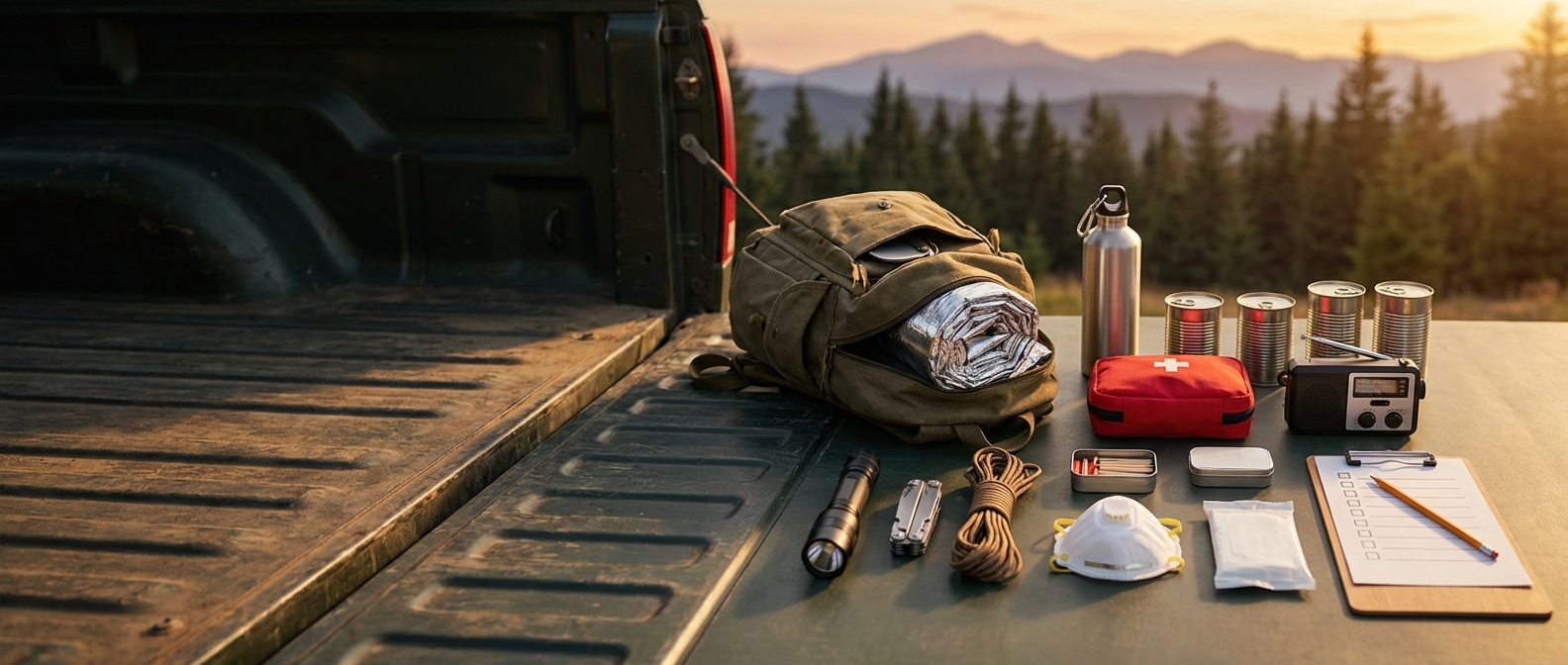
Essential Prepper Checklist: Don’t Leave Home Without It
Quick start:
- Immediate priorities: 1) Water (1 gal/person/day, 72-hour minimum), 2) Shelf-stable food (72-hour minimum), 3) First aid and prescriptions, 4) Reliable lighting and communication.
- Also include copies of important documents, some cash, basic tools, weather-appropriate clothing, hygiene supplies, and a written family plan.
- Review and rotate supplies every six months or after major life changes.
An essential prepper checklist lists prioritized, actionable items that meet basic survival needs for at least 72 hours: water, food, medical care, shelter, and communication.
This essential prepper checklist turns vague intent into practical action. Start with the basics and build capability over time. You do not need dramatic gear to begin.
Key definitions
- Prepping: assembling supplies and written plans to meet basic needs when systems fail.
- Essential prepper checklist: a prioritized list of items and tasks for short-term survival and immediate response.
- Bug-out bag: a portable 72-hour kit for quick evacuation.
- Shelter in place: staying put and making your location safe during an emergency.
- 72-hour supply: a common starting minimum recommended by disaster-prep organizations.
Quick answer: what to include
Top priorities, answer-first:
- Water, 1 gal per person per day, 72-hour minimum, plus pet water.
- Shelf-stable food, 72-hour minimum; manual can opener.
- First-aid kit and prescriptions.
- Lighting, flashlight or headlamp and extra batteries.
- Communication, NOAA/emergency radio, printed contacts, local maps.
- Basic tools, multi-tool, knife, duct tape, paracord, fire starter.
- Clothing and shelter, weather-appropriate layers and emergency blankets.
- Documents and cash, copies of IDs, insurance, small bills.
- Hygiene and sanitation items.
- A written family and pet emergency plan.
Start with a 72-hour baseline. Scale up based on local risks and family needs.
Why a checklist matters
A checklist cuts panic and prevents costly oversights. Use it to:
- Prioritize essentials before nonessentials, so you cover critical needs first.
- Build supplies affordably, one item at a time.
- Track expiration and rotation dates so food and meds stay usable.
- Create a reliable grab-and-go routine for evacuation.
Core essentials (four sturdy legs)
Think of preparedness as a table with four legs: water, food, first aid, and clothing or shelter. If one leg is missing, the plan is weaker.
Water
- Store 1 gallon per person per day, minimum 72 hours. Add extra for pets and medical devices.
- Label containers and rotate them regularly.
- Carry portable treatment: filter, purifying tablets, or a purifying straw.
Food
- Keep a 72-hour nonperishable supply per person as a baseline.
- Concrete options: canned chicken or tuna, ready-to-eat proteins, rice and beans, energy bars, instant meals.
- Bring a manual can opener and an alternate cooking plan such as a camp stove or grill.
- Include baby formula, medical-diet items, and pet food if needed.
First aid and medications
- Basic kit items: assorted bandages, gauze, medical tape, antiseptic, tweezers, scissors, burn dressings.
- Keep accessible prescriptions and spare inhalers or EpiPens when required.
- Store a printed medication list and key medical history with emergency contacts.
Clothing and shelter
- Pack a change of clothes, extra socks, sturdy shoes, warm layers, and rain gear.
- Shelter items: emergency mylar blankets, a tarp, and a lightweight tent or shelter materials.
Tools, power, and communication
- Lighting: flashlight, headlamp, and a lantern. Store batteries separately.
- Power: power bank(s), a solar charger, and a hand-crank option for small devices.
- Communication: NOAA or hand-crank radio, printed emergency contacts, local maps, and a whistle.
- Utility gear: multi-tool, fixed-blade knife, duct tape, paracord, and lighter or matches in a waterproof container.
Documents, cash, and planning
- Documents: photocopies or scans of IDs, insurance, and medical records. Keep a waterproof pouch and off-site backup.
- Cash: small bills in a waterproof pouch because ATMs may be down.
- Plan: a written family emergency plan with meeting points, assigned responsibilities, and a printed contact list.
Hygiene, comfort, and morale
- Hygiene items: toilet paper, wet wipes, soap, toothbrush and toothpaste, hand sanitizer, feminine products, diapers.
- Sanitation: trash bags and a simple waste plan for longer outages.
- Morale items: a small deck of cards or a book, a notebook and pen, and familiar snacks for children.
Maintaining and updating your checklist
When to review:
- Every six months at minimum.
- At the start of severe-weather seasons.
- After major life changes or after using supplies.
What to check:
- Replace expired food and medications.
- Rotate water and test or replace filters.
- Test radios, lights, and power banks and refresh batteries.
- Update contact information and printed plans.
Beginner priority list: what to buy first
Priority 1, immediate survival basics:
- Water storage and portable treatment
- Shelf-stable food and a manual can opener
- First-aid kit and essential prescriptions
- Flashlight or headlamp and extra batteries
Priority 2, safety and communication:
- NOAA or emergency radio
- Multi-tool and basic utility gear
- Hygiene supplies
- Weather-appropriate clothing and blankets
- Important documents and small cash
Priority 3, convenience and resilience:
- Backup power such as a power bank or solar charger
- Fire-starting supplies and cooking gear
- Extra sanitation items and storage containers
Sample essential prepper checklist (starter)
Food and water
- 3-day water supply per person (1 gal/day)
- Water filter or purifier and purification tablets
- 3-day food supply per person
- Manual can opener
- Pet food
Medical
- First-aid kit
- Prescription medications (7 to 30 day backup if possible)
- Pain relievers and allergy medication
- Spare glasses or contacts
Tools and power
- Flashlight and headlamp
- Extra batteries
- Emergency radio (NOAA)
- Power bank and solar charger
- Multi-tool and knife
- Fire starter and duct tape
Clothing and shelter
- Extra clothes and socks
- Sturdy shoes
- Rain gear and warm layers
- Emergency blankets
Hygiene and personal care
- Toilet paper, wet wipes, soap
- Toothbrush and toothpaste
- Feminine products or diapers
- Trash bags
Documents and planning
- ID copies and insurance documents
- Emergency contact list and local maps
- Cash in small bills
- Written family emergency plan
Comfort and morale
- Books or games
- Familiar snacks
- Notebook and pen
FAQ (short answers)
Q: What are the most essential items? A: Water, nonperishable food, a first-aid kit, medications, reliable lighting and power, communication tools, weather-appropriate clothing, hygiene supplies, and copies of documents.
Q: How does a checklist help? A: It makes preparedness repeatable: what to buy, when to rotate, and what to grab if you evacuate.
Q: Should beginners build a bug-out bag first? A: Cover home basics first: water, food, first aid, lighting, and meds. Then assemble a bug-out bag tailored to your needs.
Notes and local risk guidance
You do not need a bunker to start. Assess local hazards such as hurricanes, floods, or wildfire and adjust sheltering and supply needs accordingly. Use 72 hours as a starting minimum. Many households expand to seven to 14 days based on local risk and personal comfort.
Use this essential prepper checklist to begin simply and build steadily. Focus first on water, food, first aid, lighting, and documents. Keep the list actionable and review it regularly.