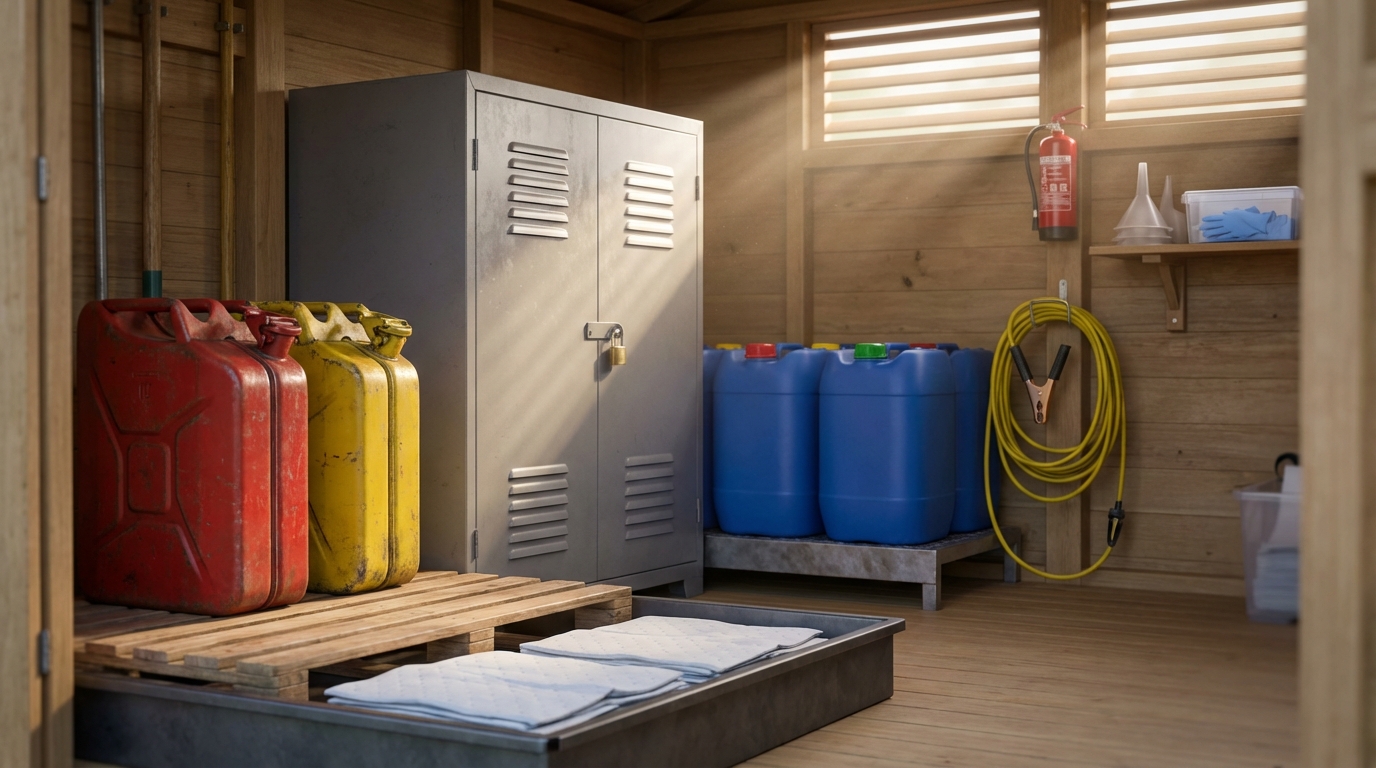
Safe Fuel Storage Tips for Emergency Preparedness
TL;DR: Store only what you can manage safely in approved containers, labeled and dated. Keep fuels cool, dry, ventilated, and away from living spaces and ignition sources. Use stabilizers and rotate liquid fuels regularly. Follow NFPA, DOT, OSHA and local fire codes.
Quick reference
- Gasoline: Volatile liquid for small engines and vehicles. Degrades faster than diesel.
- Diesel: Less volatile, higher flash point. Can develop microbial growth if water is present.
- Propane (LP-Gas): Stored as a pressurized gas in certified cylinders or ASME tanks. It will not oxidize like liquids but can leak if fittings fail.
- Fuel stabilizer: Additive that slows oxidation and vapor loss in gasoline and some diesel products.
- Diesel biocide/antimicrobial: Kills microbes where water and diesel mix.
- Standards: UL for product safety, DOT for transport, ASME for pressure vessels, NFPA for storage and handling codes, OSHA for workplace safety.
Confirm container markings and follow manufacturer instructions and local codes.
Quick checklist: safe fuel storage tips
- Store only what you need and can manage safely.
- Use containers certified for the fuel type (UL, DOT, ASME, UN markings).
- Label containers with fuel type and fill date. Use first-in, first-out rotation.
- Keep storage cool, dry, ventilated, and away from living spaces and ignition sources.
- Use stabilizers and biocides as recommended and inspect fuel regularly.
- Dispose of contaminated fuel through hazardous-waste channels.
Why proper fuel storage matters
Good storage keeps fuel usable and reduces hazards. Poor storage leads to degraded fuel, engine problems, leaks, and flammable vapors. These problems put people and property at risk and undermine emergency readiness.
Choosing the right fuel
Match the fuel to the equipment and the storage conditions.
- Gasoline: Best for portable generators, lawn mowers, and small engines. Volatile. Use stabilizer for storage beyond a few weeks.
- Diesel: Common for standby generators and larger equipment. Longer shelf life than untreated gasoline but watch for water and microbes.
- Propane: Good for cooking, heating, and appliances that accept LP-Gas. Requires certified cylinders, regulators, and fittings.
Check engine compatibility, available storage space, local quantity limits, and how you will transfer the fuel before you buy.
Container considerations
- Use only containers designed and certified for the fuel: safety cans, DOT/UN jerrycans, or certified propane cylinders and ASME tanks.
- Never use food or beverage containers.
- Verify UL, DOT, ASME, or UN approval markings and follow the manufacturer’s instructions.
Practical rules:
- Label each container with fuel type and fill date.
- Keep caps, spouts, and seals intact. Store containers upright.
- Leave headspace for thermal expansion; do not overfill.
- Use pumps or spouts made for fuel to reduce spills and static. Do not siphon by mouth.
- For propane, follow cylinder inspection, valve care, and recertification schedules.
Long-term storage: stabilization, rotation, and inspection
Treat fuel as a managed supply. Do the work and you will avoid surprises.
- Stabilizers and additives: Use products recommended by the engine or fuel manufacturer. Follow dosing instructions on the bottle.
- Rotation (first-in, first-out): Label containers and use the oldest fuel first.
- Gasoline: 3 to 6 months without stabilizer. Longer with a proper stabilizer.
- Diesel: 6 to 12 months typical. Additives and good water control can extend life.
- Propane: Does not chemically degrade in a sealed cylinder, but inspect valves and fittings.
- Storage conditions: Keep fuel cool, shaded, ventilated, and dry. Avoid temperature extremes.
Inspection checklist:
- Look for leaks, bulging, corrosion, or loose caps.
- For diesel, check for water, sediment, or sludge and watch filters for clogging.
- Smell test: sour or unusual hydrocarbon odors can indicate contamination.
- Replace damaged containers and take contaminated fuel to a hazardous-waste facility.
Safety: handling, location, and regulations
- Location: Store fuel outside the main living area when possible, such as in a detached garage, shed, or an approved storage cabinet. Basements and enclosed spaces increase vapor risk and often require engineered controls.
- Ventilation: Provide adequate airflow to prevent vapor buildup.
- Ignition control: No smoking, open flames, or spark-producing tools near stored fuel. Keep a Class B or multi-purpose extinguisher nearby.
- Transfer safety: Move fuel outdoors with approved pumps and spouts. Follow grounding and bonding procedures for large transfers.
- Transport: Follow DOT rules for container type, labeling, and quantities.
- Codes and permits: Consult NFPA 30 and 58, OSHA, DOT, and local fire and building codes for limits and permitting requirements.
Practical starter kit
- One or two UL- or DOT-approved cans, clearly marked.
- One certified propane cylinder if needed.
- Fuel stabilizer for gasoline; diesel biocide if water is a risk.
- Labels, a permanent marker, and a tracking sheet or calendar.
- A Class B fire extinguisher and basic spill cleanup supplies.
- A simple written rotation and inspection schedule.
Start small. Expand only after you have safe, permitted storage space and you understand local rules.
What to avoid
- Do not reuse food or drink containers.
- Do not store large volumes in living areas or unventilated basements without engineered controls and permits.
- Additives extend life, but do not make fuel permanent. Replace and rotate.
- Do not ignore manufacturer instructions, code requirements, or cylinder recertification schedules.
FAQ
Q: Which fuel lasts longest?
A: Propane is easiest to keep long-term. Diesel lasts longer than gasoline but can suffer microbial growth if water is present.
Q: Can I store fuel in my garage?
A: Often yes for small, approved quantities. Limits vary by jurisdiction. Check local fire codes and your insurance policy.
Q: Do I need a stabilizer?
A: Use a stabilizer for gasoline stored more than a month or two. For diesel, use anti-gel and biocide products when water or cold temperatures are a concern.
Q: How do I dispose of old fuel?
A: Take it to a household hazardous-waste facility or follow local disposal instructions. Never pour fuel on the ground or into drains.
Immediate actions
- Identify the fuel types required for your equipment.
- Buy approved containers and label each with fuel type and date.
- Store containers in cool, ventilated, nonliving areas away from ignition sources.
- Add stabilizers or biocides as recommended and set up a rotation schedule.
- Inspect containers regularly and dispose of contaminated fuel properly.
- Verify NFPA, DOT, OSHA, and local fire-code requirements. Contact your fire marshal with questions.
Flagged items to verify locally:
- Residential storage quantity limits vary widely.
- Rotation intervals depend on temperature, container integrity, and product formulas.
- Additive compatibility and effectiveness vary; check manufacturer instructions.
Preparedness is logistics, not panic. A few properly stored, clearly marked containers and a regular rotation and inspection routine keep your emergency fuel supply safe and usable.