Ham Radios for Emergencies: Your Unsung Hero in Preparedness
Summary
- Ham radios for emergencies are two-way transceivers that work without cell towers, the internet, or grid power.
- Starter kit: VHF/UHF handheld (HT), spare batteries, a better antenna, printed repeater list, and (U.S.) Technician license.
- Join a local club, practice on nets, and plan battery, solar, or vehicle power to be effective in a disaster.
Ham radios for emergencies provide reliable voice and data communications when commercial systems fail. With a basic HT, a power plan, a simple antenna, and hands-on practice plus any required license, you can check in on local nets, report conditions, and support emergency response.
Quick definitions
- Ham radio / amateur radio: licensed two-way radio communications on regulated bands for noncommercial use.
- HT (Handheld Transceiver): portable VHF/UHF radio for local emergency communications.
- VHF / UHF: line-of-sight frequencies used for local and repeater-based contacts.
- HF: long-distance bands that reach regional to global destinations when conditions allow.
- Repeater: a receive/transmit station, usually on a hill or tower, that extends range.
- Technician Class license (U.S.): entry-level FCC license that covers most VHF/UHF privileges.
Why ham radios for emergencies matter
Ham radio fills communication gaps after infrastructure fails. Practical advantages:
- Runs without cell towers or internet when powered by batteries, a vehicle, or solar panels.
- Local range with VHF/UHF; long-distance capability with HF when propagation cooperates.
- Organized networks through clubs, ARES, RACES, and scheduled nets.
- Trained operators and practiced procedures make gear useful in real events.
Verify local procedures with FEMA, ARRL, or your emergency management office.
Quick comparison: VHF/UHF vs HF
VHF/UHF
- Range: line-of-sight. Handhelds typically reach a few miles on flat ground; repeaters add tens of miles.
- Best for local, neighborhood, tactical, and vehicle communications.
- Equipment: HTs, mobile radios, and local repeaters.
HF
- Range: regional to global, depending on solar and atmospheric conditions.
- Best for out-of-area liaison and long-distance health-and-welfare messages.
- Equipment: base HF transceivers, larger antennas, and higher power.
Actual range depends on power, antenna height, terrain, and the ionosphere.
Practical starter plan: get useful fast
- Buy a reliable VHF/UHF handheld (HT)
- Look for long battery life, simple programming, and common repeater offsets.
- Build a starter kit
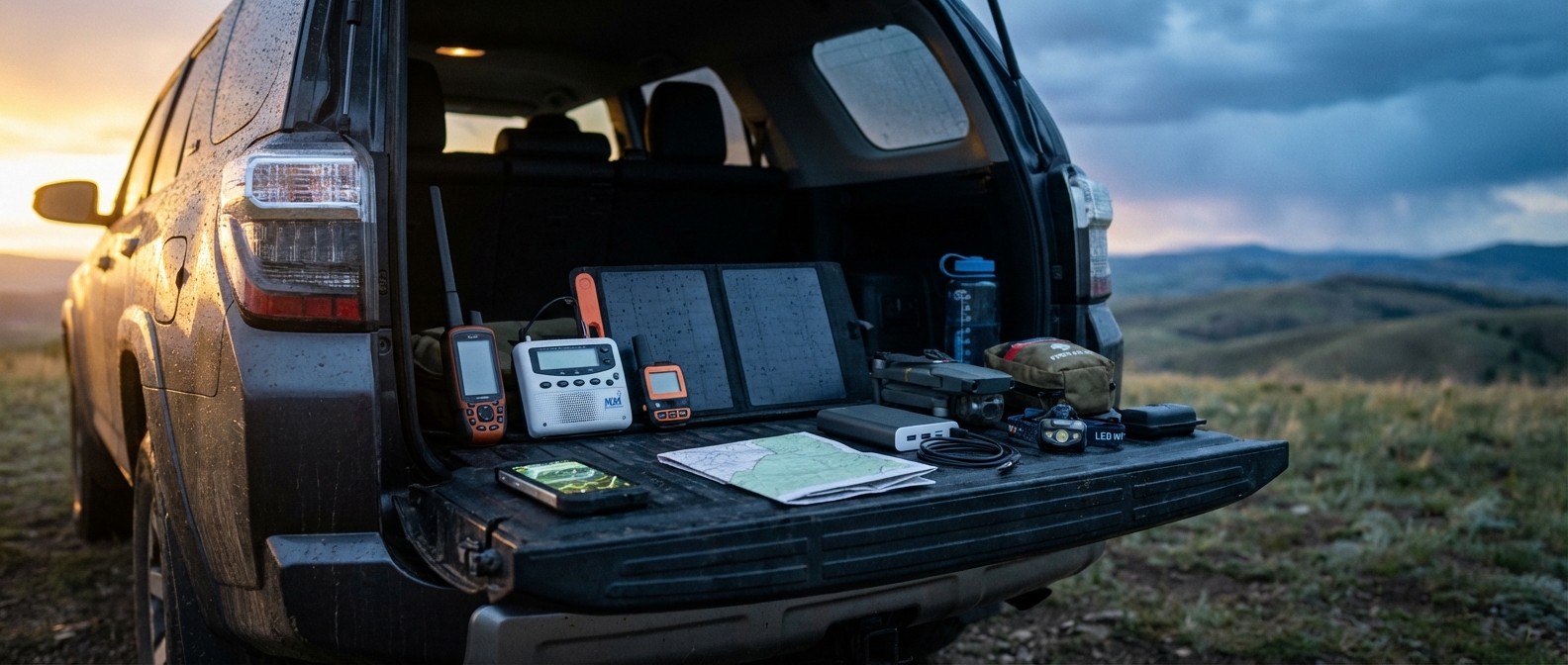
- HT, spare batteries, USB/DC charger, aftermarket antenna, speaker mic, printed repeater list.
- Get licensed (U.S. context)
- Study the Technician question pool, use practice tests, and take a VE exam.
- Join and practice
- Find local repeaters, join weekly nets, and connect with ARES, RACES, or radio clubs.
- Test power plans
- Run the radio on battery, vehicle power, and a small solar setup to measure actual run times.
Quick bug-out bag checklist
- HT with charged battery
- 1 to 2 spare batteries or a DC power bank
- Compact antenna or spare whip
- Printed local repeater frequencies and emergency channels
- Lightweight headset or speaker mic
Legal and safety highlights (U.S.)
- Licensing: transmitting on amateur bands generally requires an FCC license.
- Identification: use your assigned call sign when transmitting.
- Restrictions: operate only within the modes and bands your license permits; encryption and commercial use are restricted.
- Emergency exception: unlicensed emergency transmissions to seek immediate assistance are narrowly permitted; check current FCC guidance.
Regulations vary by country. Confirm rules with your national regulator.
Operational best practices
- Listen before transmitting. Do not interrupt active traffic.
- Use plain language and standard net procedures for emergency messages.
- Keep transmissions short, clear, and relevant.
- Maintain gear: keep batteries charged, connectors clean, and antennas inspected.
- Preplan primary and secondary frequencies and an out-of-area contact.
Real-world roles
Ham operators commonly provide:
- Damage and road-condition reports
- Health-and-welfare checks for displaced people
- Communications for shelters and volunteer logistics
- Redundant communications when phone networks are down or congested
Check ARRL and local emergency-management after-action reports for specific case studies.
FAQ (short answers)
Q: Are ham radios better than consumer walkie-talkies for emergencies?
A: They meet different needs. FRS/GMRS walkies are simple and work for close-range family use. Ham radios require licensing but offer greater range, repeater access, and integration with organized emergency nets.
Q: What is the best ham radio for a beginner prepper?
A: A VHF/UHF handheld with strong battery life, repeater compatibility, and easy programming.
Q: Do I need the internet to use a ham radio?
A: No. Voice and many digital modes work without the internet. Some repeaters or systems link to the internet, but that is optional.
Q: How far can ham radios reach?
A: It varies. Handhelds cover a few miles directly; repeaters extend range to tens of miles; mobile/base and HF setups can reach hundreds to global distances under favorable conditions.
Q: Should I keep a ham radio in my bug-out bag?
A: Yes, if you know how to use it and include a power plan. Familiarity matters more than simply carrying a device.
Actionable next steps (this week)
- Join a local amateur radio club or online group and ask about beginner nets and VE test dates.
- Buy a recommended beginner HT and basic accessories: spare battery and a better antenna.
- Start studying the Technician question pool and take practice exams.
- Create a one-page emergency communications plan with primary and backup frequencies, meeting points, and power options.
Sources and verification tips
- FCC (U.S.) for licensing rules and emergency exceptions
- ARRL for emergency-communications resources and local club directories
- FEMA and local emergency management for integration and local procedures
Consult ARRL and local emergency-management records for detailed historical claims.
Bottom line
Ham radios for emergencies deliver dependable communications with modest gear and simple training. Start with a basic HT, practice on local nets, and build a power plan. That combination gives you a reliable lifeline when conventional systems fail.
[INTERNAL_LINK: Becoming a Prepper: The Beginner’s Guide to Survival Readiness] [INTERNAL_LINK: How to Build a Bug Out Bag: Essentials for a Quick Getaway] [INTERNAL_LINK: From Garden to Table: Starting a Prepper Garden]