Prepper Escape Plan: How to Create an Evacuation Strategy for a Quick, Safe Getaway
A prepper escape plan gives you a clear, practiced path for leaving fast and reaching safety. It tells you when to go, where to go, how to get there, what to carry for 72 hours, and how to stay in contact. Act fast when a trigger is reached.
What a prepper escape plan is
- A short, written evacuation plan you can follow under stress.
- Defines evacuation triggers like official orders, visible wildfire, or rising floodwater.
- Lists three destinations and multiple routes, and names who does what.
- Includes a 72-hour go-bag for each person and backups for communication.
Why this matters
- Clears doubt so your household moves without hesitation.
- Gives pets and vulnerable people a better chance to get out safely.
- Lets you leave before roads, bridges, or services fail.
- Follow local guidance from FEMA or your emergency management office.
Key components of a solid prepper escape plan
-
Risk assessment
- Identify the realistic hazards near you: wildfire, flood, hurricane, earthquake, civil unrest. Check local emergency management and NOAA for seasonal patterns.
-
Safe destinations (pick and confirm three)
- Nearby: a trusted neighbor, friend, or community center. Know exact addresses.
- Regional backup: a hotel or relative in another city or county. Have contact details and arrival instructions.
- Distant fallback: an out-of-area contact or location if the event is widespread.
- Call ahead and confirm arrangements when possible.
-
Routes
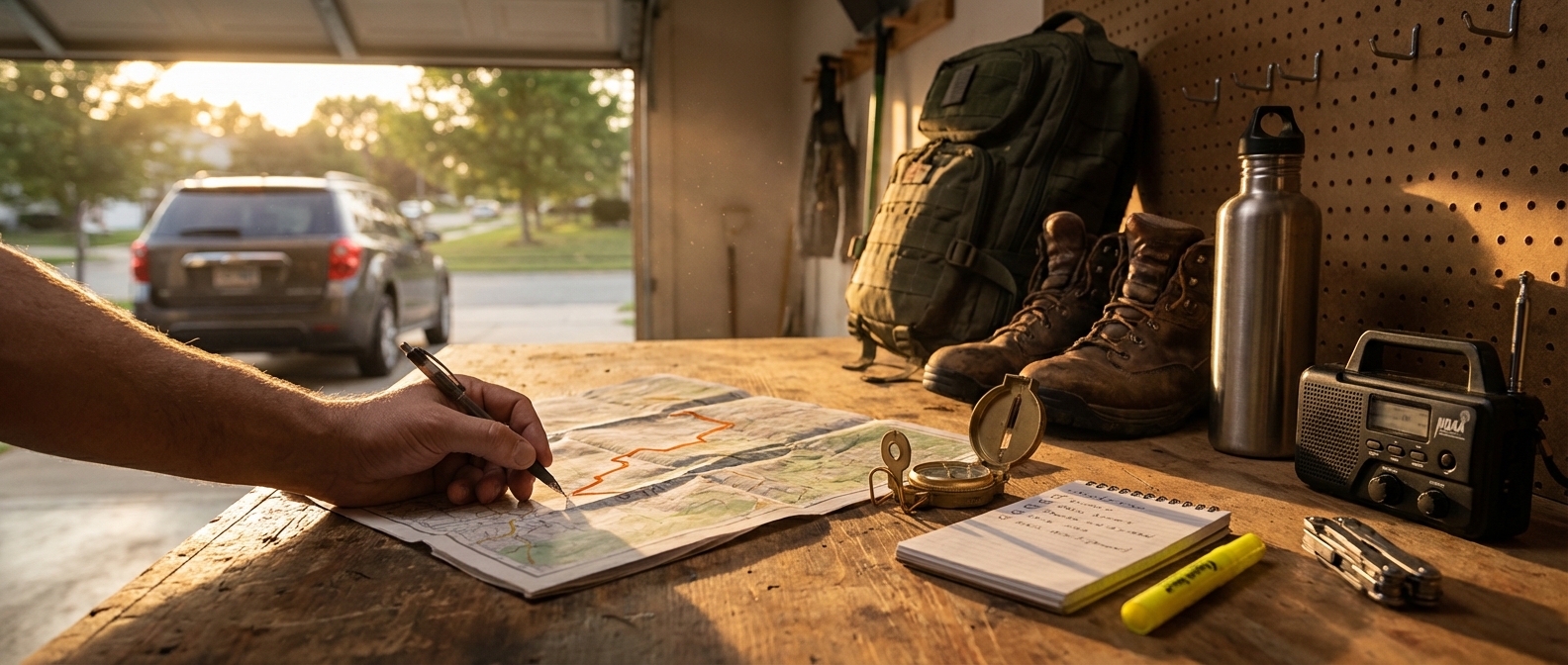
- Map a primary route and at least two alternatives. Add a walking option if roads are closed.
- Note choke points, low bridges, expected traffic bottlenecks, fuel stops, and areas with poor cell coverage.
- Keep digital navigation and printed maps in each vehicle and in your home binder.
-
Communications
- Designate an out-of-area contact and write their number on paper.
- Use a simple check-in format: Name, Location, Destination, OK or Need Help.
- Use phone and text first. Add a battery or hand-crank radio and consider ham, FRS, or GMRS if you know how to use them.
-
Essential supplies for 72 hours
- Water: plan 1 gallon per person per day for three days.
- Food: shelf-stable meals and snacks you can eat without heating.
- Medications: at least a 72-hour supply plus prescriptions copies.
- First aid kit and basic tools.
- Copies of IDs, insurance papers, and important documents on paper and encrypted digital copies.
- Cash in small bills, a flashlight, spare batteries, a power bank and chargers, clothing, and hygiene items.
- Pet supplies, formula for infants, or equipment for life-sustaining devices when needed.
- Put a printed copy of the plan in each go-bag, each vehicle, and a home binder.
-
Vehicle readiness
- Keep fuel, tires, and maintenance current. Know how far you can go on a tank.
- Vehicle kit: jumper cables, basic tools, spare phone charger, water, and a reflective triangle or vest.
- If you store spare fuel, do so safely and legally.
-
Roles and responsibilities
- Assign who gathers documents, loads the go-bags, secures pets, shuts utilities, and does the final sweep.
- If you live alone, use a short grab-and-go checklist taped by the door.
-
Special considerations
- Plan for mobility needs, oxygen or other life-sustaining devices, language needs, infants, and pets.
- These items take extra time and gear; build that into your timeline.
One-page printable prepper escape plan checklist
- Evacuation triggers: _______________________
- Out-of-area contact: Name / Phone / Text: _______________________
- Primary destination and address: _______________________
- Secondary destination and address: _______________________
- Tertiary/distant fallback: _______________________
- Primary route: _______________________
- Secondary route: _______________________
- Tertiary route or walking option: _______________________
- Go-bags located (where): _______________________
- Vehicle fuel target (for example, keep at least 1/2 tank): _______________________
- Assigned roles: _______________________
- Date last drill: _______________________
Print this checklist and place copies where everyone can reach them.
Drills and testing
- Test at least once a year and after any major life change like moving or adding a household member.
- Ten-minute evacuation drill: everyone out the door with essentials in 10 minutes. Time it.
- Route test drives: run the primary and backup routes and note actual travel times.
- Night and bad-weather drills: practice in the conditions you might face.
- No-phone drill: use paper lists and prearranged meeting points.
- After each drill, debrief. What slowed you? What did you forget? Update the plan.
Common pitfalls and how to avoid them
- Only one route: plan at least three options.
- Waiting too long: set clear evacuation triggers and stick to them.
- Overpacking: prioritize mobility and essentials.
- Assuming communications will work: keep paper backups and radio options.
- Forgetting pets or special needs: put them at the center of the plan.
- Never practicing: schedule drills and follow through.
FAQ: prepper escape plan basics
Q: How detailed should the plan be? A: Detailed enough that someone under stress can follow it. Use names, addresses, routes, and a short supplies checklist.
Q: How many escape routes do I need? A: At least three, plus a walking option when possible.
Q: What belongs in an escape bag? A: Water, food, meds, a first-aid kit, documents, light, chargers and a power bank, clothing, hygiene items, cash, and personal items.
Q: How often should I test the plan? A: Once a year and whenever things change.
Start now
- Identify your top local risks using local emergency management and NOAA.
- Choose and confirm three safe destinations.
- Map multiple routes and print paper maps as backups.
- Pack go-bags with 72-hour supplies and place them near exits.
- Assign roles and run a 10-minute drill.
Resources
- FEMA: preparedness and evacuation guidance
- American Red Cross: sheltering and evacuation advice
- NOAA / National Weather Service: official weather alerts
- Local emergency management: community-specific evacuation plans and shelters
Print the checklist above or copy it into a one-page template for each household member.