When It Happened Before
In the spring of 1918, a strain of H1N1 influenza began circulating in military camps across the United States. By the time it burned itself out in 1920, the Spanish Flu had infected an estimated 500 million people — roughly one-third of the world’s population — and killed between 50 and 100 million, including 675,000 Americans. What makes it a critical case study for pandemic preparedness isn’t just the body count; it’s the pattern. The first wave in spring 1918 was relatively mild. People relaxed. Cities lifted restrictions. Then the second wave hit in the fall, and it was catastrophically deadlier, killing healthy adults in their 20s and 30s within hours of showing symptoms. Philadelphia held a massive parade on September 28, 1918, despite warnings. Within 72 hours, every bed in the city’s 31 hospitals was full. Within six weeks, 12,000 Philadelphians were dead. St. Louis, which canceled public gatherings early and enforced strict quarantine measures, saw a death rate less than half of Philadelphia’s. The lesson? Timing isn’t everything — it’s the only thing.
Fast forward a century. When COVID-19 emerged from Wuhan, China in late 2019, most of the world watched the news for weeks before it arrived at their doorstep. We had warning. And yet, by the time the WHO declared a pandemic on March 11, 2020, the virus was already spreading silently in communities across Europe and North America. The official global death toll surpassed 7 million, though excess mortality studies suggest the true number is significantly higher. But COVID didn’t just kill through infection. It exposed the staggering fragility of modern supply chains — remember when you couldn’t buy toilet paper, hand sanitizer, or a simple box of N95 masks? It showed that hospitals could be overwhelmed not by a single catastrophic event but by a slow, relentless wave. It demonstrated that job loss, isolation, deferred medical care, and mental health collapse are as much a part of a pandemic as the virus itself. People died because they were afraid to go to the emergency room for a heart attack. That’s a secondary kill that doesn’t show up in infection statistics.
Between these two bookend events, we’ve had SARS in 2002-2003 (8,098 confirmed cases, 774 deaths, demonstrating how rapidly hospitals can be overwhelmed and how effective aggressive quarantine can be) and the Ebola outbreak of 2014-2016 that killed more than 11,000 people across West Africa and proved the life-or-death importance of contact tracing and proper PPE protocols. Each of these events was a dress rehearsal, and each time, the world largely forgot the lessons within a few years. Pandemic preparedness isn’t about predicting the next virus — it’s about accepting that there will be a next one and refusing to be caught flat-footed again.
How Much Warning You’ll Actually Get
Here’s the honest truth about pandemic warning time: you’ll probably have weeks to months of news coverage about a disease spreading in another country before it shows up locally. That’s the good news, and it’s a luxury that almost no other disaster affords you. An earthquake gives you zero seconds. A tornado gives you minutes. A pandemic gives you a window that most people will waste arguing about whether it’s “really that bad.” The signals are predictable: unusual disease clusters reported by the WHO, travel advisories, country-level lockdowns overseas, and eventually your own government issuing cautious statements that somehow manage to simultaneously downplay and alarm. COVID followed this exact playbook. We watched Wuhan lock down in January 2020. Italy’s hospitals collapsed in early March. Americans had roughly six to eight weeks of visible, escalating warning — and most people used that time to do absolutely nothing.
Once community transmission begins locally, your window shrinks to days, not weeks. Shelves start emptying fast. The items that disappear first aren’t the ones you’d expect from a survival manual — they’re the psychological comfort items (toilet paper, cleaning supplies) followed quickly by the genuinely critical ones (medications, masks, shelf-stable food). Urban residents will feel the squeeze faster because supply chains serve dense populations on a just-in-time basis, meaning stores carry only about three days’ worth of inventory at any given time. Rural residents have slightly more buffer but fewer nearby options when things run out. The key insight for pandemic preparedness is this: the time to prepare is when the news feels distant and theoretical. If you’re buying supplies the same week your governor declares a state of emergency, you’re already competing with millions of people who had the same late realization.
The First 72 Hours
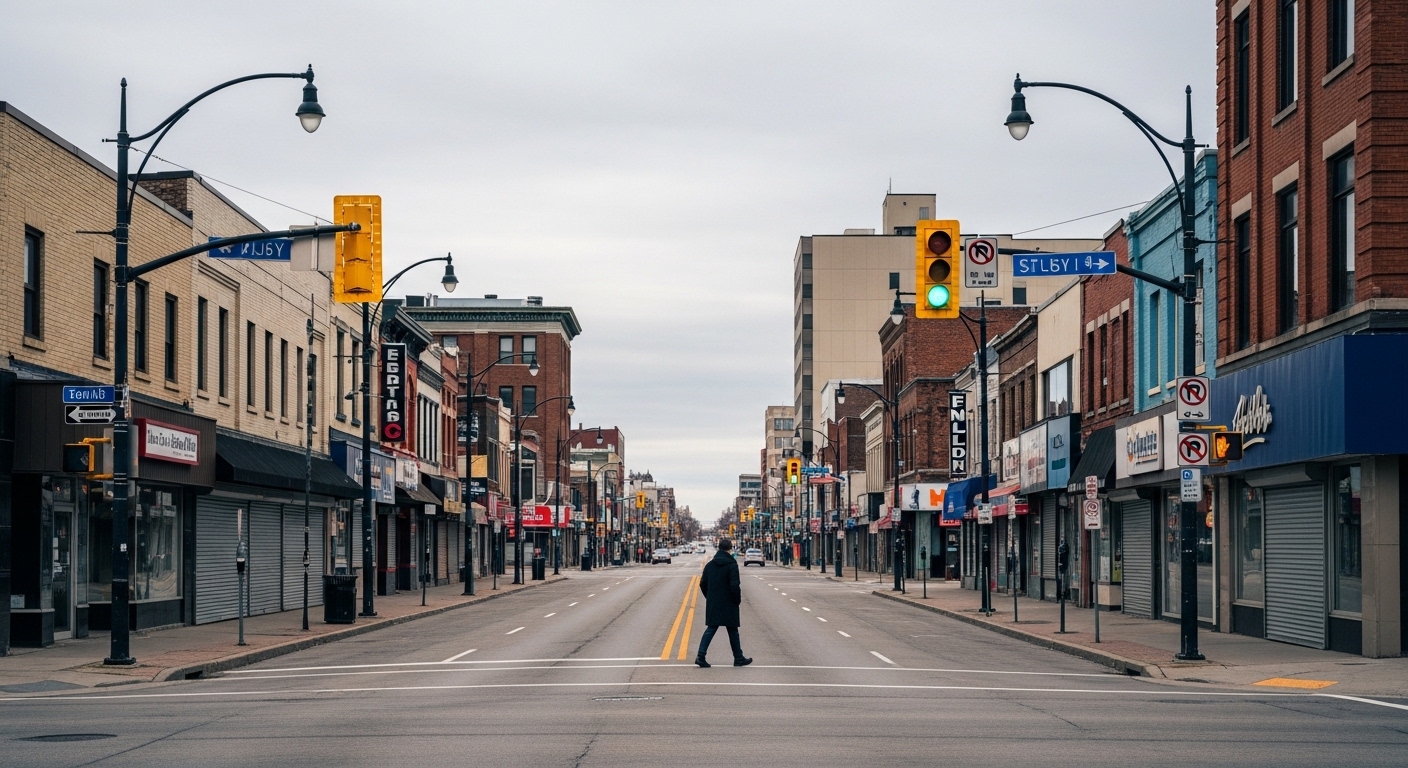
The first 72 hours of a locally declared pandemic emergency feel less like a disaster movie and more like a slow, creeping anxiety attack. There’s no explosion, no sirens. Your phone buzzes with a news alert. Schools announce closures. Your employer sends a vague email about “monitoring the situation.” And then you walk into a grocery store and see the empty shelves, and something in your chest tightens because you realize this is actually happening. In the first hour, your job is simple: do not panic-shop. If you’ve been following a pandemic preparedness plan, you already have what you need at home. If you haven’t, your priority list is ruthlessly short — prescription medications, shelf-stable food, fever reducers, and hygiene supplies. Get them now, get them calmly, and get home.
In the first 24 hours, the immediate threat isn’t the virus — it’s the breakdown of routine. You need to establish your household’s operating protocol. Who’s going out and who’s staying in? What are your hygiene procedures for items entering the house? Do you have a way to monitor symptoms? A digital thermometer and a pulse oximeter (a $25 device that clips to your finger and reads blood oxygen levels) become two of the most important tools in your home. During COVID, pulse oximeters saved lives by helping people identify “silent hypoxia” — dangerously low oxygen levels that occurred without obvious breathing difficulty — early enough to seek treatment before it became critical. Establish a quarantine room in your home in case a household member gets sick. Designate a bathroom for them if possible. Stock it with water, a thermometer, tissues, a trash bag, and OTC medications.
By hour 48 to 72, the reality of isolation starts setting in. If your area is under stay-at-home orders, you’ll notice how quickly boredom, anxiety, and cabin fever emerge — especially in households with children. This is not a trivial concern. During COVID, domestic violence calls surged by 25-33% globally, mental health crises skyrocketed, and substance abuse spiked dramatically. The first 72 hours is when you set the psychological tone for what could be weeks or months of disruption. Establish routines. Assign responsibilities. Limit news consumption to specific check-in times rather than a constant drip of anxiety. If you’ve built your preparedness foundation ahead of time — and if you’re new to this, Becoming a Prepper: The Beginner’s Guide to Survival Readiness is a solid starting point — the first 72 hours should feel manageable, not desperate.
When Days Become Weeks
After the initial shock wears off, a pandemic settles into a grim rhythm. The systems that break down follow a predictable order, and understanding that order is central to real pandemic preparedness. Healthcare goes first. Hospitals fill, then overflow. Elective surgeries get canceled, which sounds minor until you realize that “elective” includes biopsies, joint replacements that allow people to walk, and diagnostic procedures that catch cancer early. During COVID, emergency room wait times in some U.S. cities stretched to 12+ hours, and ambulance response times doubled or tripled. Next comes the supply chain. Not a dramatic collapse, but a death by a thousand cuts — certain medications become scarce, specific food items vanish, shipping times extend from days to weeks. Then comes economic disruption. Businesses that can’t operate remotely start laying off workers. During COVID, the U.S. unemployment rate hit 14.7% in April 2020 — the highest since the Great Depression. If you don’t have an emergency fund, you’re now dealing with a health crisis and a financial crisis simultaneously.
Weeks two through six are where the real grind begins. Your 3-month food supply starts looking less like paranoid overkill and more like basic common sense. If anyone in your household is immunocompromised or elderly, your isolation protocols need to be airtight because the healthcare system they’d normally rely on is now rationing care. This is also when secondary health threats spike — people skip dialysis appointments, delay chemotherapy, or ignore chest pain because they’re afraid of the hospital. During the first year of COVID, excess deaths from heart disease, diabetes, and other chronic conditions increased significantly beyond what the virus itself caused. Your ability to manage routine health at home — monitoring vitals, maintaining medication schedules, treating minor ailments without a doctor visit — becomes a genuine survival skill. The basics you might learn from resources like The Beginner’s Guide to Survivalism: Prepping for Dummies apply here in a very real, very domestic way.
Long-Term: If It Doesn’t Resolve Quickly
The Spanish Flu lasted roughly two years with multiple waves. COVID-19’s acute emergency phase stretched from early 2020 well into 2022 in most countries, with ongoing disruptions beyond that. If a future pandemic doesn’t resolve quickly — and history strongly suggests it won’t — daily life transforms in ways that go far beyond wearing a mask to the grocery store. Remote work, which was a novelty for many in March 2020, becomes the assumed norm. Education shifts online, often poorly. Social isolation becomes chronic, and its effects compound: depression, anxiety, loss of community, radicalization through excessive online engagement. Children who spent formative years in isolation showed measurable learning loss and social development delays that educators are still trying to address years later.
New threats emerge in extended pandemics that aren’t obvious at the outset. Supply chain adaptation means certain goods become permanently more expensive or scarce as manufacturers and logistics companies restructure. Inflation spikes — the post-COVID inflation surge was driven partly by pandemic-era supply disruptions and stimulus spending. Political polarization intensifies as people disagree about restrictions, vaccines, and government authority. Trust in institutions erodes, which makes the next pandemic even harder to manage because public compliance with health measures depends on trust. And perhaps most critically, your financial resilience becomes the single biggest predictor of how well you weather a prolonged pandemic. The virus may not discriminate, but its economic consequences absolutely do. An emergency fund covering 3-6 months of expenses isn’t aspirational advice — it’s the difference between riding out a disruption and losing your home. A solid foundation in overall preparedness, including the kind of practical self-reliance covered in The Benefits of Learning Bushcraft Skills for Preppers, gives you options and confidence when systems you’ve relied on become unreliable.
Your Pandemic Preparedness Checklist
Before: Building Your Foundation (Do This Now)
- 90-day supply of prescription medications. Talk to your doctor today about getting a 90-day supply instead of 30-day refills. Many insurance plans allow this through mail-order pharmacies. If your doctor pushes back, explain that you’re building an emergency reserve. Most will work with you. For controlled substances, this may require more creative timing — start filling prescriptions a few days early each cycle to build a buffer.
- N95 or P100 respirators — not surgical masks, not cloth masks. Buy a box of NIOSH-certified N95s (3M Aura 9205+ are widely available and comfortable) or P100 half-face respirators for high-exposure situations. Learn how to fit-test them at home — a mask that doesn’t seal is just decoration.
- Nitrile gloves in bulk. A box of 100 costs a few dollars when there isn’t a pandemic. During one, they become gold.
- Hand sanitizer (at least 60% alcohol) — multiple bottles staged at entry points in your home and vehicles.
- Pulse oximeter. A reliable fingertip pulse oximeter costs $20-$30. It measures blood oxygen saturation (SpO2). Normal is 95-100%. Below 92% warrants medical attention. Below 90% is an emergency. This simple device can tell you when a “bad cold” is actually a life-threatening respiratory crisis.
- Thermometers — one digital primary and one backup (battery or analog). Batteries die at the worst times.
- OTC medication stockpile: acetaminophen (Tylenol), ibuprofen (Advil), decongestants (pseudoephedrine — behind the pharmacy counter but no prescription needed), cough suppressants, anti-diarrheal medication, electrolyte packets (Pedialyte, Liquid IV, or generic), and antihistamines. If your doctor will prescribe antivirals like oseltamivir (Tamiflu) in advance, ask.
- 3-month food supply requiring no shopping. This doesn’t mean freeze-dried survival meals (though those work). It means rice, beans, canned goods, pasta, peanut butter, oats, cooking oil, salt, honey, powdered milk, canned proteins, and multivitamins. Rotate stock using a first-in, first-out system.
- Emergency fund covering 3-6 months of essential expenses. This is your most important prep. If you’re starting from zero, begin with a target of $1,000, then build from there. Automate transfers. This is non-negotiable.
- Remote work capability. If your job can be done remotely, make sure you have a reliable internet connection, a laptop, and access to any necessary software or VPN. If your job can’t be done remotely, your emergency fund needs to be larger.
- Entertainment and mental health supplies. Books, board games, art supplies, exercise equipment. This sounds trivial until you’re on week six of quarantine and your household is one argument away from a meltdown.
- Copies of critical documents — insurance cards, prescription lists, identification, financial account information — stored physically and in encrypted digital backup.
During: Immediate Response
- Activate your hygiene protocol. Designate a “decontamination” area at your home’s entrance. Remove shoes, sanitize hands, change clothes if you’ve been in a high-exposure environment.
- Establish a household quarantine room in case a member becomes ill. Stock it with water, medications, a thermometer, pulse oximeter, phone charger, tissues, trash bags with ties, and disinfectant.
- Monitor symptoms daily. Temperature checks and pulse oximetry for all household members every morning. Log results. Trends matter more than single readings.
- Limit trips outside to essential needs only. Batch errands. Use delivery services when available but maintain hygiene protocols for received packages during peak transmission periods.
- Communicate with your support network. Check in with elderly relatives, immunocompromised friends, and neighbors who live alone. A phone call costs nothing and can save a life if someone is deteriorating and doesn’t realize it.
- Ration wisely. Calculate your food supply against the number of people and days. Adjust portion sizes if necessary. Eat perishables first, then frozen goods, then shelf-stable supplies.
After: Recovery and Reassessment
- Replenish everything you used. Restock medications, food, PPE, and financial reserves immediately while supplies are available and prices normalize. The next wave — or the next pandemic — won’t wait for you to be ready.
- Document what worked and what didn’t. Write it down. Which supplies did you burn through fastest? What did you wish you had? Where did your plan fail? Adjust accordingly.
- Address deferred medical care. Schedule those appointments you postponed. Get the screenings, dental work, and checkups that fell through the cracks. Secondary health impacts from delayed care are a leading cause of post-pandemic excess mortality.
- Rebuild your emergency fund if you drew it down. This is priority one before any discretionary spending.
- Invest in skills that increase your self-reliance — first aid certification, food preservation, basic home medical care. The next disruption may not be identical, but the skills transfer.
What Most People Get Wrong
The single biggest mistake in pandemic preparedness is confusing information with action. During COVID, millions of people obsessively refreshed case count dashboards, argued about mask efficacy on social media, and watched hours of news coverage — while their pantries held three days of food and their medicine cabinets held a half-empty bottle of expired Tylenol. Knowing the R-naught of a virus doesn’t help you if you can’t feed your family for a month without going to a store. The second biggest mistake is preparing for the wrong pandemic. People imagine a Hollywood-style plague — bodies in the streets, total civilizational collapse — and either over-prepare for an apocalypse that doesn’t come or