Natural Disaster Preparedness Checklist: A Beginner’s Guide
Quick start
Focus on five high-impact actions to get started quickly:
- Know your local risks: flood, earthquake, wildfire, hurricane, winter storm, extreme heat.
- Build a basic emergency kit: three days of water and food, prescriptions, a first aid kit.
- Create and practice a simple family emergency plan.
- Reduce home hazards and learn how to shut off utilities.
- Sign up for trusted alerts: Wireless Emergency Alerts, NOAA, and local notifications.
Start this week. Identify your top local threats and pack a go-bag.
Short checklist
Do these first if you want the condensed version:
- Know local risks.
- Build a three-day emergency kit.
- Create and rehearse a family emergency plan.
- Reduce home hazards and learn utility shutoffs.
- Sign up for trusted alerts.
Definitions
- Emergency kit: supplies to keep people healthy and informed for about three days.
- Go-bag: a portable grab-and-go kit with essentials for one person.
- Shelter-in-place: stay indoors and seal a room during certain hazards.
- Wireless Emergency Alerts (WEA): government emergency messages sent to phones.
Why prepare?
Preparing keeps people safer and speeds recovery. For example:
- You avoid last-minute trips for water and batteries. Short trips can be dangerous during a storm.
- Pets stay with you when their supplies are ready.
- You return to work and normal routines sooner because damage and paperwork are smaller.
Trust these sources for guidance: FEMA (Ready.gov), NWS/NOAA, American Red Cross, USGS, and your county or state emergency management office.
Step 1: Understand your local risks
Match readiness to the hazards you face.
Actionable items:
- Check FEMA flood maps and local wildfire maps.
- Review USGS earthquake hazard maps and local seismic history.
- Track historical severe weather and NWS/NOAA advisories.
- Ask local emergency management about evacuation routes and regional hazards.
Match your kit, plan, and home fixes to the risks you identify.
Step 2: Assemble your emergency kit
Support household members for at least three days.
Core items:
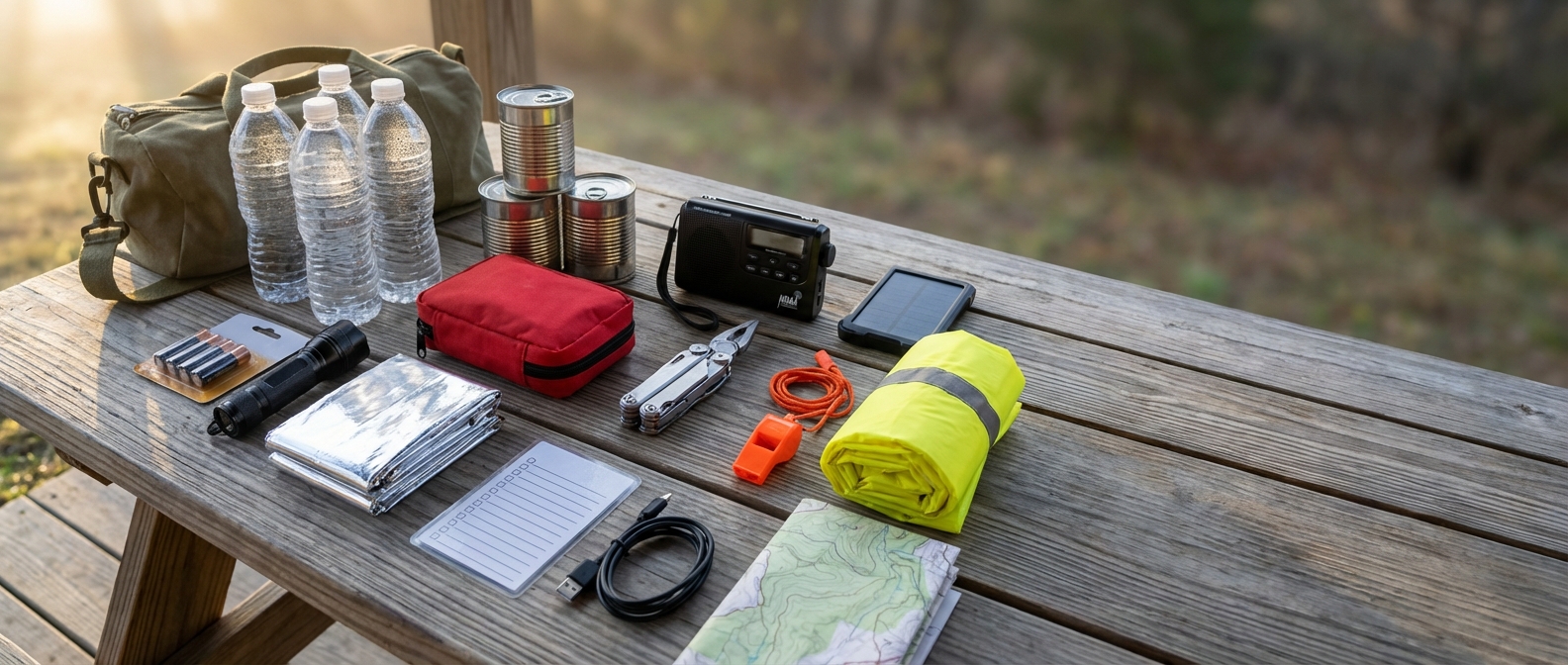
- Water: 1 gallon per person per day for three days. Add extra for pets. Include a purification method such as tablets or a filter.
- Food: three days of nonperishable, easy-to-prepare items and a manual can opener.
- First aid and medications: a basic kit, prescriptions (try to keep a 30-day supply), and spare glasses.
- Light and power: flashlights, spare batteries, a battery or hand-crank radio, and power banks.
- Hygiene: wet wipes, hand sanitizer, toilet paper, feminine products, and trash bags.
- Clothing and bedding: weather-appropriate layers, sturdy shoes, and a blanket.
- Documents and cash: copies of IDs, insurance papers, medical records in a waterproof sleeve; keep small bills.
- Specialty items: baby formula, pet supplies, mobility aids, and hearing-aid batteries.
Where to store kits:
- Home kit: larger, stored in an accessible place.
- Car kit: compact, kept in the trunk or cargo area.
- Go-bag: one per person, kept near an exit or with each person.
Tip: keep physical copies of critical documents in a waterproof sleeve and encrypted digital copies stored offline.
Step 3: Create a family emergency plan
A kit helps. A plan makes it work.
Plan checklist:
- Emergency contacts, including an out-of-town contact.
- Two meeting places: one near home and one outside the neighborhood.
- Evacuation routes and shelter locations.
- Shelter-in-place instructions and the safest rooms for each threat.
- Household roles: who grabs go-bags, pets, children, and seniors.
- Communication alternatives if cell service is down, such as text check-ins or amateur radio.
Practice drills with everyone in the household. Update the plan every six months or when circumstances change.
Step 4: Home safety and mitigation
Simple fixes reduce damage and repair costs.
Practical actions:
- Secure heavy furniture, TVs, and water heaters. Bolt or strap them to studs when possible.
- Label and learn how to shut off water, gas, and electricity, following local utility rules.
- Trim hazardous branches, clean gutters, and store flammable materials away from the house.
- Use storm shutters or plywood for windows, reinforce garage doors, and have sandbags on hand for flood-prone entries.
- Prepare for outages: keep power banks charged and have a plan for refrigerated medications.
- Install and test smoke and carbon monoxide detectors regularly.
Step 5: Stay informed
Timely information saves lives.
Ways to stay updated:
- Enable Wireless Emergency Alerts on phones and sign up for local text and email alerts.
- Monitor NOAA Weather Radio and NWS advisories.
- Follow FEMA and the Red Cross for preparedness guidance. Follow local news for on-the-ground updates.
- Keep a battery-powered or hand-crank radio and a printed list of emergency contacts.
- Consider solar chargers and offline map apps to navigate if lines are down.
Compact, copyable checklist
- Know local risks
- Sign up for alerts (WEA and local text/email)
- Build a home emergency kit (water, food, meds, first aid, light)
- Prepare a go-bag for each person
- Create and practice a family emergency plan
- Secure heavy items and know utility shutoffs
- Install and test smoke and carbon monoxide detectors
- Keep backup power such as power banks or a small solar charger
- Store copies of key documents and keep some cash
- Review kit and plan every six months
5-week starter plan
Break preparedness into manageable weekly tasks:
- Week 1: Identify the top two or three hazards where you live and sign up for alerts.
- Week 2: Buy a three-day water supply and shelf-stable meals.
- Week 3: Assemble a basic emergency kit with first aid, light, hygiene items, and copies of documents.
- Week 4: Create and practice a family emergency plan and pick meeting points.
- Week 5: Secure heavy items in your home, test detectors, and learn how to shut off utilities.
Consistency matters. Refresh supplies and drills every six months.
FAQ
Q: What should a basic checklist include? A: Know risks, build an emergency kit, make a family plan, reduce home hazards, and use multiple alert channels.
Q: How much water and food? A: Baseline is at least three days. FEMA recommends 1 gallon per person per day.
Q: What is the first step? A: Identify the disasters most likely in your area.
Q: Are prebuilt kits useful? A: Yes. They help you get started. Customize them with medications, documents, and pet supplies.
Q: How often should I update my kit and plan? A: At least every six months or when your circumstances change.
Notes and citations
- Confirm current water guidance at Ready.gov (FEMA).
- Any national disaster statistics should cite NOAA NCEI, FEMA, or similar agencies before publishing.
- Local rules for shutting off gas and electric vary. Check utility guidance before acting.
Final steps
Focus on five clear actions: assess risk, pack a basic kit, make and practice a family plan, reduce home hazards, and stay informed. Small, repeated steps create real preparedness.
Further reading
- [Becoming a Prepper: The Beginner’s Guide to Survival Readiness]
- [Water, Water Everywhere: How to Store H2O Without Losing Your Sanity]
- [Canned Goods and Other Edibles: Your First Steps to Stockpiling Food]
- [How to Build a Bug Out Bag: Essentials for a Quick Getaway]
- [Batten Down the Hatches: Home Fortification Tips for Beginners]
- [Gadgets and Gizmos Aplenty: Tech Tools for the Modern Prepper]