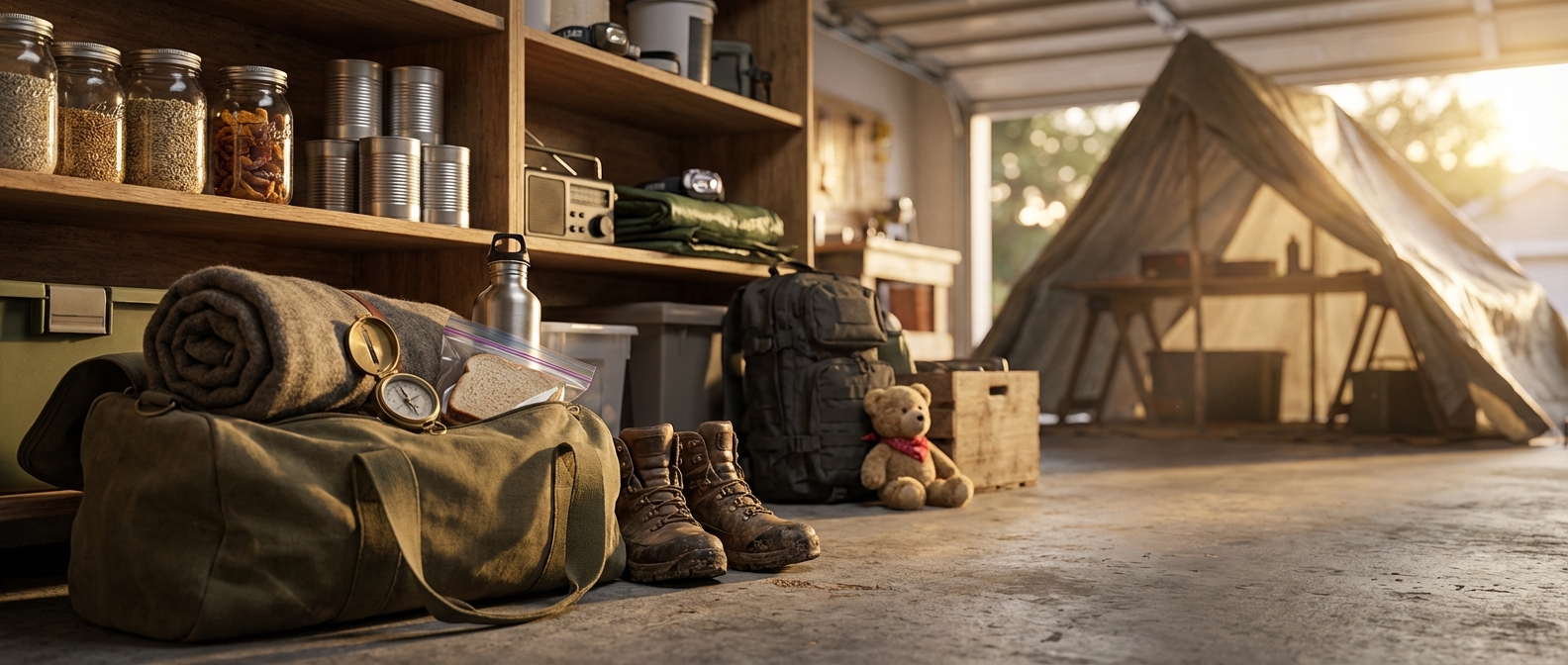
Prepper Mindset: Practical Psychology of Preparedness and Self-Reliance
TL;DR: The prepper mindset treats uncertainty as a problem to solve. Combine risk awareness, targeted supplies, core skills, and clear plans. Focus on likely local threats such as power outages, storms, or job loss.
Habitually ask “What if this goes wrong?” Then take specific steps: build a 72-hour kit, learn core skills, and make simple contingency plans. The aim is to rely less on fragile systems and to handle short-term disruptions without assuming societal collapse.
[INTERNAL_LINK: Becoming a Prepper: The Beginner’s Guide to Survival Readiness]
Definition: What the prepper mindset looks like in practice
Actively look for likely local disruptions. Stock targeted supplies. Learn practical skills. Make plans everyone in your household can follow. Examples:
- Scout common local problems like seasonal flooding, winter storms, or power outages.
- Keep a 72-hour kit with water, food, a light source, and basic medical supplies.
- Train one useful skill such as first aid, water treatment, or basic repairs.
This approach favors action and preparation over worry.
Why people adopt the prepper mindset
People prepare for concrete reasons:
- Control. Having a plan and supplies restores a sense of agency.
- Security. A few resources and rehearsed steps lower anxiety during an emergency.
- Competence. Skills such as CPR, basic plumbing fixes, or preserving food create lasting confidence.
- Community. Neighbors who share plans and resources reduce risk for everyone.
- Responsibility. Many people prepare to protect family or dependents.
Surveys from FEMA and Pew Research show that natural disasters and infrastructure failures commonly motivate preparedness.
The psychology behind prepping
Prepping converts worry into useful action. Concrete tasks reduce helplessness. You cannot stop hazards, but you can control your readiness. Skills extend resilience beyond any single piece of gear. Direct experience with blackouts, evacuations, or supply interruptions typically increases future preparedness. News and local events prompt planning, too.
Many people enjoy the problem-solving element. That makes preparedness stick.
Practical priorities and common items
Emergency kits
- A 72-hour kit for each household member. Include water, food, shelter, and basic meds.
Water
- Store at least one gallon per person per day for drinking and cooking. Add a portable filter or purification tablets for extended outages.
Food
- Keep several days of shelf-stable staples. Rotate stock to avoid waste. Include nutrient-dense options and a manual can opener.
First aid and training
- A basic first-aid kit plus hands-on training from local Red Cross or community classes.
Communications
- A battery-powered or hand-crank NOAA radio and a written contact list. Keep phone chargers and power banks available.
Power and light
- Flashlights, headlamps, spare batteries, and safe charging practices for portable power banks.
Skills
- Prioritize at least one practical skill: CPR/first aid, water purification, basic tool use, gardening, or food preservation.
Community planning
- Exchange contact info with neighbors, identify shared resources, and pick meeting points.
Prioritize items based on local risks such as coastal flooding, wildfires, or extended winter storms.
When prepping becomes part of daily life
You start noticing changes:
- You pay more attention to alerts, weather, and local conditions.
- You buy intentionally and rotate supplies to prevent waste.
- You focus on skill development as much as gear.
- You create routine contingency plans for family and household.
Sensible preparedness becomes everyday resilience, not an extreme identity.
Humor, creativity, and community
A lighter approach lowers anxiety and makes learning easier. Shared jokes and practical challenges build community. Creative, low-cost solutions often work best: multi-use gear, DIY storage, and simple improvisation beat single expensive products.
How to start: a beginner’s checklist
- Identify top local risks such as flood, wildfire, winter storm, or power outage.
- Build a basic 72-hour kit for each household member:
- Water: 1 gallon per person per day for drinking and cooking
- Nonperishable food
- Flashlight and extra batteries
- Basic first-aid kit
- Copies of important documents and a contact list
- Learn one key skill: basic first aid, water purification, or safe outdoor cooking.
- Rotate and audit supplies every 6 to 12 months.
- Connect locally: take CERT or Red Cross training, join neighborhood groups, and share plans with family.
Useful resources: FEMA guides, American Red Cross training, NOAA alerts, and local emergency management offices.
[INTERNAL_LINK: Water, Water Everywhere: How to Store H2O Without Losing Your Sanity]
[INTERNAL_LINK: Canned Goods and Other Edibles: Your First Steps to Stockpiling Food]
[AFFILIATE_OPPORTUNITY: beginner prepper kits]
Practical starter packing (one page)
- Water: 3 days per person minimum, plus a filter or purification method
- Food: 3 days of nonperishables per person and a manual can opener
- Light and power: flashlight, headlamp, spare batteries, small power bank
- Medical: basic first-aid kit and prescription meds for 7 to 30 days if possible
- Tools and communications: multi-tool, battery-powered radio, phone chargers
- Documents: copies of IDs, insurance, and emergency contacts
Live with intention, not fear
Start small. One kit. One skill. One plan. Small, steady steps reduce vulnerability and make emergencies manageable.
Helpful links:
- [INTERNAL_LINK: Becoming a Prepper: The Beginner’s Guide to Survival Readiness]
- [INTERNAL_LINK: How to Build a Bug Out Bag: Essentials for a Quick Getaway]
- [INTERNAL_LINK: From Garden to Table: Starting a Prepper Garden]
Preparedness means small, steady steps toward less vulnerability.
FAQ
Q: What is the prepper mindset? A: A proactive approach to likely emergencies that emphasizes self-reliance, planning, and practical readiness.
Q: Why do people become preppers? A: Common reasons include natural disasters, economic instability, family safety, and the peace of mind that comes from readiness.
Q: How does prepping change behavior? A: It encourages planning, skill-building, intentional purchasing, and routines that reduce day-to-day risk.
Q: Is prepping a hobby or a lifestyle? A: It can be either. Some treat it as a practical project. Others make preparedness part of daily life.
Q: Do you have to expect societal collapse to be a prepper? A: No. Most practical preparation focuses on short-term emergencies like storms, blackouts, or temporary supply disruptions.