Water Storage for Beginners: A Practical Guide to Emergency Drinking Water
TL;DR
- Store at least 1 gallon of water per person per day for drinking and basic sanitation.
- Start with a 3-day kit. A 14-day reserve gives much more breathing room.
- Use food-grade containers (HDPE), keep them cool and dark, label them with fill dates, rotate every 6 to 12 months, and keep a backup purification method: boil, filter, or chemicals.
Quick definitions
- Food-grade: Materials safe for food or drinkable water, usually HDPE plastic.
- Potable water: Safe to drink.
- Rotation: Replacing stored water on a schedule to keep it fresh.
- Boil-water advisory: A public-health notice that requires tap water to be boiled before drinking.
Why store water
Emergencies such as hurricanes, floods, winter storms, and boil-water advisories can interrupt or contaminate water service. Stored water gives you immediate access to drinking water and reduces pressure on stores during a crisis. Check guidance from FEMA, the CDC, and your local public-health department for official notices.
How much to store
Rule of thumb: 1 gallon per person per day for drinking and basic sanitation.
Planning targets:
- Minimum: 3 days per person. This fits a small grab-and-go kit.
- Beginner goal: 14 days per person. Much better for household resilience.
Examples:
- One person for 14 days = 14 gallons.
- Two people for 14 days = 28 gallons.
- Four people for 14 days = 56 gallons.
Increase amounts for hot climates, heavy physical work, infants who need formula, pregnant or nursing people, older adults, medical needs, cooking rehydrated foods, and pets. Plan roughly 0.5 to 1 gallon per pet per day.
If space or budget is limited, start small. A 3-day supply is useful. Add more over time.
Choosing safe containers
Before you buy, confirm these items:
- Food-grade material. HDPE is a common, affordable choice.
- Labels that say “food-grade” or “potable water.” BPA-free is preferred.
- Tight-fitting lids or spigots to reduce contamination.
- Opaque or dark containers to limit light exposure and reduce algae growth.
Common container types and what to expect:
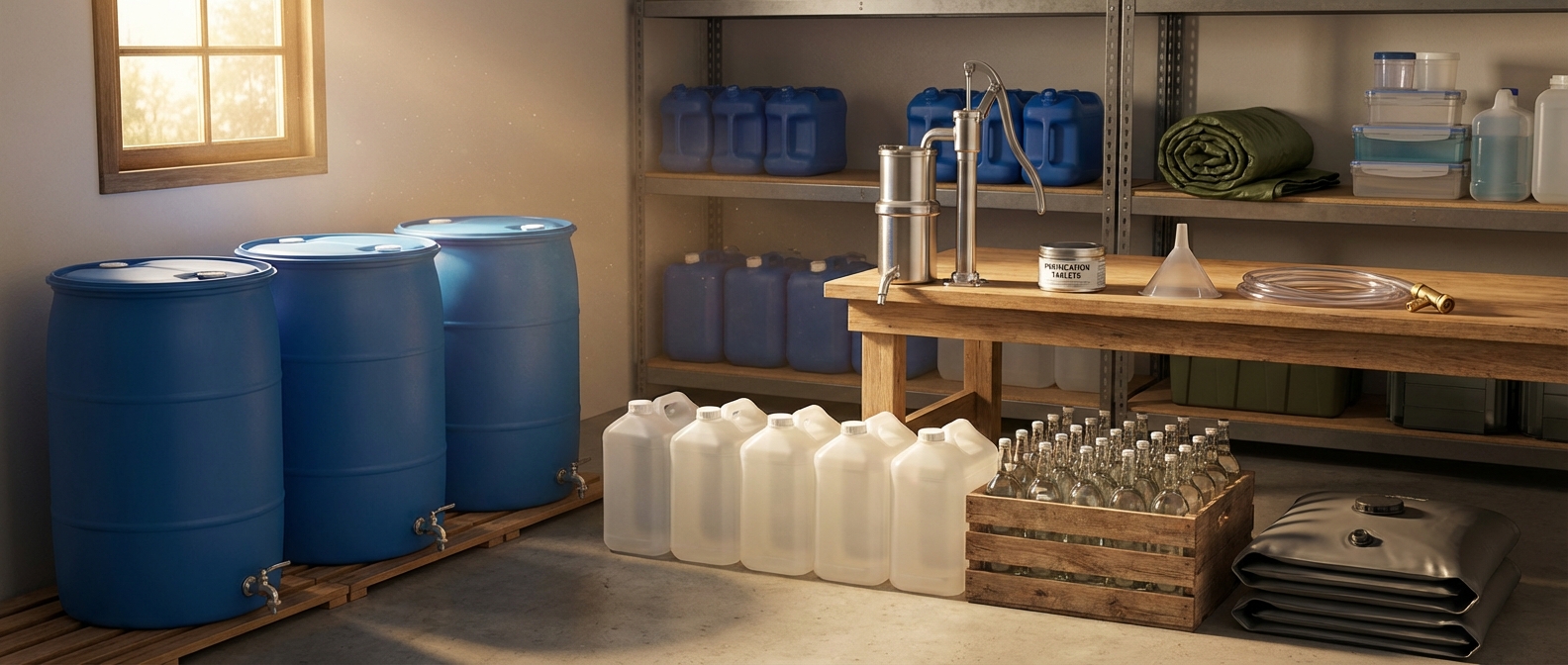
- Factory-sealed bottled water (16 oz to 1 gal): Ready to use and portable. Takes a lot of space for larger reserves.
- Reusable food-grade jugs (1 to 7 gallons): Easy to refill and store. Sanitize and rotate regularly.
- Water bricks / modular containers (about 3.5 to 5.5 gallons): Stackable and easy to move, but cost per gallon is higher.
- 55-gallon food-grade barrels: Low cost per gallon, but heavy. Use pumps or spigots to dispense.
- Stainless steel or glass: Durable options. Glass is heavy and breakable. Stainless steel can be costly.
Avoid containers that previously held milk, juice, chemicals, fuel, or other non-food products.
Container safety checklist before filling:
- Confirm food-grade material.
- Clean and sanitize according to the manufacturer s instructions.
- Install a secure lid or spigot.
- Label with the fill date and intended use (“drinking” or “utility”).
Proper storage and rotation
- Clean and sanitize containers before use.
- Fill from a treated municipal source or other verified safe water.
- Seal tightly and label with the fill date.
- Store in a cool, dark, dry place away from sunlight, heat, gasoline, pesticides, and other chemicals.
- Rotate home-filled containers every 6 to 12 months. Unopened commercial bottled water often keeps quality longer.
- Inspect containers periodically. If you see leaks, bulging, cloudiness, or smell odd odors, replace or treat the water.
Put rotation reminders on your calendar. Tie them to a regular event, like a birthday or daylight saving time.
Backup purification options
Stored water can extend supply, but also keep ways to treat additional or uncertain sources.
- Boiling: Bring water to a rolling boil for 1 minute. At elevations above about 2,000 meters, boil for 3 minutes.
- Filtration: Use mechanical filters rated for bacteria and protozoa. Add a disinfection step if viruses are a concern.
- Chemical disinfection: Chlorine dioxide tablets, iodine products, or unscented household bleach used exactly per instructions.
- UV devices: Portable UV purifiers work well on clear water and need a power source or batteries.
Filter or let particulate settle first, then disinfect by boiling, chemicals, or UV.
Dispensing from large reserves
- Fit food-grade spigots for hands-free dispensing.
- Use a siphon or hand pump to remove water from drums without tipping them.
- Keep a clean funnel and spare food-grade bottles handy for transfers.
- Place barrels on a stable, elevated base to create gravity flow.
Short and practical. That makes daily use easier.
Common beginner mistakes and fixes
- Storing too little water. Fix: calculate needs and start with drinking water, then add more for cooking and cleaning.
- Using unsafe containers. Fix: use only food-grade containers.
- Forgetting to rotate. Fix: label and set calendar reminders every 6 to 12 months.
- Storing in hot or sunny areas. Fix: move containers to a cool, dark place to protect plastic and prevent algae.
- Relying only on bottled water. Fix: add reusable containers and a treatment plan.
- Skipping backup purification. Fix: keep tablets, a filter, or a plan to boil water.
Quick checklist for water storage beginners
- Calculate household needs using 1 gallon per person per day as a baseline.
- Start with a 3-day supply; expand toward 14 days if possible.
- Choose food-grade containers that fit your space.
- Fill, seal, and label containers with fill dates and use type.
- Store in a cool, dark, chemical-free area.
- Set rotation reminders for every 6 to 12 months.
- Keep purification options: boiling, a filter, or tablets.
- Include water for pets and any special medical needs.
Frequently asked questions
Q: How long does stored water last? A: Unopened commercial bottled water stays drinkable for an extended period; manufacturers may recommend 1 to 2 years for quality. Home-filled containers are commonly rotated every 6 to 12 months because factors like container type, storage conditions, and seal quality affect shelf life.
Q: Can I disinfect water with household bleach? A: Yes. Use unscented household bleach exactly as directed by the CDC or product instructions. Dosages vary by concentration and water volume.
Q: Is bottled water enough for preparedness? A: Bottled water is a good start for quick evacuation and short outages. For longer-term preparedness, add reusable containers and a backup purification method.
Q: What if my water is cloudy? A: Remove particles first by letting solids settle, decanting, or pre-filtering. Then disinfect by boiling, chemicals, or UV according to official guidance.
Next steps
Make a simple plan and act. Fill a few jugs, label them, set a rotation reminder, and buy one reliable filter or a pack of treatment tablets. Pair your water plan with food reserves and a grab-and-go bag.
Resources
- FEMA: household emergency supplies and water recommendations
- CDC: emergency water storage and boil-water advisories
- Your local public-health department and water utility for area-specific notices
Follow current official guidance from these agencies for the latest recommendations.