Emergency Prep for Apartment Dwellers: A Small-Space Survival Guide
At a glance
- For emergency prep for apartment dwellers, prioritize water (1 gallon per person per day), a 72-hour go-bag, reliable lighting, a basic first-aid kit, and renter-friendly security.
- Start small: dedicate one shelf, one under-bed bin, and one packed go-bag. Rotate supplies every 3 to 6 months.
What makes apartment prep different
Apartment living limits private storage and imposes building rules. You may not be able to install permanent locks or run a generator. Utilities can be shared and restored by management. Close neighbors and shared exits change evacuation choices.
Plan for power outages, short-term water loss, severe weather, fires, shelter-in-place events, and rapid evacuations. Match your supplies and routines to the hazards in your city and building.
Trusted sources
Consult FEMA, the American Red Cross, the CDC for water and sanitation guidance, and NOAA for weather alerts. Local emergency management offices and your utility providers offer area-specific procedures and shelter locations.
Key terms
- 72-hour kit: supplies to sustain one person for the first 72 hours after an emergency.
- Go-bag: a packed evacuation bag with critical items from your 72-hour kit.
- Shelter-in-place: staying inside because it is safer than leaving.
- Multi-use gear: items that perform more than one function to save space.
Quick-start one-week checklist
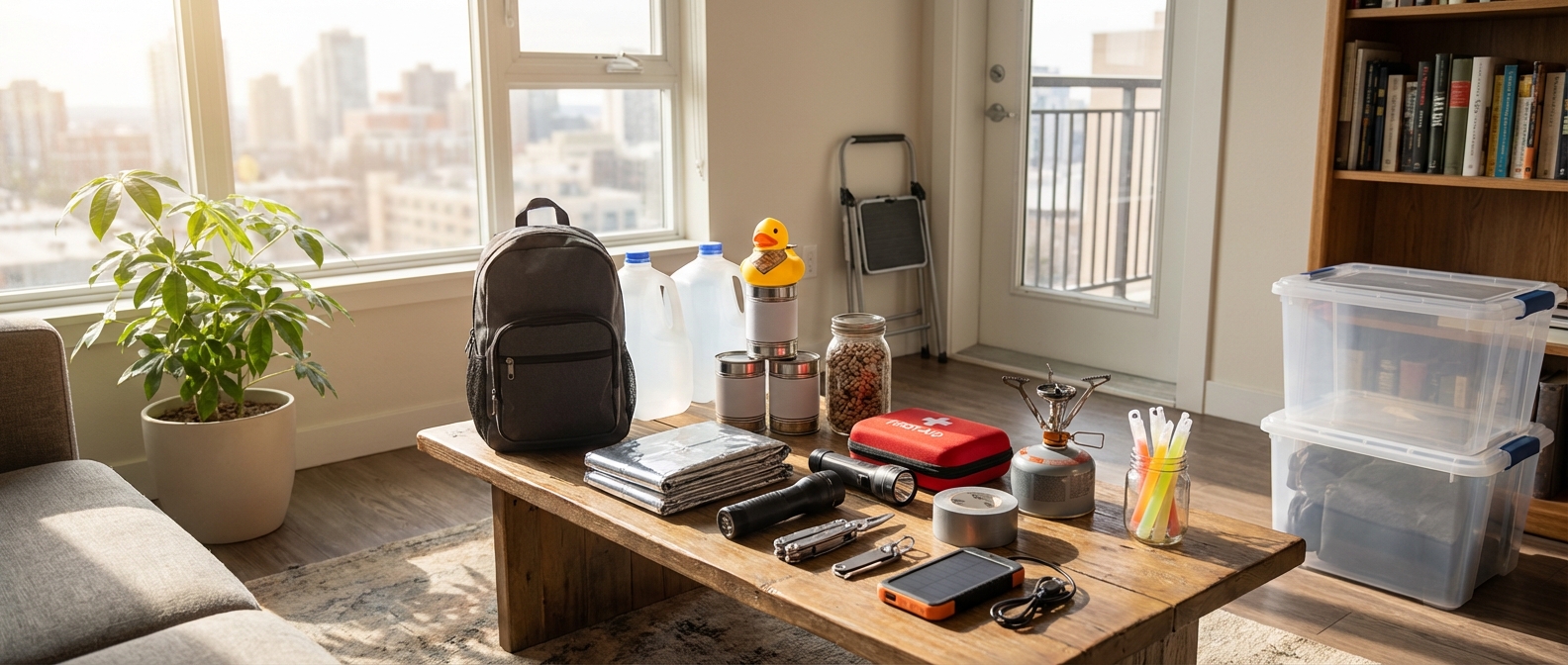
- Pack a 72-hour kit: 1 gallon of water per person per day, three days of shelf-stable food, a flashlight, a basic first-aid kit, a phone charger, and some cash.
- Assemble a go-bag and store shoes and a flashlight near the door.
- Choose one shelf or one under-bed bin for overflow supplies.
- Test and replace smoke alarm batteries.
- Scan IDs and important documents and back them up securely.
Space-saving storage strategies
-
Under-bed and furniture storage
- Use flat bins for food, blankets, and first-aid supplies.
- Vacuum-compress bedding and seasonal clothing.
- Label containers for quick grab-and-go access.
-
Vertical and multi-purpose furniture
- Install tall shelving, use over-the-door organizers, and choose storage ottomans.
-
Break supplies into zones so one accident does not ruin everything
- Kitchen: food, manual can opener, water treatment options.
- Bathroom: hygiene supplies and medications.
- Bedroom: go-bag, flashlight, important documents.
- Entryway: evacuation kit, shoes, spare keys.
-
Use collapsible gear
- Collapsible water containers, nesting cookware, and compressible sleeping bags save floor space.
Essential supplies (compact choices)
- Water and storage
- Store at least 1 gallon per person per day. Start with a 72-hour supply and expand if space allows.
- Small-space options: multiple small sealed bottles, collapsible containers, and compact filters or purification tablets.
- Spread water across locations so one leak does not wipe out your entire stash.
- Non-perishable food
- Pick calorie-dense, familiar items that rotate easily: canned proteins, dried beans, rice, oats, pasta, nut butter, and protein bars.
- Keep a manual can opener. Check building rules before using any fuel-burning heaters indoors.
- First aid and medications
- Compact kit essentials: adhesive bandages, sterile gauze, medical tape, antiseptic wipes, pain relievers, tweezers, gloves, and a thermometer.
- Store current prescriptions and keep photocopies or encrypted digital copies.
- Keep a small first-aid pouch in your go-bag.
- Light, communication, and power
- LED flashlights and headlamps with spare batteries.
- Portable battery banks and charging cables.
- NOAA weather radio or a solar/hand-crank radio.
- Small portable power stations only if your lease allows them; otherwise use multiple power banks.
- Compact go-bag essentials
- Water and compact snacks, a reliable flashlight, first-aid items, and current medications.
- IDs and essential documents (physical and encrypted digital copies), phone charger, and cash.
- Spare clothes, basic hygiene items, and comfortable shoes near the door.
- Multi-use tools and safety items
- A multi-tool, duct tape, work gloves, paracord, and an emergency whistle.
- A small kitchen fire extinguisher and regularly tested smoke detectors.
- Sanitation and hygiene
- Toilet paper, wet wipes, trash bags, hand sanitizer, feminine hygiene items, and pet waste supplies.
Renter-friendly security and safety
Read your lease and speak with building management before installing hardware. Use non-permanent options:
- Door jammers, portable security bars, and door sensors.
- Sliding-door rods or dowels and removable window locks.
- Portable alarms, removable indoor cameras where allowed, and approved video doorbells.
Fire and evacuation practices
Know two exits. Keep shoes and a flashlight by the bed. Never use elevators during a fire.
Practical routines to keep supplies usable
- Focus first on likely risks: outages, water interruptions, fire, and evacuation.
- Limit your footprint: one shelf, two under-bed bins, one closet section, and one go-bag.
- Rotate supplies every 3 to 6 months and label purchase dates so you use older items first.
- Choose multi-use, compact gear over bulky single-use items.
- Store important documents in an encrypted cloud or on a secure USB stick.
FAQ: emergency prep for apartment dwellers
Q: How much food and water should I store? A: Start with a 72-hour supply: 1 gallon of water per person per day and three days of familiar, shelf-stable food.
Q: Where should I store water in a small apartment? A: Spread water across under-bed bins, low closet shelves, and storage furniture. Use collapsible containers to save room.
Q: What should renters prioritize? A: Power outages, water interruptions, severe weather, fires, shelter-in-place episodes, and evacuation. Tailor choices to local hazards.
Q: Can renters improve security without permanent changes? A: Yes. Door jammers, window locks, sliding-door rods, portable alarms, and removable cameras are all practical options when allowed.
Q: What is the best first purchase? A: A compact starter kit: water for 72 hours, shelf-stable food, a reliable flashlight, a basic first-aid kit, a battery bank, and a go-bag.
Local and authoritative resources
- FEMA for emergency kits and planning guidance
- American Red Cross for 72-hour checklists and sheltering tips
- CDC for water safety and sanitation guidance
- NOAA for weather alerts and forecasts
- Local emergency management office and utility providers for outage procedures and shelter locations
Contact building management about alarm systems, evacuation routes, and any building-specific rules.
Start small and stay practical
Emergency prep for apartment dwellers means efficient choices, not excess. Prioritize your local risks. Choose compact, multi-purpose items and adopt simple routines. Do one small task this week: pack a go-bag, set up a water stash, or label a bin. You will be more prepared.
Further reading
- Becoming a Prepper: The Beginner’s Guide to Survival Readiness
- Water, Water Everywhere: How to Store H2O Without Losing Your Sanity
- How to Build a Bug Out Bag: Essentials for a Quick Getaway
Verify local recommendations with FEMA, the Red Cross, the CDC, NOAA, and your local emergency management office.