Essential Knots for Survival: 5 Knots Every Prepper Should Master
Quick answer
- Learn these essential knots for survival first: Bowline (fixed loop), Clove Hitch (quick anchor), Figure Eight (stopper), Sheet Bend (joining ropes), Square Knot (binding).
- They cover loops, anchors, stoppers, joins, and simple bindings for shelter, gear, and basic emergency repairs.
Summary
Five knots give you a compact toolkit for common field tasks: erect tarps and ridgelines, secure gear, join cordage, stop rope pull-throughs, and bind simple bundles. Practice each knot until you can tie it without thinking. Use the right knot for the job.
Why knot-tying matters
A knot changes how rope behaves. It creates loops, prevents slippage, joins lines, or distributes loads. Proper knots let you build shelters, suspend food, secure loads, and help with basic rescue or first aid. Knot strength varies by knot and rope type. Test critical systems and add backups.
Top 5 essential knots for survival (quick reference)
-
Bowline — fixed loop
- Uses: hauling, ridgelines, rescue loops, hanging gear.
- Strengths: holds under load and is usually easy to untie.
- Watch out: can work loose under cyclic loading. Add a backup knot when reliability matters.
-
Clove Hitch — quick anchor
- Uses: attach line to posts, start lashings, tarp tie-offs.
- Strengths: fast and adjustable.
- Watch out: it can slip if the load direction changes. Secure it with a half hitch or extra wrap.
-
Figure Eight (stopper)
- Uses: prevents rope pull-through; provides an easy visual check.
- Strengths: simple and bulky, easy to inspect.
- Watch out: not for joining ropes.
-
Sheet Bend — join two ropes
- Uses: join ropes of unequal diameter or material.
- Strengths: reliable for dissimilar ropes; double it for slick cordage.
- Watch out: not a permanent splice for critical loads. Test under load.
-
Square Knot (Reef Knot) — simple binding
- Uses: bundling, bandages, light lashings.
- Strengths: quick for equal-diameter, non-critical bindings.
- Watch out: it can capsize or slip under uneven load. Do not use for life-safety.
Quick tying steps and tips
- Bowline (fixed loop)
- What: a stable loop at a rope end that will not tighten under load.
- Tie: make a small loop, pass the working end up through the loop, around the standing part, and back down through the loop. Dress and snug.
- Mnemonic: “rabbit out of the hole, round the tree, back in.” Backup when needed.
- Square Knot (binding)
- What: two opposite overhands, good for equal ropes in non-critical uses.
- Tie: right over left, then left over right. Pull flat.
- Warning: avoid for life-safety or with mismatched lines.
- Clove Hitch (quick anchor)
- What: adjustable hitch for posts, poles, and ridgelines.
- Tie: wrap once, cross over the standing part, wrap again, tuck under the second wrap, snug.
- Secure with extra wraps or a half hitch when load direction shifts.
- Figure Eight (stopper)
- What: a bulky stopper knot to prevent pull-through.
- Tie: make a loop, pass the working end behind the standing part, then back through the loop to form an 8.
- Use where visibility and inspection matter.
- Sheet Bend (joining ropes)
- What: joins two ropes, especially of different diameters.
- Tie: form a bight in the thicker rope, pass the thinner rope through the bight, wrap around both legs, tuck under itself. Double it for slick lines.
- Test under load. Use splices or hardware for critical joins.
Practice materials
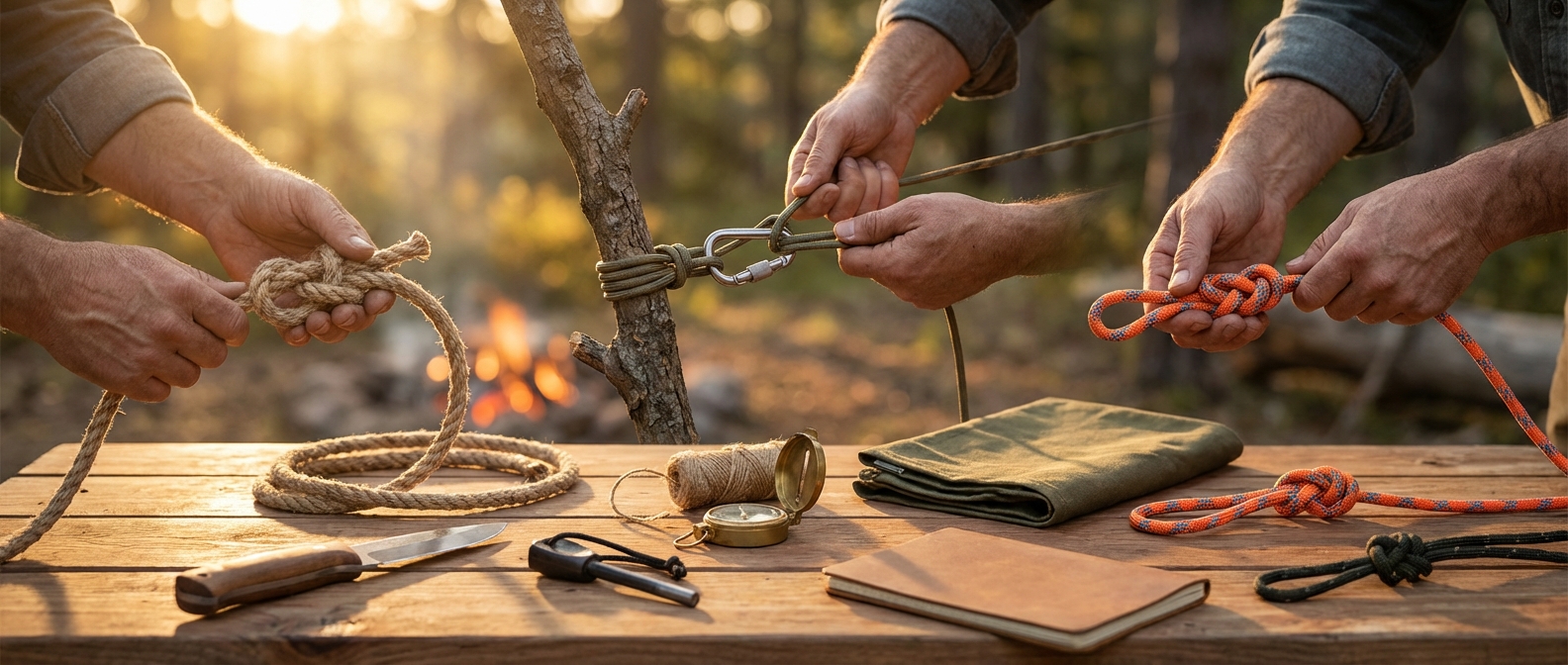
- Paracord (550): common in kits.
- Utility rope (braided nylon or polyester): good feel for learning.
- Cotton or natural-fiber rope: grippy for beginners.
- Slick ropes (polypropylene or slick nylon): practice these too.
- Extras: tarp with grommets, carabiners, poles or branches, stakes.
Starter kit
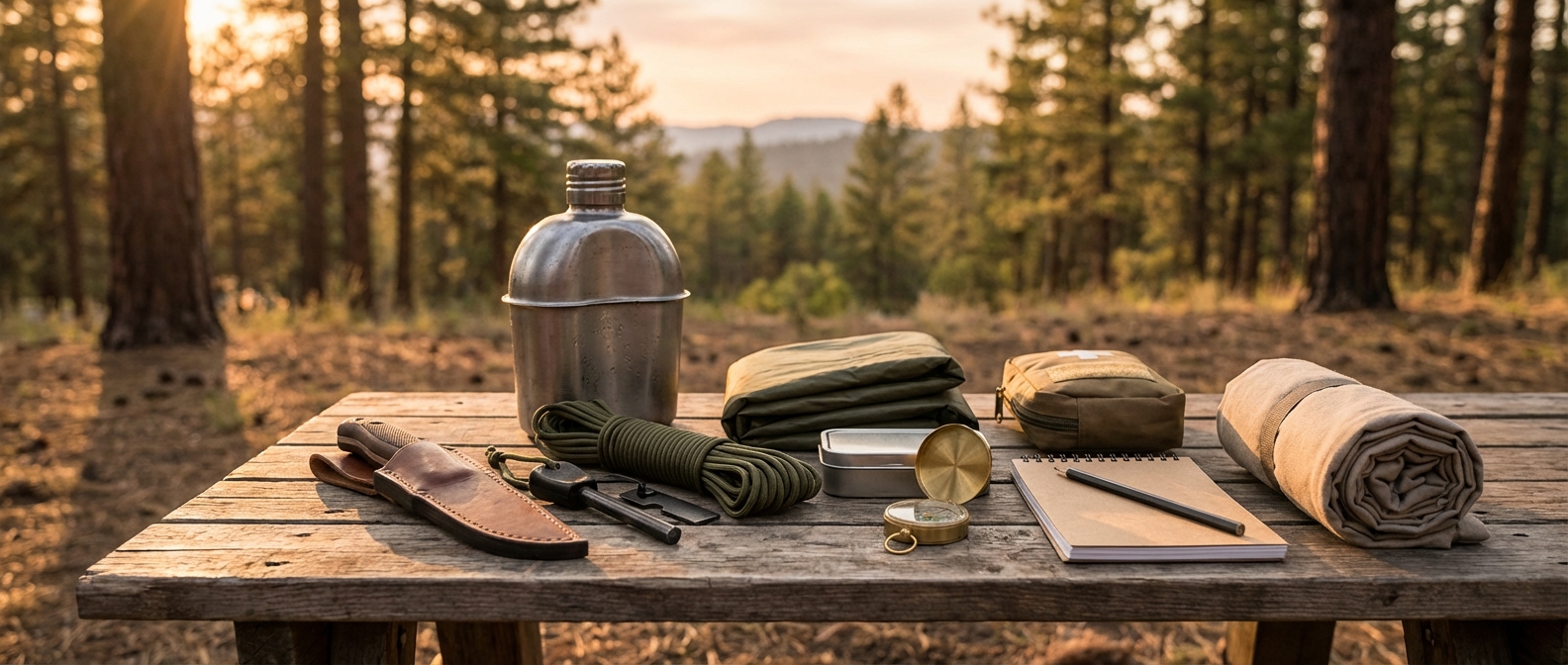
10 to 20 feet of paracord, 10 to 20 feet of thicker utility rope, a tarp, a few stakes, and a waterproof knot reference card.
Practical applications
- Shelter: Bowline and Clove Hitch for ridgelines and tie-offs. Use Figure Eight for end stoppers.
- Securing gear: Bowline for reliable loops. Square Knot for simple, non-critical bundles.
- Repairs: Sheet Bend to join mismatched cordage temporarily.
- First aid and support: Bowline for non-tightening loops. Figure Eight for visible stoppers. Seek professional training for technical rescue.
How to master these knots
- Learn one knot at a time. Start with the Bowline and Clove Hitch.
- Practice 10 minutes daily. Do 5 to 10 repetitions per knot.
- Practice on real tasks: set up a tarp, lash poles, hang a food bag.
- Inspect every knot: neat turns, no twists, tails several rope diameters long.
- Test knots under load before relying on them.
- Carry a waterproof knot card or a small field guide.
Common mistakes to avoid
- Using the wrong knot for the job, for example using a Square Knot for critical loads.
- Leaving tails too short so they can slip out.
- Failing to dress and set knots.
- Not backing up knots when redundancy is required.
FAQ: essential knots for survival
Q: What knot should beginners learn first? A: Bowline and Figure Eight. Bowline for loops and load tasks. Figure Eight as a clear stopper.
Q: Which knot joins two ropes? A: Sheet Bend. Use a double Sheet Bend for slippery or unequal cords.
Q: Do I need special rope to practice? A: No. Start with thicker, grippier rope, then practice paracord and slick lines for realism.
Q: Are these five knots enough for most beginner needs? A: Yes. They cover loops, anchors, stoppers, joins, and basic bindings. Add specialized knots as you encounter new needs.
Knot-tying is a high-value, low-cost survival skill. Master these essential knots for survival: Bowline, Clove Hitch, Figure Eight, Sheet Bend, and Square Knot. Practice them on your gear this weekend and use them alongside shelter, fire, water, and first-aid training.
Further reading and next steps
- Pair knot practice with hands-on shelter building and first-aid drills.
- Take an in-person class for rescue-grade knotting and advanced ropework.
Becoming a Prepper: The Beginner’s Guide to Survival Readiness