Urban vs Wilderness Survival: Skills, Differences, and Shared Priorities
Quick answer
- Urban vs wilderness survival differ in hazards and tools, but they follow the same survival priorities.
- Urban survival emphasizes handling infrastructure failure, crowds, contamination, and security.
- Wilderness survival emphasizes exposure, water sourcing, shelter, fire, navigation, and wildlife avoidance.
- Learn core skills like first aid, water treatment, and navigation, then adapt gear to city or backcountry needs.
Summary
Urban vs wilderness survival describes two environments that require the same basic approach: assess risk, secure safety, and get to help. Cities fail when systems break down. Expect power outages, blocked roads, overwhelmed services, and crowds. Wilderness incidents happen far from services. Expect exposure, difficult terrain, and delayed rescue.
Methods and equipment change. Priorities remain: stay safe, find shelter and water, treat injuries, communicate, and make calm decisions.
Clear definitions
- Urban survival: staying safe and functional when services, infrastructure, or civil order break down in populated areas.
- Wilderness survival: staying alive and reaching help when stranded in remote natural settings without immediate services.
Quick comparison
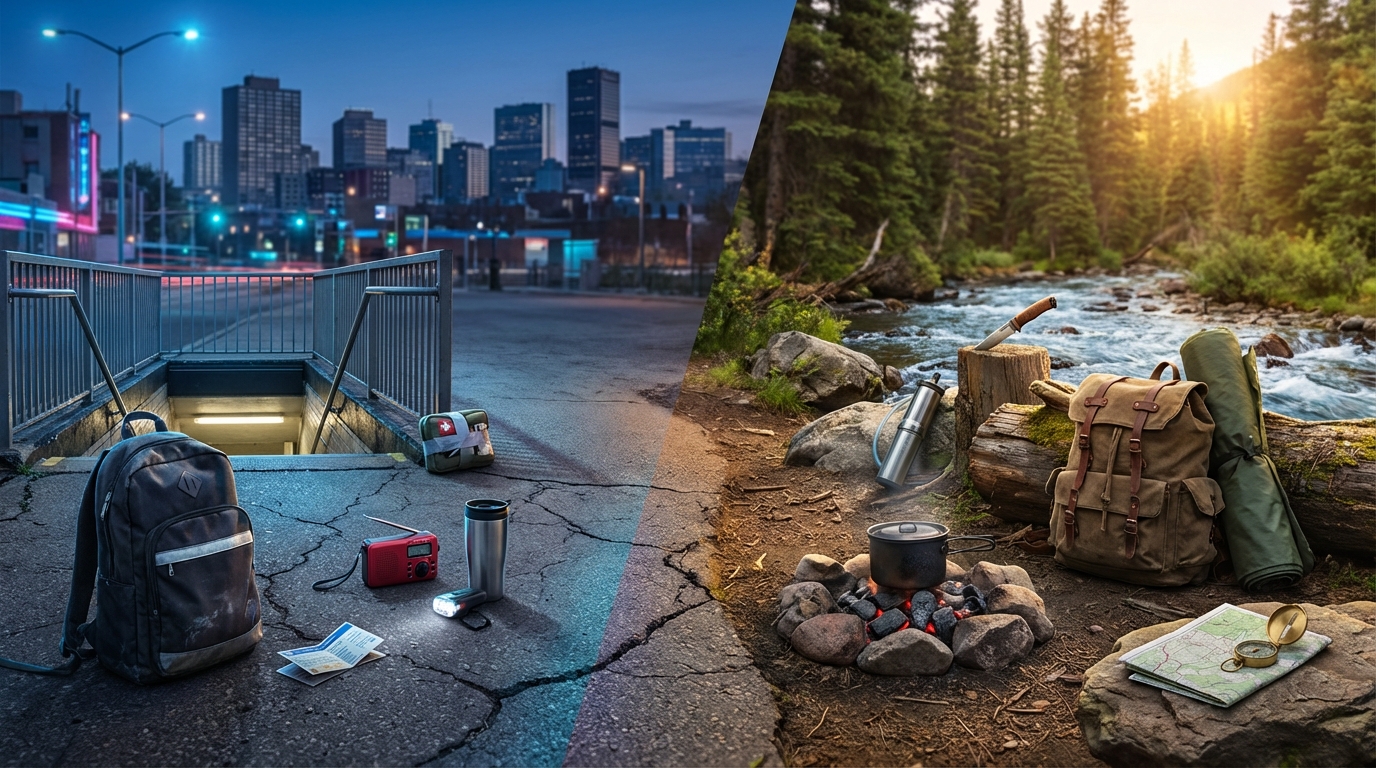
| Topic | Urban survival | Wilderness survival |
|---|---|---|
| Main hazards | Infrastructure failure, crowds, contamination, civil unrest | Exposure, remoteness, terrain, wildlife, weather |
| Primary needs | Security, sanitation, potable water, power for comms | Shelter from elements, water sourcing, fire, navigation |
| Typical tools | Stored water, radios, materials to secure windows and doors, locks or deterrents | Tarps, sleeping systems, fire kit, map and compass, water filter |
| Typical rescue timeline | Often faster if roads and services operate, but crowding and blocked routes complicate access | Often slower; plan on longer self-rescue and extended self-care |
Core shared priorities
- Safety and situational awareness
- Avoid obvious hazards. Watch for unstable structures, traffic, or hostile crowds. In the backcountry, scout for cliffs, avalanche terrain, and river crossings.
- Shelter and temperature control
- Stop heat loss and limit heat exposure. Use clothing layers, find insulated ground contact, and block wind. In warm climates, focus on shade and hydration.
- Water access and purification
- Identify water sources. Treat with filters, boiling, or chemical tablets. Carry stored water in cities and a lightweight filter in the wilderness.
- Medical care and bleeding control
- Control bleeding first. Stabilize fractures and treat shock. A compact first aid kit and basic training save lives.
- Communication, signaling, and navigation
- Maintain radio or phone contact when possible. Use whistles, mirrors, or satellite beacons to attract rescuers. Know map and compass basics.
- Mental resilience and decision-making
- Stop. Assess. Prioritize. Make one clear plan and act on it. Short pauses prevent poor decisions.
Urban survival, priorities and practical steps
Prepare to be self-reliant where infrastructure supports daily life.
- Plan multiple exit routes on foot and by vehicle. Mark short cuts and pedestrian routes that bypass damaged bridges or traffic jams.
- Store at least 72 hours of water and know portable treatment methods: filters, tablets, boiling.
- Learn how to secure a room: board or cover windows, lock doors, and create sanitation solutions when plumbing stops.
- Manage personal security with situational awareness, low-profile gear storage, and clear escape plans for crowded areas.
- Keep communications alive: battery radios, charged power banks, and local alert services.
Key local sources: FEMA (Ready.gov), local emergency management offices, American Red Cross.
Wilderness survival, priorities and practical steps
Expect limited resources and delayed rescue. Stay where rescuers can find you when you can do so safely.
- Water sourcing: identify streams, springs, and collect rain. Treat all natural water before drinking.
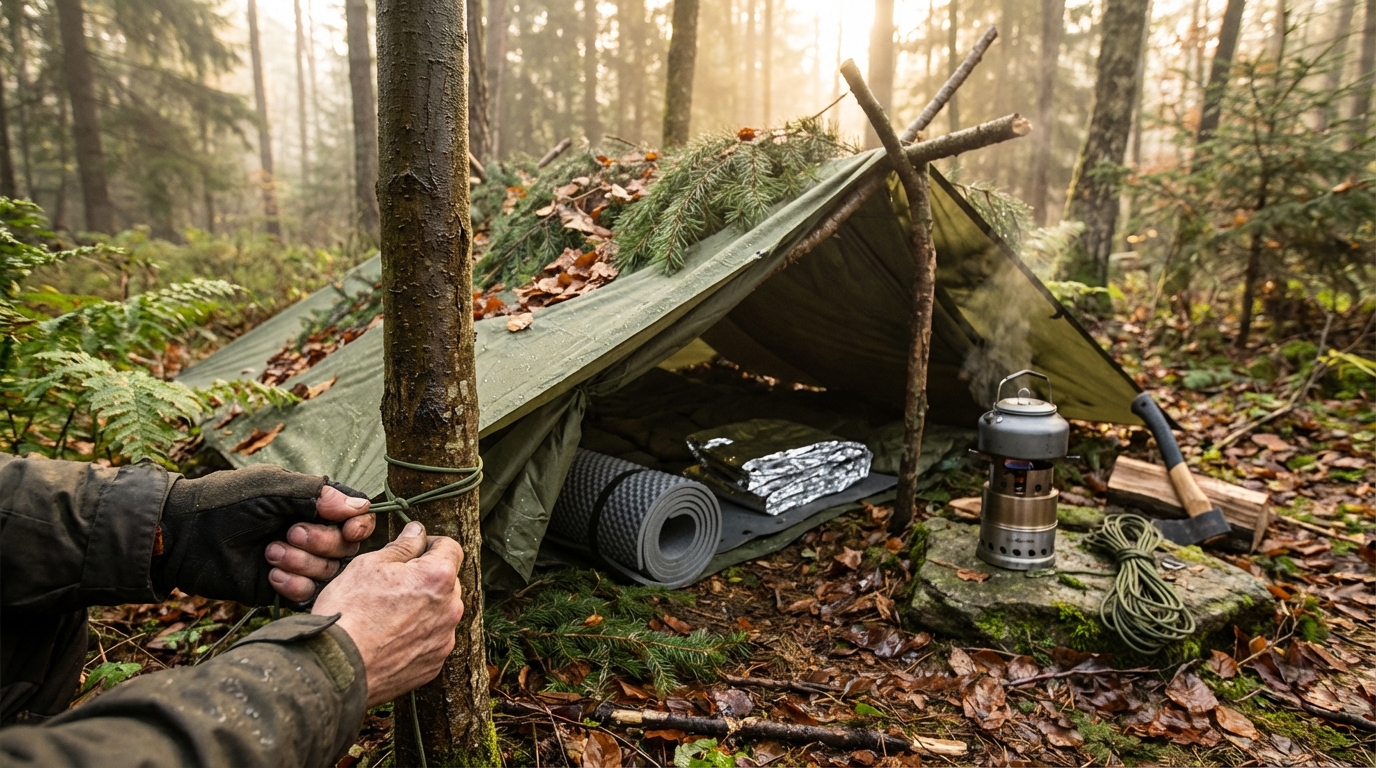
- Shelter: carry a tarp or bivy and insulate from the ground with a sleeping pad or improvised materials.
- Firecraft: carry at least two ignition methods, and practice starting fire in damp conditions.
- Navigation: learn to read contours, follow ridgelines, and use compass bearings. Mark travel so rescuers can track you.
- Wildlife and environment: store food away from camps, use odor control, and avoid animal trails and dens.
Training and reference: Wilderness First Aid courses, National Park Service guidance, Leave No Trace principles.
Transferable skills with concrete examples
- Mental routine: perform a quick threat sweep, stop, list three priorities, pick one action, then act.
- First aid: apply direct pressure for bleeding, use a pressure dressing, splint obvious fractures, treat for hypothermia with dry insulation.
- Water planning: rotate stored water every six months, carry a 0.2 to 0.6 micron filter for backcountry use, keep chlorine tablets for compact city kits.
- Resource management: keep a labeled grab-and-go bag for home, a small kit in your car, and a pared-down pack for hikes.
- Signaling: program emergency numbers into your phone, carry a whistle that can be heard at distance, and use a mirror or a PLB/satellite messenger when out of range.
Practical training and drills
- Assemble a full home emergency kit and compact versions for car and pack.
- Practice the water treatment methods you will actually carry and use.
- Complete a basic first aid class, then a Wilderness First Aid course if you travel off-trail.
- Navigate without GPS through repeated map and compass exercises.
- Build and sleep in low-impact shelters on practice trips where it is legal and safe.
- Run a home blackout drill and a supervised overnight wilderness rehearsal.
FAQ
- Which is harder, urban or wilderness survival?
- They are different. Cities bring complex logistics and crowds. Wilderness brings exposure and isolation.
- What should beginners learn first?
- First aid, water storage and treatment, emergency communication, situational awareness, and a compact kit.
- Can wilderness skills help in a city?
- Yes. Water treatment, shelter thinking, navigation, and calm decision-making all translate.
- Do I need separate gear for each environment?
- Some gear overlaps, such as flashlights and multi-tools. Urban kits prioritize sanitation and security. Wilderness kits prioritize shelter, clothing, and navigation.
Sources to cite
- FEMA Ready.gov for preparedness statistics and checklists.
- American Red Cross for first aid and sheltering guidance.
- CDC resources on water safety and sanitation.
- National Park Service and Leave No Trace for backcountry practices.
- Look for studies on outcomes from basic first aid and water safety programs when making specific effectiveness claims.
Next steps
Start small. Build core skills. Tailor one kit for daily life and one for the terrain you use most. Practice regularly. Rehearse plans until actions feel automatic.