Mental Resilience in Survival: How to Stay Calm, Adapt, and Decide in Emergencies
Quick Answer / TL;DR
Mental resilience in survival means staying calm, thinking clearly, and adapting under stress so you can prioritize and execute safety actions. Short daily habits (2-5 minutes), weekly drills, and monthly simulations improve decision-making and reduce panic.
Focus only on gear and you miss the most important survival tool: mental resilience in survival. Gear, water, and shelter matter. Your brain runs the operation. Resilience helps you stay calm, think clearly, adapt fast, and make useful decisions when stress scrambles your thoughts.
Beginner preppers get clear benefits from psychological training. Build resilience with short, repeatable habits and drills.
Direct summary (answer-first)
Mental resilience in survival means maintaining useful thinking and behavior under threat. Regulate arousal. Prioritize actions. Improvise when plans fail. Recover afterward.
Build it with brief daily practices like breathing and grounding, regular scenario rehearsals, and periodic stress exposure. Combine those with physical basics such as sleep, hydration, and nutrition. Rehearse decisions with other people so you act reliably when it counts.
Clear definitions
- Mental resilience in survival: staying functional emotionally, cognitively, and behaviorally during emergencies and recovering afterward.
- Resilience vs toughness: toughness is enduring discomfort. Resilience is adapting, learning, and returning to effective function.
- Stress inoculation: gradual exposure to manageable stressors to increase tolerance and practice coping skills.
Why mental resilience in survival matters
- Less panic and fewer impulsive actions.
- Better attention, memory, and problem solving under pressure.
- More flexibility when plans or supplies fail.
- Higher morale during prolonged incidents.
Research and sources
APA, FEMA, and the Red Cross teach practical psychological preparedness techniques such as breathing, grounding, and community coordination. Clinical methods like CBT, stress inoculation training, and MBSR provide proven tools that transfer to field situations. Physiological markers such as heart-rate variability relate to regulation capacity; slow diaphragmatic breathing influences HRV and lowers arousal.
Research supports measurable improvements from these methods, but effect sizes and conditions vary. Consult primary studies or organizational guidance for details.
Techniques to build mental resilience in survival
-
Controlled breathing (physiological regulation)
- Practice: inhale 4 seconds, hold 4 seconds, exhale 6-8 seconds for 2-5 minutes to calm before action.
- Avoid prolonged breath holds if you have respiratory or cardiovascular issues; check with a clinician.
-
Mindfulness and grounding (stop panic fast)
- 5-4-3-2-1 grounding: name 5 things you see, 4 you can touch, 3 you hear, 2 you smell, 1 you taste or recall.
- Use this to reorient attention immediately.
-
Task-focused self-talk
- Use short action cues like “Stop. Breathe. Check priorities.” Keep phrases concrete and rehearsed.
-
Visualization and mental rehearsal
- Visualize likely scenarios and common failures. Run the steps: notice, calm, prioritize, use gear, adapt if plans break.
-
Scenario drills and low-stress rehearsals
- Try a 24-hour no-power drill, timed evacuation, or navigating with a paper map. Build decision loops and muscle memory.
-
Gradual stress practice
- Add controlled discomfort: bad-weather hikes, trips with limited conveniences, or cold showers. Practice regulation under strain.
-
Simple decision framework
- Stop. Breathe. Observe. Prioritize. Act. Reassess. Use this as a short checklist to reduce impulsivity.
-
Maintain physical basics
- Prioritize sleep, hydration, nutrition, and short mental breaks. They directly affect cognitive resilience.
-
After-action reviews (AARs)
- After drills or events, ask: what went well, what stressed me, where did I hesitate, what will I change?
-
Use vetted resources
- Rely on APA, FEMA, and Red Cross materials, and consider CBT or MBSR workbooks. Check apps for privacy and evidence.
Quick decision loop (copyable)
Stop.
Breathe for 30-60 seconds of slow breaths.
Observe: what changed, what hazards or resources exist?
Prioritize: what protects life first?
Act: take one simple, reversible step.
Reassess.
Practice schedule
- Daily: 2 minutes breathing, one brief mental rehearsal, one situational-awareness scan.
- Weekly: mini drill such as using only stored water for a day or timing your bug-out bag pack. Write a short stress journal entry.
- Monthly: 24-hour outage simulation, household communication and evacuation drill, timed shelter or fire-starting practice.
Train with others
- Practice clear, concise communication under time pressure.
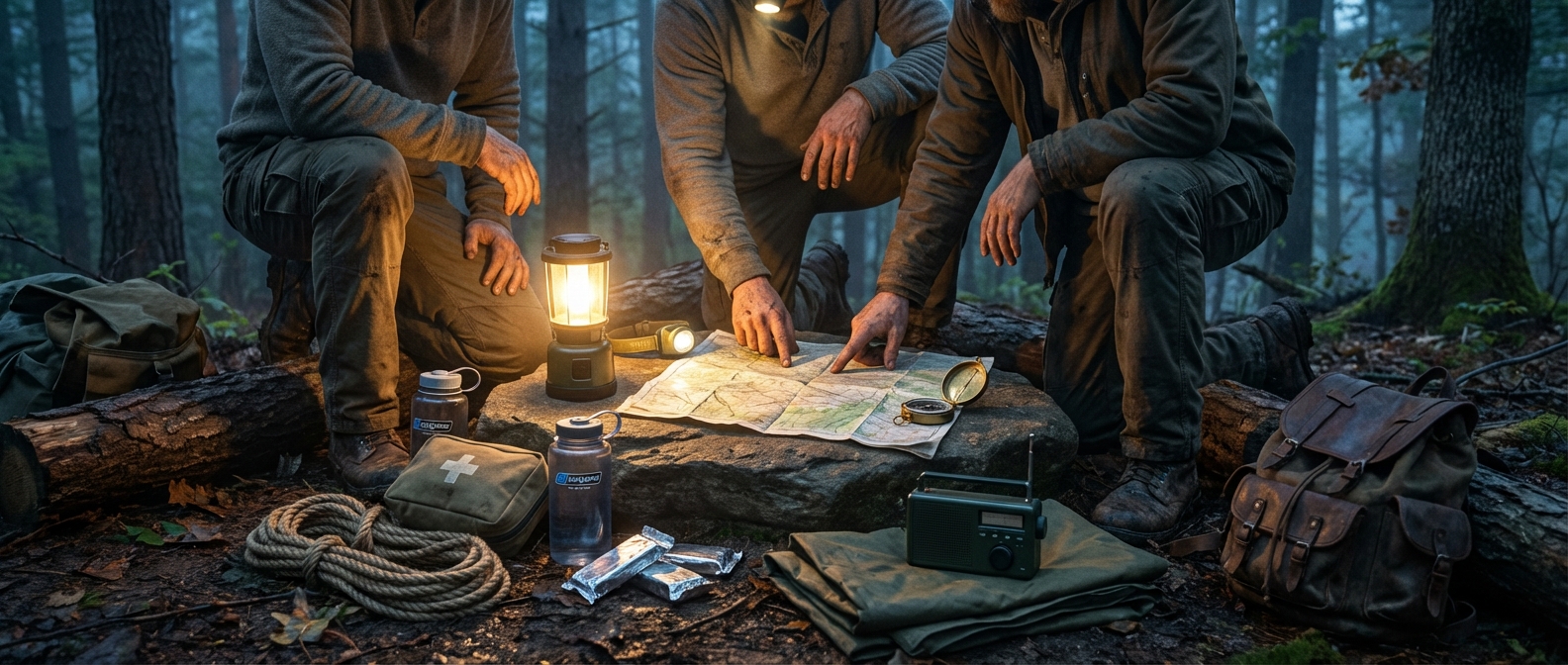
- Assign roles and rehearse task handoffs.
- Run brief debriefs to capture lessons and improve coordination.
A calm, coordinated team performs better than a group of stressed individuals.
Recommended resources and organizations
- American Psychological Association (APA) for resilience research and practical tips.
- FEMA for community preparedness and psychological resources.
- Red Cross for disaster mental health and psychological first aid.
- Clinical options: CBT and MBSR workbooks and courses; seek licensed providers for clinical work.
- Guided-breathing and mindfulness apps: choose reputable, privacy-respecting options.
Search these organizations for specific programs and citations.
FAQ: Mental resilience for beginner preppers
Q: What is mental resilience in survival? A: The ability to stay calm, focused, and adaptable during emergencies so you can prioritize and execute safety actions.
Q: Can resilience be trained? A: Yes. Mindfulness, controlled breathing, CBT techniques, and scenario rehearsal improve coping and decision-making, though results vary by person and practice dose.
Q: How often should I practice? A: Daily micro-practices of 2-5 minutes, a weekly drill, and a monthly challenge form a sustainable schedule.
Q: Is mindset more important than gear? A: Both matter. Gear provides capability. Mental resilience ensures you use gear effectively and adapt when plans or gear fail.
Practical next steps (do these this week)
- Review your emergency plan and mark where stress could derail actions.
- Add one daily micro-habit: 2 minutes of breathing, a short rehearsal, or a situational scan.
- Schedule a weekly mini-drill and a monthly simulation with your household.
- Bookmark APA, FEMA, and Red Cross resources. Consider an MBSR course or a CBT workbook for structured training.
Evidence notes and caveats
Research supports these techniques, but study details and effect sizes vary. If you have a history of anxiety disorders, PTSD, or other mental health conditions, consult a licensed professional before using stress-inoculation or prolonged exposure practices.
Invest a few minutes daily. Practice realistic drills. Build the habit of structured decision-making. Those changes improve your odds when it matters most.
[INTERNAL_LINK: Becoming a Prepper: The Beginner’s Guide to Survival Readiness]
[INTERNAL_LINK: How to Build a Bug Out Bag: Essentials for a Quick Getaway]
[INTERNAL_LINK: Water, Water Everywhere: How to Store H2O Without Losing Your Sanity]
[INTERNAL_LINK: From Garden to Table: Starting a Prepper Garden]