Fitness for Survival: A Practical Physical Preparedness Guide for New Preppers
Quick take: Fitness for survival builds the physical abilities you will actually use in an emergency: cardiovascular endurance, practical strength, mobility, balance, and load carriage. Start with regular walks, two full-body strength sessions per week, daily mobility work, and weekly loaded practice with your actual gear.
What fitness for survival means
- A task-focused approach that develops transferable capacities: sustained walking or hiking, lifting and carrying gear, safe movement over rough ground, and getting up from the ground when needed.
- Priority is transferability. Can you do the job? Not how you look.
Why fitness for survival matters
You may need to:
- Move on foot for extended distances for evacuation or a bug-out.
- Lift, carry, or drag supplies or another person.
- Traverse uneven terrain, climb, or descend safely.
- Work for long periods with limited rest while staying clear-headed.
Practical benefits include being able to carry a full pack for miles, lifting a 5-gallon water container without risking your back, and recovering faster between tasks.
Core components of a survival-oriented fitness program
- Cardiovascular endurance
- Purpose: sustain walking, hiking, and repeated effort. Be able to keep moving for hours when needed.
- Examples: brisk walking, hiking, cycling, stair-climbing, rowing, jump rope.
- Start: 20-30 minutes, 3-5x per week. Progress by adding time, hills, or a light pack.
- Strength (functional)
- Purpose: lift and move gear, operate tools, assist others.
- Focus on movement patterns: squat, hinge, push, pull, carry, and rising from the ground.
- Beginner options: bodyweight squats, loaded deadlifts with household weights, push-ups, band rows, farmer carries.
- Mobility and flexibility
- Purpose: keep safe ranges for bending, crawling, and lifting.
- Practice daily hip, hamstring, shoulder, and ankle drills. Add short dynamic stretching or yoga.
- Balance and coordination
- Purpose: prevent falls and improve control on uneven surfaces.
- Drills: single-leg stands, controlled lunges, step-ups, and hiking on rough ground.
- Functional carrying capacity (load carriage)
- Purpose: learn how far and how long you can move with your actual gear.
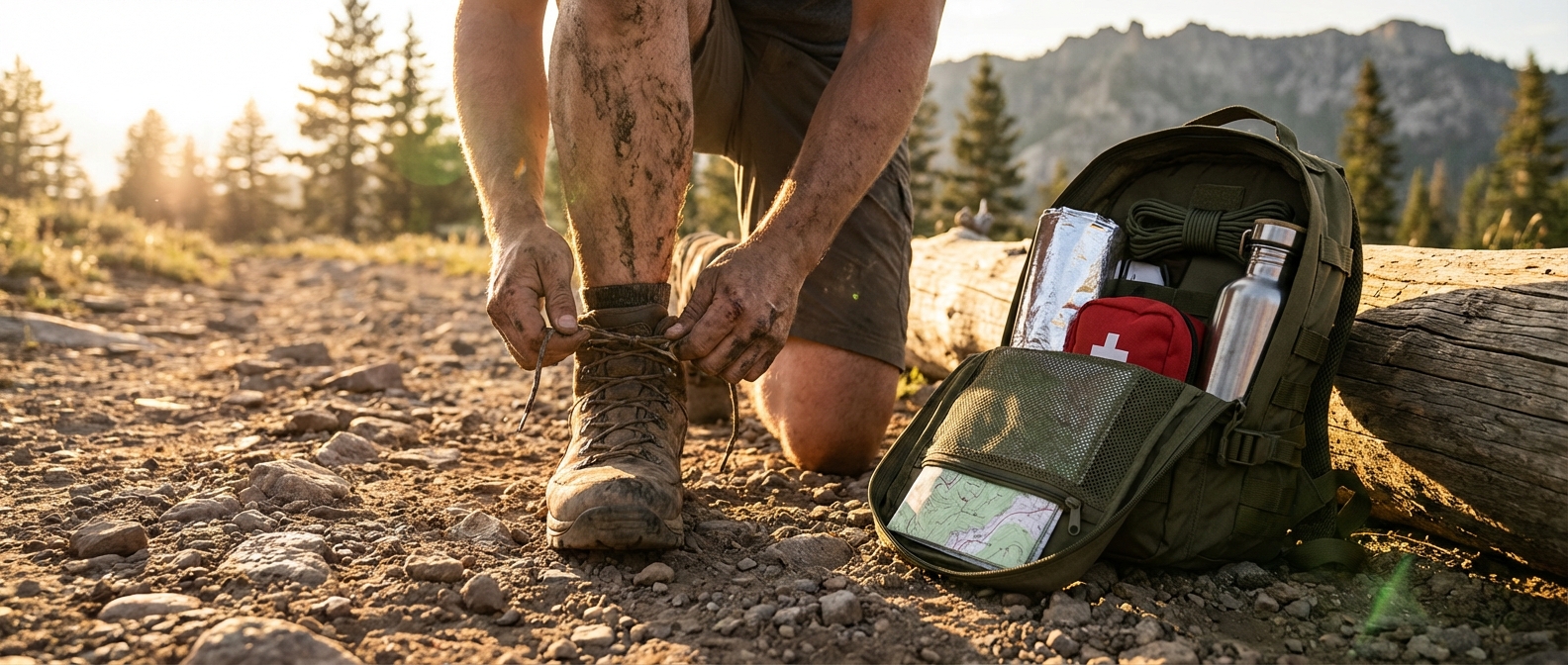
- Practice: loaded walks and hikes with your bug-out bag, water jugs, or grocery bags. Test footwear and pack setup.
Getting started: a simple 6-week plan for new preppers
Week 1-2: establish consistency
- Cardio: walk 20-30 minutes, 3x per week at a brisk pace.
- Strength: 2x per week full-body circuit (example below).
- Mobility: 5-10 minutes daily.
- Practice: 1 short walk (1-2 miles) with a light pack (5-10% body weight).
Start simple. Build a habit.
Week 3-4: build volume
- Cardio: increase one session to 40 minutes or add hills.
- Strength: increase circuit rounds or reps; keep 2x per week.
- Mobility: continue daily.
- Practice: weekly hike 2-4 miles with your pack; test footwear.
Week 5-6: add specificity
- Cardio: include one interval or hill session per week.
- Strength: add a loaded carry or heavier deadlift variation.
- Practice: longer loaded hike (3-6 miles) or multiple loaded carries.
Example beginner circuit (2-3 rounds)
- 10 bodyweight squats
- 8 incline or floor push-ups
- 10 glute bridges
- 8 resistance-band rows
- 20-second plank
- 30-second single-leg balance per side
Rest 60-90 seconds between rounds.
Training principles that matter for survival
- Train movements, not just muscles. Squat, hinge, push, pull, carry, and get up from the ground.
- Practice with your actual gear and footwear to find weak links early. Test pack straps, pockets, and balance.
- Use progressive overload. Increase duration, reps, or load gradually.
- Prioritize recovery: sleep, hydration, protein, and electrolytes matter.
- Get medical clearance if you have chronic conditions or are returning after a long sedentary period.
Common myths
- Myth: “I only need survival skills, not fitness.” Reality: skills are harder to apply without strength and endurance.
- Myth: “You must be super athletic.” Reality: steady, practical improvement works better than specialization.
- Myth: “You need a gym.” Reality: walking, bodyweight training, bands, and loaded carries work well.
- Myth: “Thin equals fit.” Reality: appearance does not predict task performance. Test capability.
- Myth: “Too old to start.” Reality: sensible progressions help most adults improve.
Quick FAQ
Q: How does fitness improve survival chances?
A: It increases your capacity to carry gear, travel on foot, avoid injury, recover faster, and maintain decision-making under fatigue.
Q: What should I focus on first?
A: Walk regularly. Add two short strength sessions per week. Do daily mobility work. Practice carrying your actual gear.
Q: How often should I train?
A: Cardio 3-5x per week, strength 2-3x per week, mobility most days. Adjust for recovery.
Q: Do I need equipment?
A: No. Resistance bands, a jump rope, and a packed backpack provide a lot of value.
Practical readiness checklist
- Can you comfortably walk 2-3 miles with a light pack (5-15% body weight)?
- Can you lift and carry water containers or a loaded pack short distances without acute pain?
- Have you tested boots and clothing on short hikes and in wet or rough conditions?
- Do you follow a basic recovery routine: regular sleep, hydration, and meals with protein?
- Have you practiced getting up from the ground and moving under minor load?
Notes on claims and cautions
- Fitness helps tolerance to heat and cold, but acclimatization, clothing, hydration, and medical factors matter most.
- Conditioning helps decision-making under fatigue, but severe sleep deprivation and high stress still impair cognition.
- You do not need a gym. Minimal equipment can cover most survival needs. Weights and coaching speed safe progress.
Safety and medical notes
- Consult a clinician if you have heart disease, uncontrolled high blood pressure, recent surgery, or other serious conditions.
- Stop and seek medical help for chest pain, dizziness, fainting, or sudden severe joint pain during exercise.
Further reading
- Becoming a Prepper: The Beginner’s Guide to Survival Readiness
- How to Build a Bug Out Bag: Essentials for a Quick Getaway
- Canned Goods and Other Edibles: Your First Steps to Stockpiling Food
- Water, Water Everywhere: How to Store H2O Without Losing Your Sanity
Low-cost, high-value gear suggestions
- Resistance bands, a jump rope, and a sturdy backpack for loaded practice. Buy locally or from trusted online stores.
Treat your body as mission-critical gear. Build fitness for survival with steady, task-focused practice and regular tests using your actual gear.