Best Survival Clothing: How to Dress Right When Disaster Strikes
Quick answer
- The best survival clothing is a layered system, a weather-appropriate outer shell, and durable footwear.
- Use moisture-managing base layers such as merino or technical synthetics, an insulating mid layer, and a waterproof, breathable shell. Boots, a rain jacket, and wool socks solve the most urgent problems: keep feet dry and prevent hypothermia.
Overview
The best survival clothing keeps you dry, controls body temperature, and lets you move without pain or restriction. Start with solid boots, a breathable waterproof shell, and moisture-wicking base layers. Add insulating mid layers and specialized items for the environment you expect to face.
Definitions
- Base layer: next-to-skin garments that wick sweat and dry quickly. Typical fabrics: merino wool, polyester.
- Mid layer: insulation that traps warm air, such as fleece, wool, or synthetic fill like Primaloft.
- Outer layer (shell): blocks wind and rain while letting moisture escape, using waterproof breathable membranes or water-resistant fabrics with taped seams.
- DWR: durable water repellent treatment that sheds light moisture but is not a permanent waterproof membrane.
- Membrane: a layer such as Gore-Tex that blocks liquid water while allowing vapor to pass.
- Merino wool: fine-fiber wool that insulates when damp and resists odor; common for base layers and socks.
What survival clothing must do
- Protect from exposure: wind, rain, sun, and snow. Wear a windproof shell in exposed terrain and a rain shell in persistent precipitation.
- Control temperature: layer so you can add or remove insulation as activity and conditions change. Use vents and zippers to dump heat when you need to.
- Keep you functional: choose durable, low-chafe pieces with reinforcements at knees and seat, flat seams, and easy-to-adjust cuffs and hoods.
How the best survival clothing changes by environment
Your environment and activity level determine what to prioritize. Gear that keeps you safe in alpine winter will be harmful in desert heat.
Cold environments — priorities and checklist
Priorities: retain heat, prevent wetting from outside, and avoid excessive sweating that causes chill later.
Recommended items:
- Merino or synthetic base layer
- Insulating mid layer such as fleece, wool, or synthetic like Primaloft
- Waterproof, breathable shell with a hood
- Insulated gloves, a warm hat, wool socks, insulated and waterproof boots
Manage layers proactively to avoid heavy sweating. Open vents or remove a layer when your breathing or heart rate climbs.
Hot environments — priorities and checklist
Priorities: protect from sun, keep airflow, and handle sweat.
Recommended items:
- Lightweight long sleeves in breathable fabrics for sun protection
- High-wicking merino or synthetic base layers
- Wide-brim hat with UPF protection
- Quick-dry pants and breathable trail footwear
Choose light colors and garments with venting panels when temperatures swing between hot days and cool nights.
Wet environments — priorities and checklist
Priorities: stay dry, dry fast, and avoid losing heat when wet.
Recommended items:
- Waterproof, breathable rain jacket and rain pants with sealed seams
- Quick-drying base layers and wool socks
- Gaiters and waterproof or fast-draining footwear
Balance waterproofing and breathability. Fully non-breathable shells can trap sweat and make you colder.
Rugged and urban terrain — priorities and checklist
Priorities: resist abrasion, block debris, and maintain traction.
Recommended items:
- Reinforced or ripstop pants
- Strong-soled boots with reliable traction
- Work gloves and long sleeves to prevent cuts and scrapes
Choose pants with articulated knees and a bit of stretch so you can move without tearing fabric.
Beginner checklist (must-have items)
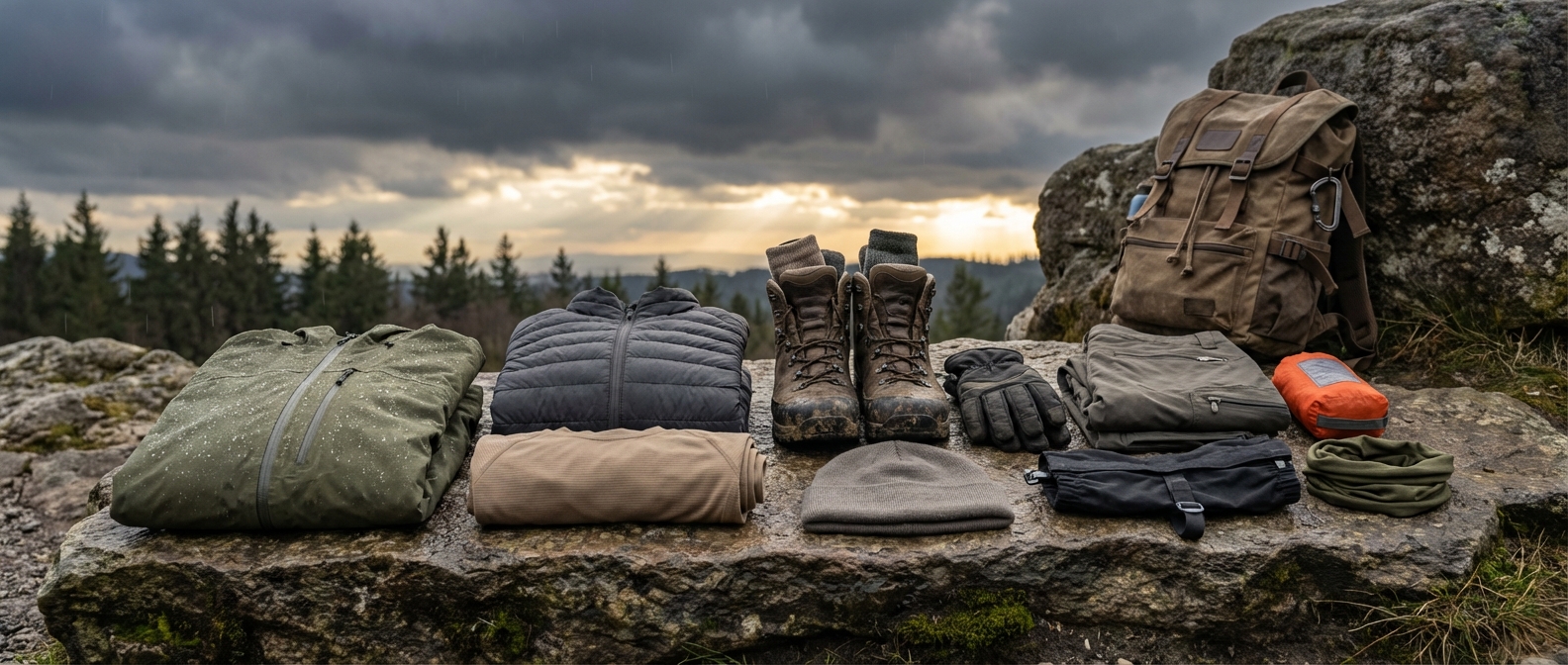
- Waterproof jacket: a breathable shell with sealed seams and an adjustable hood.
- Durable boots: correct fit, ankle support, and a sole suited to the terrain.
- Base layers: merino or synthetic next-to-skin pieces.
- Insulating mid layers: fleece, wool, or synthetic insulation.
- Tough pants: ripstop or softshell with stretch.
- Wool socks: merino-blend with cushioning where you need it.
- Gloves and hat: insulated versions for cold and lighter work gloves for handling debris.
- Moisture-wicking underwear: synthetic or merino.
- Rain pants: lightweight shell pants for prolonged wet conditions.
Materials: pros and cons with practical notes
- Merino wool
- Pros: insulates when damp, resists odor, and regulates temperature well. Use for base layers and socks.
- Cons: can cost more, and thick knits add weight.
- Synthetics (polyester, nylon, Polartec)
- Pros: fast-drying, durable, lightweight, and budget-friendly. Good for active use.
- Cons: some synthetic fabrics hold odor and they can melt near open flames.
- Technical insulation (Primaloft, Thinsulate)
- Pros: retains loft when wet, compressible, excellent warmth-to-weight for jackets and packable layers.
- Waterproof membranes and DWR
- Membranes: provide reliable waterproofing with breathability.
- DWR: sheds surface water but wears off and needs re-treatment.
- Cotton
- Cons: absorbs moisture and dries slowly. Avoid cotton for core survival layers.
Brands worth trying
- Merino and socks: Smartwool, Icebreaker
- Value to mid-range outerwear: Columbia, REI, Patagonia
- Technical shells and gloves: Outdoor Research, Arc’teryx
- Footwear: Salomon, Merrell, Danner
- Durable pants and utility gear: 5.11 Tactical, KUHL
Look for specific technologies when you shop, for example Gore-Tex membranes, Primaloft insulation, and Polartec fabrics, and match them to the conditions you expect.
What to buy first
- Boots. Fit matters more than price. Try them with the socks you will wear.
- Waterproof jacket that breathes. You will use it more than you expect.
- Wool socks. They prevent blisters and keep feet warm when damp.
- Quality base layers. They control moisture at the skin.
- Warm mid layer. Fleece or synthetic insulated jacket.
- Durable pants. Ripstop or softshell with some stretch.
- Gloves and hat. Get both insulation and work variants.
- Rain pants. Lightweight protection for long wet spells.
Start with boots and a rain shell. Those items reduce the greatest near-term risk by keeping you mobile and dry.
Layering: a simple three-layer approach
- Base layer: manage moisture. Use merino or synthetics.
- Mid layer: add insulation. Use fleece, wool, or synthetic fill.
- Outer layer: block wind and water with a waterproof, breathable shell.
Rules for layer management:
- Add insulation before you get chilled.
- Remove layers before you start to sweat heavily.
- Use vents and zippers to fine-tune airflow while moving.
FAQ: short answers
- Essential items: moisture-wicking base layer, insulating mid layer, waterproof shell, durable pants, wool socks, gloves, hat, and sturdy boots.
- How environments affect choices: cold needs insulation and strict moisture control; hot needs sun protection and ventilation; wet needs breathable waterproofing.
- Materials to prioritize: merino for base layers and socks, technical synthetics for durability and quick drying, and reputable membranes for shells. Avoid cotton.
- How many sets to keep: have one ready-to-wear set and one backup in a go-bag or vehicle. Add seasonal extras if you have space.
Buying and maintenance tips
- Try boots with the socks you plan to use and walk in them before you commit.
- Test waterproofing and breathability in real use before relying on gear for long trips.
- Re-treat DWR coatings as they wear and follow the manufacturer’s wash instructions.
- Replace items that compromise protection, such as leaky seams, compressed insulation, or worn soles.
Final takeaways
The best survival clothing is practical, layered gear chosen for the conditions you expect. Focus on moisture management, effective layering, and footwear that fits. Choose merino and technical synthetics over cotton. Start by filling the largest gaps: boots, a breathable rain shell, and good socks. Build your kit gradually and use it in the field so you know how it performs.
[INTERNAL_LINK: Becoming a Prepper: The Beginner’s Guide to Survival Readiness] [INTERNAL_LINK: How to Build a Bug Out Bag: Essentials for a Quick Getaway] [INTERNAL_LINK: From Garden to Table: Starting a Prepper Garden] [INTERNAL_LINK: Batten Down the Hatches: Home Fortification Tips for Beginners]