Survival Myths Debunked: Practical Wilderness and Emergency Advice
Common survival myths like drinking urine, using moss as a compass, sucking venom from a snakebite, relying on friction fire as the easiest method, and always playing dead with bears cause real harm. Focus on water, shelter, signaling, navigation, reliable fire starters, and trained first aid.
Answer-first summary (survival myths debunked)
These five myths are dangerous and persistent:
- Do not drink urine. It raises your salt load and worsens dehydration.
- Moss does not reliably indicate north. Carry a compass and map or a GPS device.
- Do not suck venom from a snakebite. Immobilize the limb and get medical care.
- Rubbing sticks together is a difficult technique. Bring modern fire starters and practice with a ferro rod and lighter.
- Playing dead will not save you from every bear. Response depends on species and context.
Carry redundant tools and learn practical skills now. Practice them in safe conditions.
Quick action checklist
- Secure potable water, shelter, signaling, and first aid.
- Carry at least two fire-starting methods, for example a lighter plus a ferrocerium rod or waterproof matches.
- Bring navigation tools: a compass and topographic map, and a GPS-enabled device with offline maps and spare power.
- Take certified first-aid or wilderness first-aid training.
- Follow guidance from local wildlife and medical agencies for region-specific risks.
Why these myths stick
Short, memorable rules spread easily. A small truth, like moss favoring a shaded side, becomes an absolute rule in storytelling. That makes people overconfident during real emergencies. Learn from reputable sources and practice skills in non-emergency settings.
Myth 1: You can drink your own urine to survive
Claim: Urine is a safe emergency fluid.
Reality: Urine contains salts and waste products. Drinking it increases your salt intake and can accelerate dehydration. It also places extra strain on the kidneys.
Quick facts:
- Urine becomes more concentrated as you dehydrate.
- Drinking it provides negligible hydration benefit and can worsen the situation.
Practical steps:
- Carry water and a reliable purifier or filter such as a Sawyer, LifeStraw, or Katadyn, or bring purification tablets.
- Boil water when you can.
- Conserve fluids by resting, staying in shade, and avoiding unnecessary exertion.
Sources: American Red Cross, CDC.
Myth 2: Moss always grows on the north side of trees
Claim: Moss reliably indicates north.
Reality: Moss grows where moisture and shade favor it. Wind, canopy, slope, and local microclimate change where moss appears. It can grow on any side of a tree.
Quick facts:
- Moss is an unreliable navigation aid on its own.
- The sun, stars, and a compass are more dependable.
Practical steps:
- Carry and learn to use a compass and map.
- Use terrain association and prominent landmarks for navigation.
- Keep a GPS or smartphone with offline maps and spare power.
Myth 3: You can suck venom from a snakebite
Claim: Removing venom by sucking or cutting the wound reduces harm.
Reality: Sucking removes almost no venom, risks infection and tissue damage, and can put the rescuer at risk.
Correct first aid:
- Move to safety and have the victim remain calm and still.
- Immobilize the bitten limb at or slightly below heart level.
- Remove rings or tight clothing to allow for swelling.
- Seek immediate medical care; contact emergency services or Poison Control.
- Do not cut the wound, apply ice, use a tourniquet, or try to suck out venom.
Caveat: First-aid details can vary by species and region. Follow local medical guidance.
Myth 4: Rubbing two sticks together is the easiest way to start a fire
Claim: Friction methods are the simplest and fastest for most people.
Reality: Friction fire works but it demands dry materials, precise technique, and a lot of practice. It is not reliable under stress or in damp conditions.
Quick facts:
- Success depends on material selection and dryness.
- Technique takes time to learn and perform.
Practical recommendations:
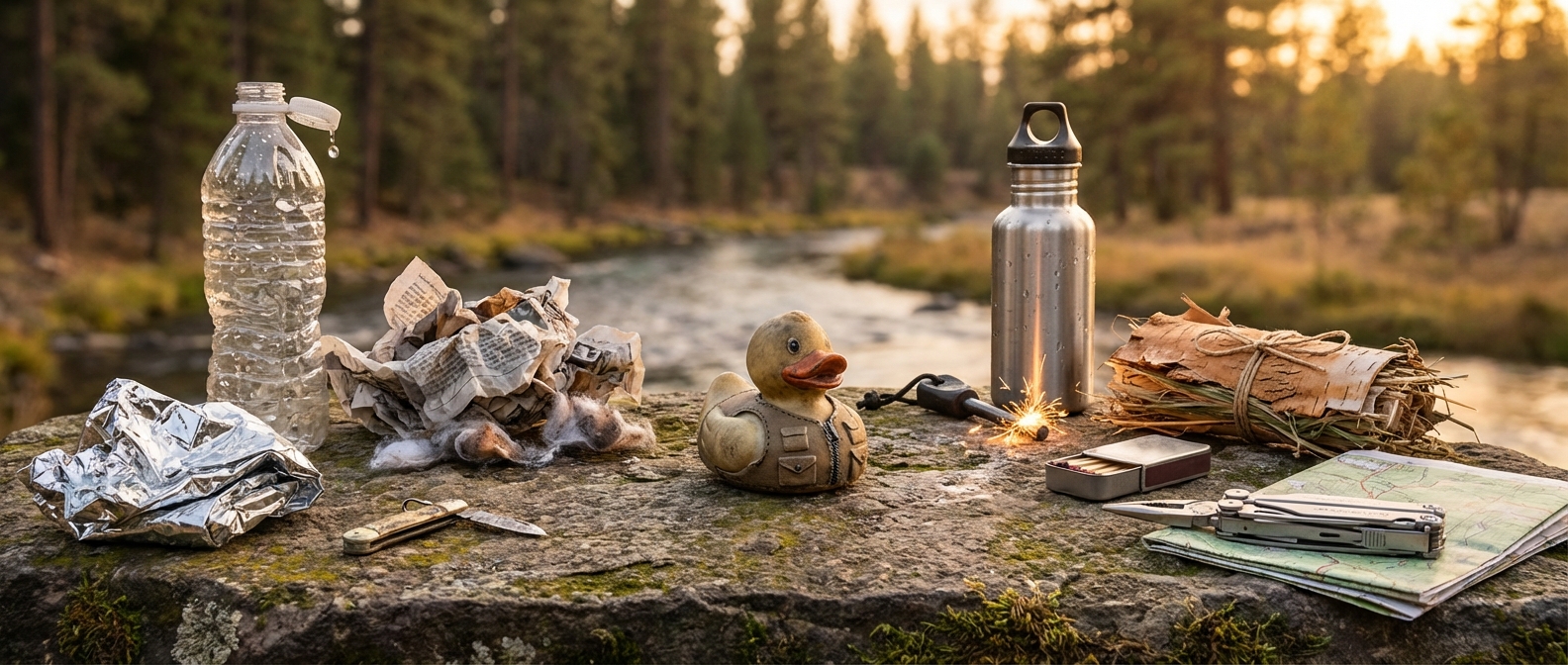
- Carry redundant fire starters: a butane lighter, waterproof matches, and a ferrocerium rod.
- Pack reliable tinder such as commercial tinder tabs, cotton balls smeared with petroleum jelly, or char cloth.
- Practice both modern and traditional fire-making skills when conditions are good.
Definition: A ferrocerium rod produces hot sparks when struck and works in varied weather.
Myth 5: Playing dead will save you from a bear attack
Claim: Playing dead is always the correct response to a bear encounter.
Reality: The right response depends on the bear species and whether an attack is defensive or predatory. Defensive attacks, often from grizzly or brown bears protecting cubs or a food source, sometimes stop if you play dead. Predatory attacks and many black bear incidents often require fighting back and targeting the bear’s face.
Practical steps:
- Learn which bear species live where you travel.
- Prevent encounters by making noise while hiking, keeping a clean camp, and storing food in bear-resistant containers.
- Carry bear spray where legal and train with it.
- Follow recommendations from local wildlife agencies and the National Park Service.
Claims to avoid
- “Moss points north”: Local conditions change growth patterns; do not rely on moss for navigation.
- “Play dead with bears”: The right action depends on species and context.
- “Urine is safe in an emergency”: That is medically unsound in most scenarios.
Treat absolute statements about survival with skepticism. Verify with authoritative sources.
How debunking these myths improves preparedness
Avoiding harmful shortcuts saves time and reduces risk. Focus on gear you can master and skills you can practice.
Recommended items and skills:
- Gear: water filter or purification system, portable stove or chemical treatment, ferro rod and lighter, waterproof matches, compass and topo map, compact first-aid kit.
- Skills: map and compass navigation, water treatment, basic shelter construction, modern fire-making techniques plus practiced traditional methods, certified first aid or wilderness first aid.
FAQ
Q: What are the most common survival myths?
A: Drinking urine, moss-as-compass, sucking venom, friction fire as the easiest method, and always playing dead with bears.
Q: Why are these myths dangerous?
A: They oversimplify complex situations and can cause delays or increased injury.
Q: Should beginners learn traditional skills like friction fire?
A: Yes. Modern tools are faster and more reliable, but traditional skills are valuable backups when technology fails.
Q: Where can I get trustworthy guidance?
A: American Red Cross, Wilderness Medical Society, CDC, National Park Service, state wildlife agencies, and certified wilderness-first-aid instructors.
Make facts your foundation
Confidence in an emergency only helps when it rests on accurate information and practiced skills. Replace folklore with evidence-based practices: carry reliable gear, get formal training, and follow local guidance.
Next steps:
- Start with water treatment and basic first-aid training.
- Build a compact grab bag with redundant fire and navigation options.
- Practice navigation and fire-making in safe conditions.
- Consult authoritative sources for region-specific advice.
Sources and further reading
- American Red Cross: first aid and water safety
- Wilderness Medical Society: wilderness medicine guidance
- Centers for Disease Control and Prevention: safe water and outdoor health
- National Park Service: wildlife encounter recommendations
- State wildlife agencies and local Poison Control centers
[INTERNAL_LINK: Becoming a Prepper: The Beginner’s Guide to Survival Readiness] [INTERNAL_LINK: Water, Water Everywhere: How to Store H2O Without Losing Your Sanity] [INTERNAL_LINK: How to Build a Bug Out Bag: Essentials for a Quick Getaway]