
The best prepper books for beginners include broad survival guides, preparedness planning books, medical references, and self-reliance manuals. Strong starter picks are *SAS Survival Handbook*, *The Prepper’s Blueprint*, *When All Hell Breaks Loose*, and *The Survival Medicine Handbook* because they teach practical skills and help new preppers build a solid emergency plan.
Key Takeaways
- Buy 3 books first: a planning guide, a survival manual, and a medical reference.
- Build an emergency binder with contacts, inventories, and medical info in week 1.
- Assemble and test a basic 72-hour emergency kit before any other gear purchases.
- Practice one new survival skill every week for at least one month straight.
- Run a preparedness drill every 2 to 3 months covering power outages or evacuation routes.
Best Prepper Books for Beginners: Top 10 Essential Survival Guides
The best prepper books for beginners focus on planning, basic medical care, and core survival skills. Start with 2-3 titles: a planning workbook, a broad survival manual, and a medical guide. Then practice one skill per week.
Quick answer
Buy these three first:
- The Prepper’s Blueprint — Tess Pennington (planning and checklists)
- SAS Survival Handbook — John ‘Lofty’ Wiseman (survival priorities and techniques)
- The Survival Medicine Handbook — Joseph Alton, MD and Amy Alton, ARNP (practical medical guidance)
These cover planning, survival fundamentals, and medical readiness. From there, choose a book on homesteading, bushcraft, or advanced medicine based on your goals.
Definitions
- Prepper: a person who prepares for emergencies by learning skills, making plans, and storing supplies.
- Prepping: planning, gaining practical skills, and organizing supplies so you can meet basic needs during disruptions.
Why books first
- Books give step-by-step instructions you can follow while you practice. For example, learning how to rotate food stores or set up a potable water plan.
- They stop impulse gear purchases by teaching how to use what you already own.
- Pair reading with hands-on training and local courses for best results.
How I picked the best prepper books for beginners
- Practicality: clear, actionable steps for water, food, shelter, first aid, and communications.
- Readability: short chapters, clear checklists, and summaries.
- Relevance: advice useful in urban, suburban, and wilderness settings.
- Credibility: authors with field experience or medical credentials.
- Currency: up-to-date guidance for modern homes and common threats.
Top 10 best prepper books for beginners
-
SAS Survival Handbook — John ‘Lofty’ Wiseman
- A thorough guide to priorities in both wilderness and urban settings. Learn navigation basics, shelter and firecraft, signaling, and basic first aid.
-
The Prepper’s Blueprint — Tess Pennington
- A roadmap with templates for family plans and supply rotation. Learn to build an emergency binder, create checklists, and plan on a budget.
-
When All Hell Breaks Loose — Cody Lundin
- Plainspoken advice focused on the home and mindset. Learn sanitation, resource prioritization, and decision-making under stress.
-
The Encyclopedia of Country Living — Carla Emery
- A detailed resource for food production and preservation. Learn gardening techniques, canning recipes, and basic livestock care.
-
Emergency War Surgery — U.S. Department of the Army
- A technical trauma reference for austere conditions. Learn trauma management, triage concepts, and the limits of improvised care. Use with formal training.
-
The Self-Sufficient Life and How to Live It — John Seymour
- A classic on small-scale farming and domestic crafts. Learn seasonal planning, preserving harvests, and basic repair skills.
-
The Survival Medicine Handbook — Joseph Alton, MD and Amy Alton, ARNP
- A hands-on medical guide for situations with delayed professional care. Learn wound care, infection prevention, and how to stock a medical kit. Pair this with a first-aid course.
-
Back to Basics — Abigail R. Gehring
- A visual, project-based manual for homesteading tasks. Learn food preservation projects, basic household repairs, and DIY resilience skills.
-
Bushcraft 101 — Dave Canterbury
- An introduction to outdoor fieldcraft and tool selection. Learn essential tools, fire-starting techniques, and shelter construction.
-
98.6 Degrees: The Art of Keeping Your Ass Alive — Cody Lundin
- Practical lessons on thermoregulation and survival priorities. Learn how to maintain core temperature, build simple shelters, find and purify water, and manage stress.
How to use these books: a practical plan
- Week 1: Read one chapter from a planning book and build an emergency binder with contacts, inventories, and medical info.
- Week 2: Practice a hands-on skill. Rotate stored food, cook a pantry-only meal, or practice basic wound dressing.
- Ongoing: Run a small drill every 2 to 3 months for a power outage, an evacuation route, or a first-aid scenario.
- Annotate books. Add tabs, highlight step-by-step lists, and copy checklists into your binder.
Short and direct: practice, then practice again.
Starter checklist
- Buy 2 to 3 books: a planning guide, a survival manual, and a medical reference.
- Create an emergency binder, paper and digital.
- Assemble and test a basic 72-hour kit.
- Practice one skill weekly for a month.
- Take a local first-aid or field-skills course.
FAQ: best prepper books for beginners
Q: Which three do I start with? A: The Prepper’s Blueprint, SAS Survival Handbook, and The Survival Medicine Handbook.
Q: How many books should a beginner buy at first? A: Start with two or three that match your priorities: planning, medical, and one skills reference.
Q: Are older prepper books still useful? A: Yes. Shelter, firecraft, and food preservation methods remain relevant. Update medical and communications advice with current resources.
Notes and verification
Verify any exact survey figures before citing them. Treat medical and surgical manuals as references and get hands-on training from certified instructors.
Build a balanced starter library. Pick one book now. Practice one skill this week. Write a one-page action plan and test it at home.
The Complete
Prepper's Reference.
149 articles synthesized into one comprehensive PDF — twelve chapters covering water, food, shelter, first aid, comms, and scenario-specific preparedness. Free with your email.
Unsubscribe anytime · We never share your email
You're in. Check your inbox.
Keep Reading
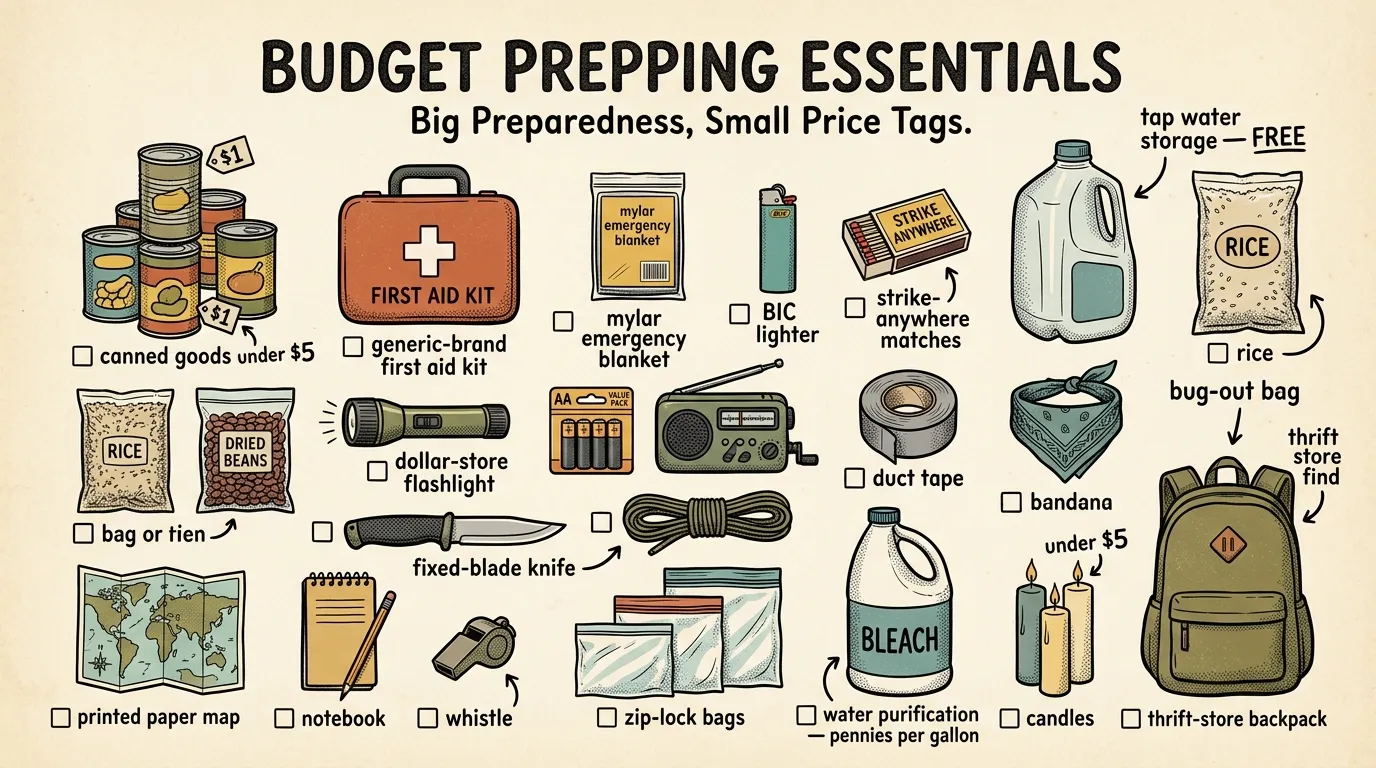
Prepping on a Budget: Affordable Gear & Strategies
Start prepping on a budget with a $75-$150 starter kit. Get affordable gear picks, DIY hacks, and a layered buying plan from a FEMA-trained responder.
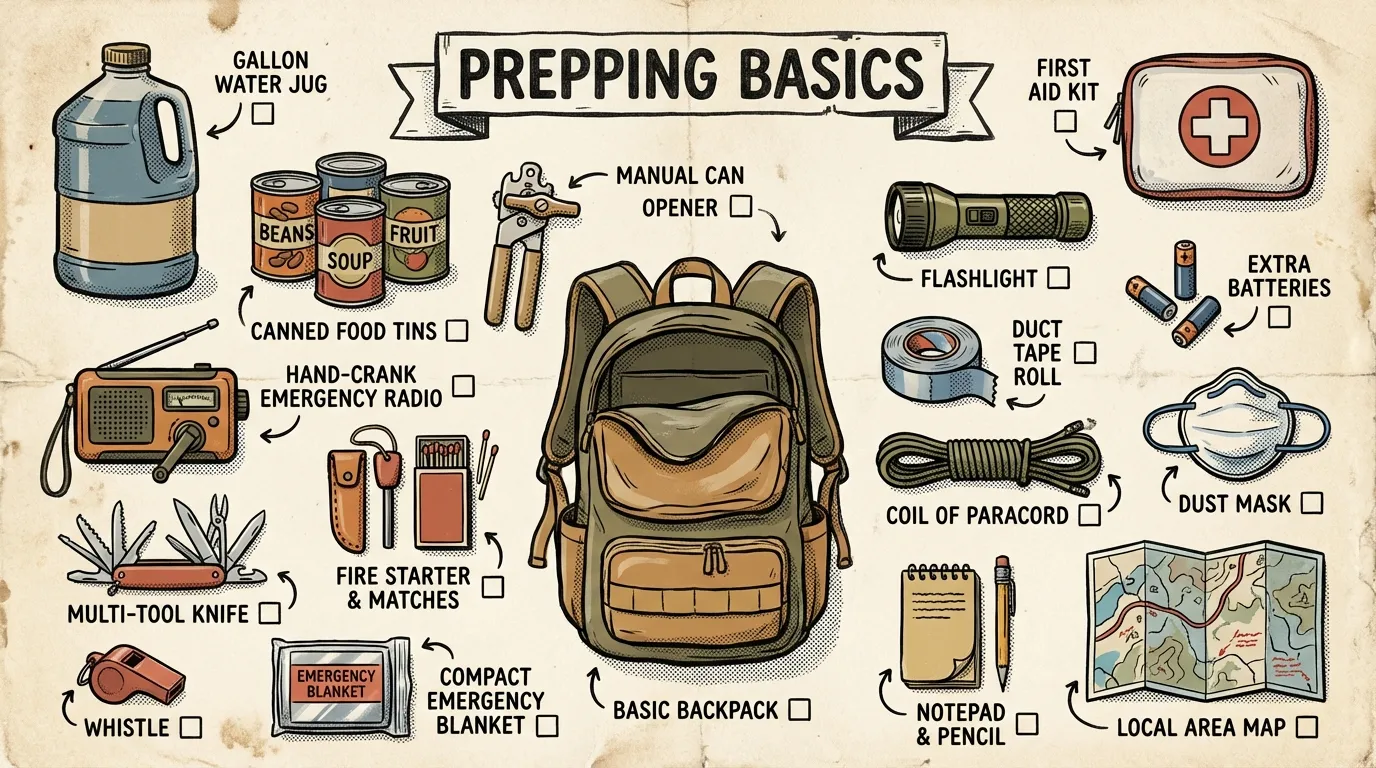
Beginner Prepping Basics: Start Survivalism the Right Way
Learn beginner prepping basics from a FEMA-trained responder. Practical steps, budget-friendly gear, and common mistakes to avoid. Start prepping today.
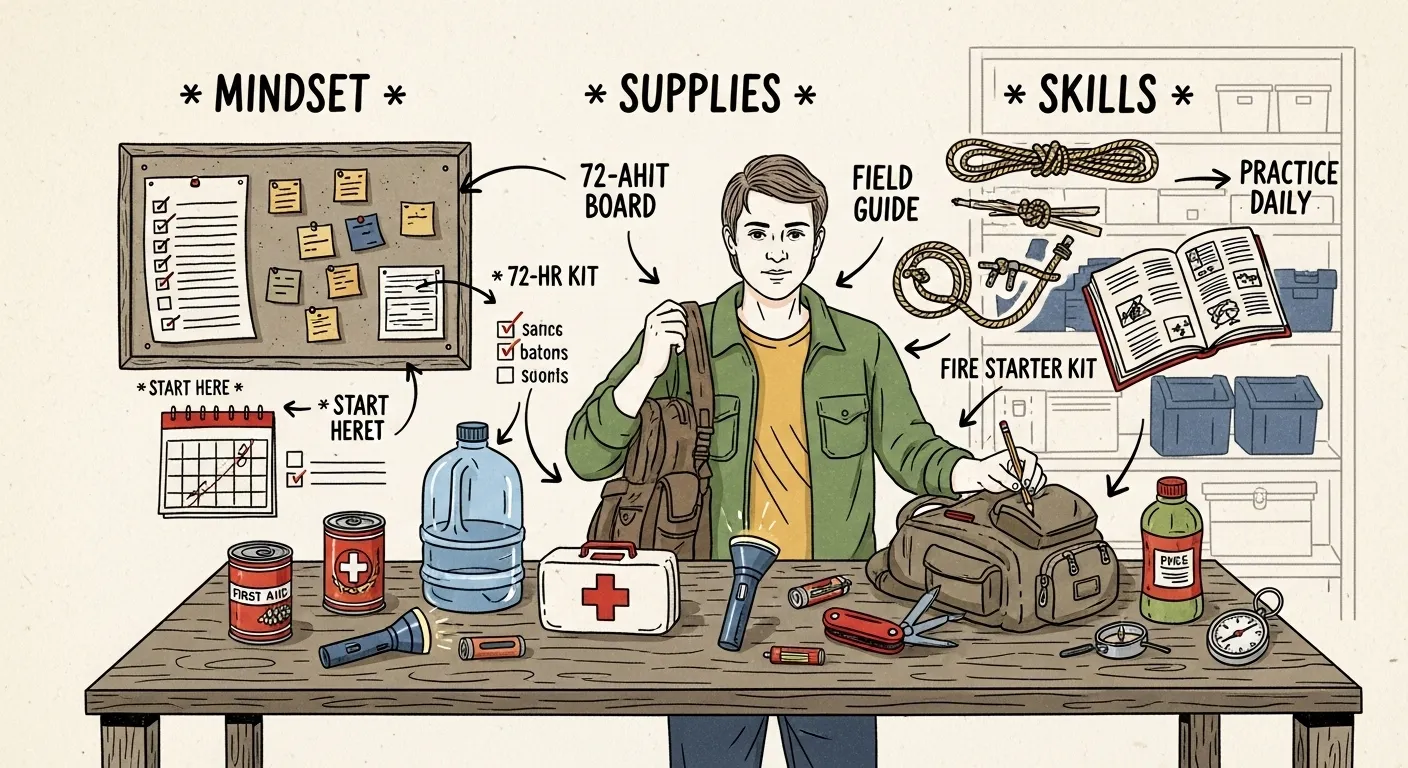
Beginner Prepper Guide: Mindset, Supplies & Skills
New to prepping? This beginner prepper guide covers the preparedness mindset, essential supplies, skills, and mistakes to avoid. Start building readiness today.