Solar Oven Cooking Tips: Sun-Powered Cooking for Emergencies
Quick answers
- Solar ovens trap heat using reflected sunlight, dark cookware, and insulation. Verify temperatures with an oven thermometer.
- Top solar oven cooking tips: place in uninterrupted sun, preheat 20 to 40 minutes, use dark metal cookware with lids, add thermal mass, adjust aim every 30 to 60 minutes, and allow extra time.
When the power is out or fuel is scarce, these solar oven cooking tips help you get safe, consistent results. Place the cooker where it gets steady sun. Use dark metal pots with tight lids. Measure temperatures.
Essential solar oven cooking tips
- Put the cooker in uninterrupted direct sun and shield it from strong wind.
- Preheat 20 to 40 minutes before adding food. A hot interior shortens and evens cook time.
- Use dark, thin metal pots and pans. They absorb heat faster than glass or ceramic.
- Always use lids to trap steam and speed cooking.
- Add thermal mass, such as sealed dark jars of water, to reduce temperature swings.
- Reposition reflectors or the cooker every 30 to 60 minutes to follow the sun.
- Use an oven thermometer to monitor interior temperature and an instant-read thermometer to check food. Follow USDA internal-temperature guidelines.
Note: Oven temperatures vary by model and conditions. Measure your oven so you know its real performance.
What is a solar oven?
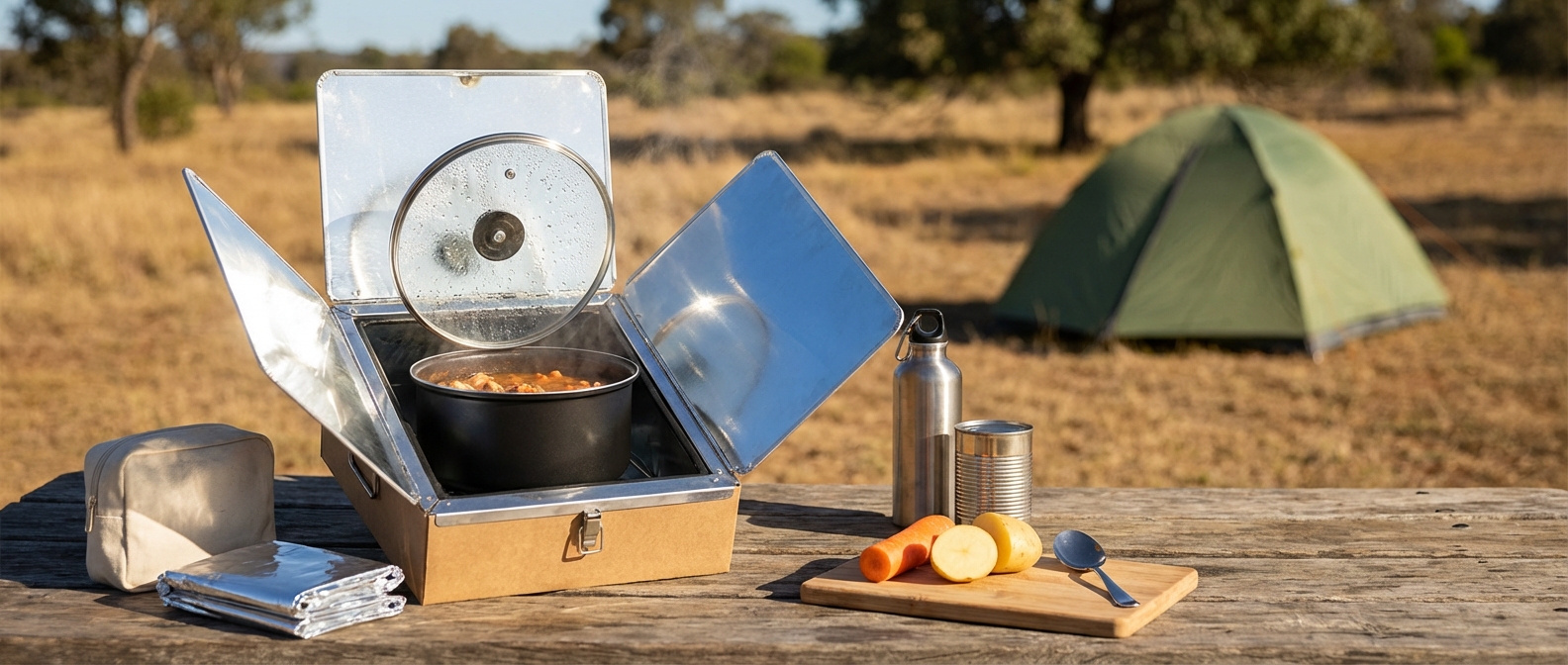
A solar oven collects and concentrates sunlight, converts it to heat with dark surfaces, and retains that heat with insulation and a transparent cover. Think of a portable greenhouse that cooks. The main parts are:
- Reflectors: aluminum foil, Mylar, or polished metal that direct sunlight into the chamber.
- Absorber: dark surfaces or cookware that convert light into heat.
- Insulation: rigid foam, fiberglass, or wool that reduces heat loss.
- Glazing: tempered glass or polycarbonate that lets sunlight in and holds heat.
Common types
- Box cookers: insulated boxes with reflective flaps. Stable and beginner friendly. Good for slow-cooking casseroles, grains, and stews.
- Panel cookers: flat reflective panels that focus sunlight into a pot. Lightweight and budget friendly.
- Parabolic cookers: dish-shaped reflectors that concentrate sunlight for higher temperatures. They cook faster but need frequent aiming and caution.
How a solar oven works
- Reflectors gather sunlight and aim it into the cooking chamber.
- Dark cookware absorbs light and converts it to heat.
- Insulation and glazing trap heat and raise the interior temperature.
Thermal mass such as water jars or stones stores heat and reduces temperature swings.
Why use a solar oven in an emergency
- No fuel required when the sun is available. Solar energy does the work.
- Safer than open flames, with less smoke and lower fire risk.
- Quiet and low profile, which can be useful in some situations.
- Good for grains, beans, casseroles, breads, roasted vegetables, and desserts.
Consult Solar Cookers International and your local public health department for technical guidance and safety recommendations.
Getting started: practical tips for predictable results
- Choose the right day and spot
- Use clear skies or peak sun hours from late morning to mid-afternoon.
- Pick a location with several hours of uninterrupted sun and protection from strong wind.
- Preheat the oven
- Aim the oven at the sun and preheat 20 to 40 minutes before adding food. Preheating reduces variability.
- Use the right cookware
- Dark, thin metal pots and pans heat fastest.
- Glass and ceramic work, but they heat and cool differently; expect longer times.
- Use lids. They retain steam and speed cooking.
- Add thermal mass, such as sealed dark jars of water, to even out temperature swings.
- Prepare foods for slow, even cooking
- Cut vegetables into uniform pieces so they cook at the same rate.
- Soak grains and beans when appropriate.
- Add enough liquid; solar ovens cook mostly by conduction and steam.
- Aim and adjust regularly
- Realign reflectors or the cooker every 30 to 60 minutes so the sun hits the absorber directly.
- Allow extra time
- Solar cooking is slower than conventional ovens. Plan for longer cook times and check temperatures rather than relying on time alone.
- Verify food safety
- Use an oven thermometer to monitor interior temperature and an instant-read thermometer for final checks.
- USDA internal-temperature guidelines: poultry 165 F (74 C), ground meats 160 F (71 C), whole cuts 145 F (63 C) plus rest time.
- If you cannot confirm a safe internal temperature, continue cooking until you can.
Typical solar oven cooking times (approximate)
| Food type | Typical time range (sunny day) | Notes |
|---|---|---|
| White or brown rice | 1 to 2 hours | Tight lid; about 2 to 2.5 cups liquid per cup rice |
| Vegetables (chopped) | 1 to 2 hours | Root vegetables toward the upper end |
| Casseroles and one-pot meals | 2 to 3 hours | Covered pan; check internal temperature |
| Beans (pre-soaked) | 2 to 4 hours | Dry beans often need longer or pre-cooking |
| Cornbread and muffins | 1.5 to 2.5 hours | Use dark pans; time varies with sun intensity |
| Baked fruit and cobbler | 1 to 2.5 hours | Bake until bubbly and tender |
These times are starting points. Actual cook times depend on your oven, sunlight intensity, and ambient temperature.
Practical recipes and meal ideas
- Solar rice and beans: 1 cup rice plus canned or pre-cooked beans, 2 to 2.5 cups liquid, covered dark pot, 1.5 to 2 hours.
- Vegetable bake: chopped vegetables tossed with oil and herbs in a covered dark pan, 2 to 3 hours.
- Solar chili: canned tomatoes, beans, and seasoning, simmer covered for 2 to 3 hours.
- Cornbread or muffins: dark baking pan, 1.5 to 2.5 hours.
- Baked fruit or cobbler: dark pan, bake until bubbly.
Do not attempt high-heat frying or searing that needs immediate, intense heat. Solar ovens work best for slow, moist, or baked dishes.
Food safety and water pasteurization
- Always verify internal food temperatures with an instant-read thermometer.
- Follow USDA temperature guidelines listed above.
- For water pasteurization using a solar cooker, use a reliable thermometer and follow public health instructions. Boiling remains the most foolproof method for water safety.
Maintenance and care
- Clean the interior and glazing after use to prevent residue buildup.
- Keep reflective panels clean; avoid abrasive cleaners.
- Inspect seals, hinges, and insulation and replace parts that wear out.
- Store the oven in a dry place away from prolonged UV exposure when not in use.
- Practice using the oven on clear days to learn how it behaves across seasons.
Build a simple solar oven meal kit
- Dark pot with lid
- Dark baking pan
- Oven thermometer for interior readings
- Instant-read food thermometer
- Oven mitts
- Basic seasonings and staple dry goods
- Quick-start guide with your oven’s measured preheat time and typical cook times
Practice recipes on good weather days so you know timing, aiming, and safety before an emergency.
FAQ
Q: Can a solar oven cook food safely?
A: Yes. Cook safely when you have enough sun and verify safe internal temperatures.
Q: Do solar ovens work on cloudy days?
A: Performance drops in heavy cloud cover. Partly cloudy days may warm food but are unreliable for full cooking.
Q: Can I use a solar oven in winter?
A: Yes, when the sun is bright and direct. Expect longer cook times.
Q: Which solar oven is best for beginners?
A: Box-style cookers are forgiving and easy to use.
Q: Can I cook meat in a solar oven?
A: Yes. Ensure adequate sun, sufficient time, and confirm safe internal temperatures.
Practice and prepare
Position the cooker well. Use dark cookware with lids. Verify temperatures with thermometers. Practice these steps before an emergency so you know how your oven performs. Solar ovens become dependable tools when you prepare and test them.
Note: Temperature ranges and cook times vary by oven and conditions. Test your solar oven and document its performance before relying on it in an emergency.