Alternative Cooking Methods for Preppers: Off-Grid Cooking Options
Quick Answer / TL;DR
Practical alternative cooking methods for beginners: solar cookers (fuel-free, weather-dependent), rocket stoves that boil water using small twigs, Dutch ovens for one-pot baking and stews, campfire cooking, and alcohol stoves for ultralight kits. A starter set of 2-3 methods works well: one home backup, one portable option, and one low-fuel or long-term solution. Practice each method before relying on it in an emergency.
Short direct summary (answer-first)
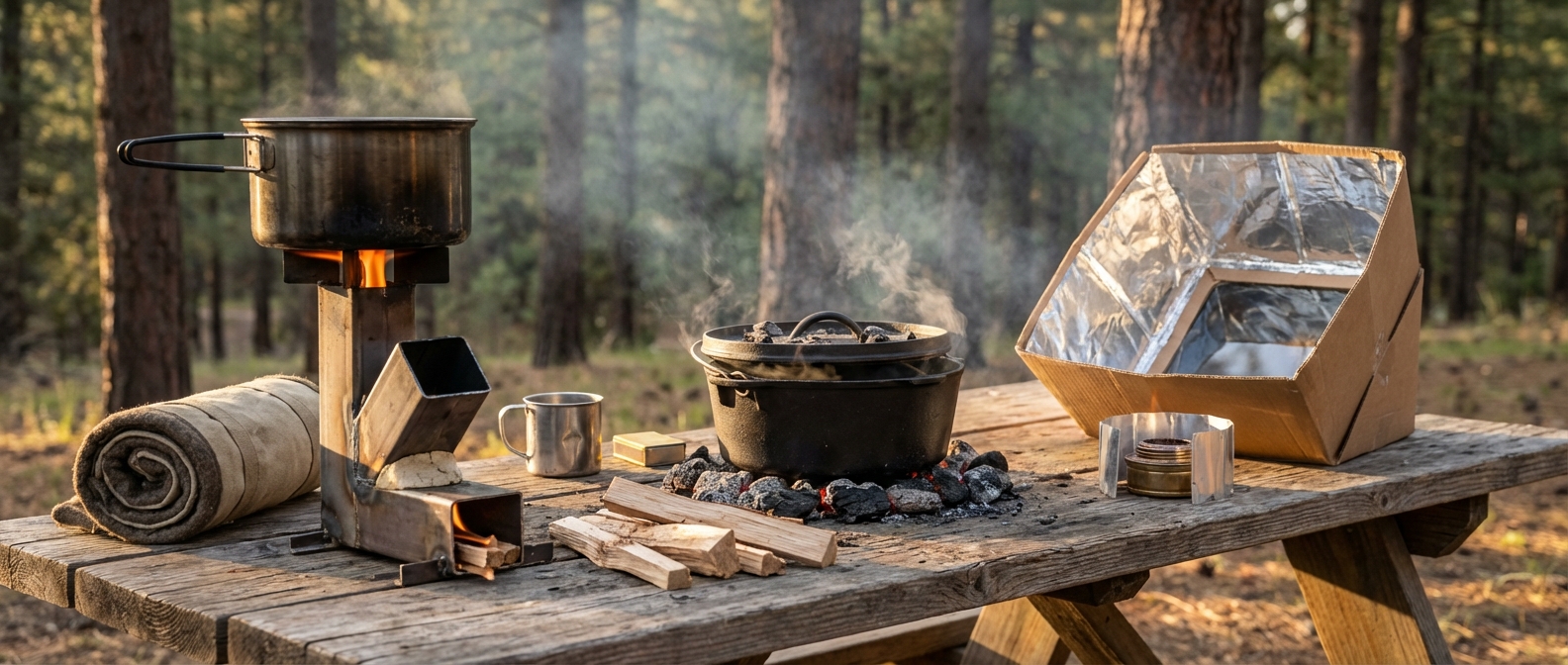
Alternative cooking methods let you heat and prepare meals without grid electricity or piped gas. Match methods to your climate, available fuels, living space, and how mobile you need to be. A practical base set is a rocket stove for fast boiling with minimal wood, a Dutch oven for baking and large meals, and an alcohol stove for light, quiet portability. Add a solar cooker if you have reliable sun.
Why alternative cooking methods matter
Alternative cooking methods let you cook and treat water when power and gas are out. They keep food safe, allow you to boil and rehydrate staples, and give options for camping, evacuations, or long-term off-grid living. Choose tools that match local conditions so they actually work when you need them.
At-a-glance comparison
| Method | Fuel / Input | Best for | Pros | Cons |
|---|---|---|---|---|
| Solar cooker | Sunlight | Slow-cooking, baking, water pasteurization | No fuel cost, no smoke | Weather-dependent, slow |
| Rocket stove | Small biomass (twigs) | Rapid boiling, frying | Brings water to a boil with far less fuel than an open fire | Needs dry fuel, some soot on cookware |
| Dutch oven | Charcoal, embers, wood | Baking, stews, large meals | High heat retention, even baking | Heavy, requires ember management |
| Campfire | Wood logs | Flexible outdoor cooking | Readily available fuel in many areas | Less efficient, visible smoke, often regulated |
| Alcohol stove | Denatured alcohol, ethanol | Boiling water, rehydrating meals, ultralight kits | Very light and compact fuel bottles | Lower peak heat, slower boils |
| Solid fuel tablets | Hexamine or similar | Short-term emergency heat | Compact, long shelf life | Limited burn time, leaves residue |
Solar Cooking
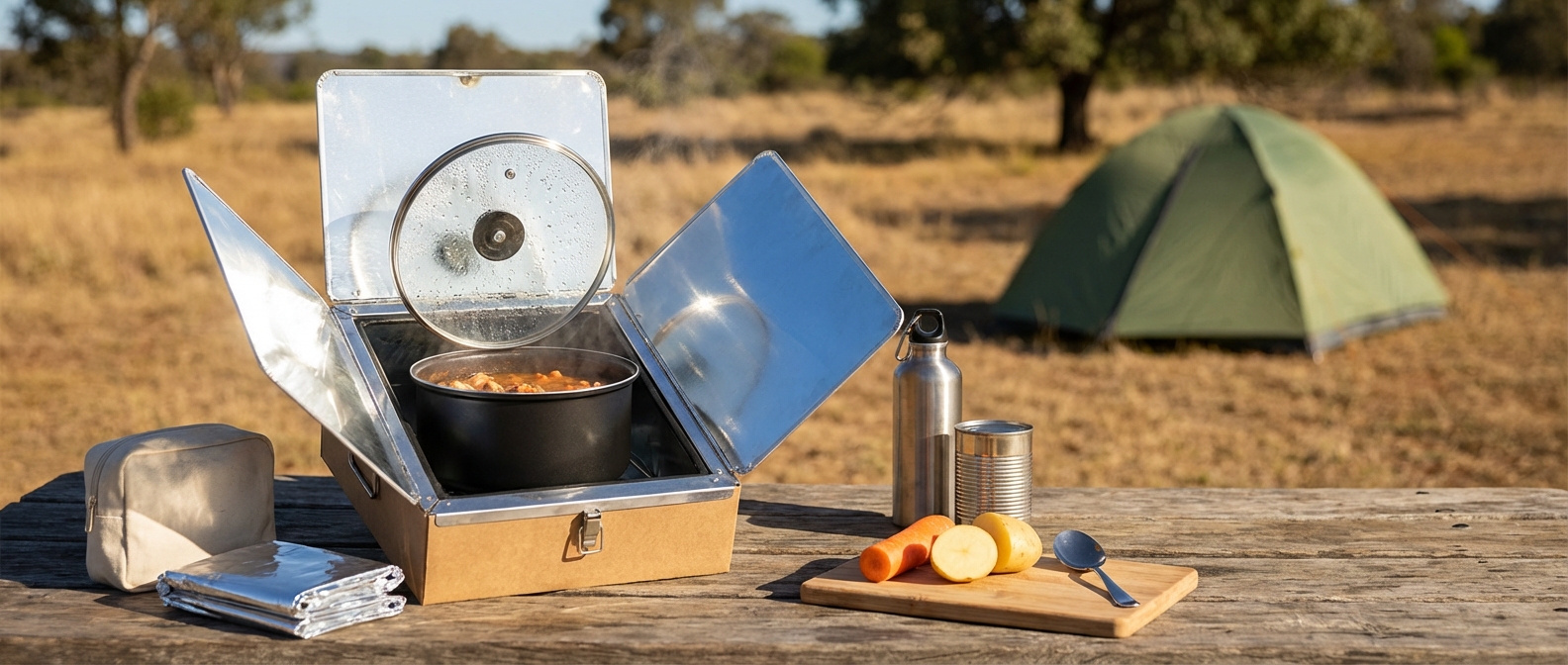
A solar cooker concentrates sunlight with reflectors or a parabolic dish to heat food without combustion. Temperatures in strong sun can reach roughly 250-400 F (120-204 C). That handles rice, stews, slow baking, and water pasteurization.
Pros: no fuel purchases, no smoke. Cons: requires clear skies and takes longer than flame-based cooking. Keep a thermometer and use dark, well-sealed pots for best results. Keep a secondary method for cloudy days.
Rocket Stoves
Rocket stoves burn small-diameter biomass in an insulated combustion chamber. The design channels heat upward so you get hotter, cleaner burns with less fuel than an open fire.
Use a rocket stove for rapid boiling and frying when fuel is limited. It will boil water faster than a simple campfire while using just twigs. Expect soot on the bottom of pots. Place it on a nonflammable surface and keep a fire extinguisher or water nearby. For indoor use choose certified, vented models and run a carbon monoxide alarm.
Dutch Ovens (cast iron)
A Dutch oven is a heavy lidded cast-iron pot used with coals or embers to bake, roast, and stew. It excels at bread, casseroles, roasts, and large-batch meals.
Learn coal placement and rotate the pot to avoid hot spots. Season and store the cast iron dry to prevent rust. Remember the pot is heavy; plan how you will carry and store it.
Campfire Cooking
Campfire techniques include grilling, skillet cooking, foil packets, and pot cooking over coals. Cook over coals for steadier heat rather than direct flames.
Campfires work when wood is abundant. They are adaptable but less efficient than a rocket stove and produce visible smoke. Always follow local regulations and carry tools to fully extinguish the fire.
Alcohol Stoves and Lightweight Options
Alcohol stoves burn denatured alcohol, ethanol, or methanol and suit ultralight kits. They are ideal for boiling water and rehydrating freeze-dried meals.
These stoves weigh only a few ounces and fuel fits into small bottles. They generate lower peak heat, so expect slower boil times. Use approved fuels, never refill a hot burner, and practice lighting and extinguishing on stable ground.
Other fuel options (quick)
- Charcoal: steady heat for grills and Dutch ovens; store it dry.
- Solid fuel tablets: compact emergency fuel with long shelf life but short burn times.
- Gas canisters (butane/propane): convenient, controlled flame, but require resupply.
- Biomass: twigs and brush for rocket stoves and campfires.
Check local fuel availability and regulations before buying gear.
How to choose the right combination (practical checklist)
- Define the role for each method: home backup, apartment-safe, bug-out kit, or long-term off-grid.
- Verify local rules about open fires and fuel gathering.
- Note which fuels you can source reliably: sunlight, wood, alcohol, or canisters.
- Match cookware size to your household and meal plans.
- Balance stealth versus speed and capacity. Alcohol stoves are discreet. Rocket stoves are fast. Dutch ovens hold a lot.
- Practice each method to learn boil times, fuel needs, and common problems.
Suggested starter combo: rocket stove, Dutch oven, and an alcohol stove. Add a solar cooker if you live in a sunny area.
Safety and indoor-use warnings
Most open-flame and solid-fuel devices produce carbon monoxide. Do not use them in unvented indoor spaces. Only use devices indoors when the manufacturer says they are indoor-safe, you have proper ventilation, and you run a CO detector. Keep fire suppression tools handy and never leave active flames unattended.
FAQ (concise)
Q: What are practical alternative cooking methods for preppers?
A: Solar cookers, rocket stoves, Dutch ovens, campfire techniques, alcohol stoves, charcoal, and solid fuel tablets. Choose based on location and needs.
Q: Can I cook without electricity or gas?
A: Yes. Use sunlight, biomass, charcoal, denatured alcohol, or solid fuel tablets with the right stove and cookware.
Q: Are these methods safe indoors?
A: Generally no. Avoid wood, charcoal, and most biomass stoves indoors unless they are specifically designed and properly vented with CO monitoring.
Next steps (practical actions)
- Pick 2-3 methods that match your climate and how you move.
- Buy or build the gear and test it at home. Time boils and measure fuel use.
- Practice safety: ventilation, CO alarms, and how to extinguish fires.
- Store and rotate fuels safely. Create a one-page emergency checklist.
Practice your chosen methods now so they work when you need them.