Foraging Wild Edibles: A Beginner’s Guide for Preppers
Quick start
- Learn 3 to 5 high-confidence species first: dandelion, plantain, clover, chickweed, cattail, or common brambles.
- Confirm identification with two trusted sources: a regional field guide plus USDA, iNaturalist, or your local extension service.
- Harvest ethically, avoid contaminated sites, and use foraged foods as a supplement to stored food and gardening.
Summary
Foraging wild edibles means finding, identifying, and harvesting safe-to-eat plants. For preppers, it increases food resilience and adds fresh nutrients and flavor, but it does not replace stored staples. Always confirm identity, avoid pollution, and harvest with care.
This guide focuses on plant foraging. Mushroom foraging requires separate expert training.
Clear definitions
- Foraging: gathering wild foods such as leaves, roots, seeds, and fruits from natural or semi-natural areas.
- Positive identification: matching multiple characteristics of a plant—leaf shape and arrangement, flowers, stem, habitat, smell—and confirming with more than one trusted reference.
- Edible part: the specific plant part safe to eat, for example young leaves, flower buds, roots, seeds; some parts need cooking.
- Ethical harvesting: taking only what you need, avoiding rare species, leaving food for wildlife, and minimizing damage to the site.
Why foraging wild edibles matters for beginner preppers
- Adds fresh nutrients and variety. Example: dandelion leaves for bitter greens, wild berries for vitamin C, cattail shoots for starchy food.
- Builds seasonal knowledge and observation skills that help in other survival tasks.
- Complements gardening, preserving, and outdoor cooking.
- Saves money when you harvest responsibly and legally.
Regional availability varies. Verify any local statistics before relying on them.
Getting started with foraging wild edibles
Start small. Master 3 to 5 species across seasons and growth stages so you can identify them reliably.
Core beginner skills
- Observe closely: note leaf shape, leaf arrangement, flower structure, stem texture, sap, smell, habitat, and season.
- Confirm identity with multiple matching traits; do not rely on a single feature.
- Avoid plants near roads, industrial sites, or chemically treated lawns.
- Know seasonality: spring leaves differ from fall seeds.
- Harvest with low impact and leave plenty for wildlife.
Tools and resources
- Regional field guides in paper form.
- USDA Plants Database and iNaturalist.
- Local extension services, Master Gardener programs, and Native Plant Societies.
- Plant ID apps used only as a secondary check.
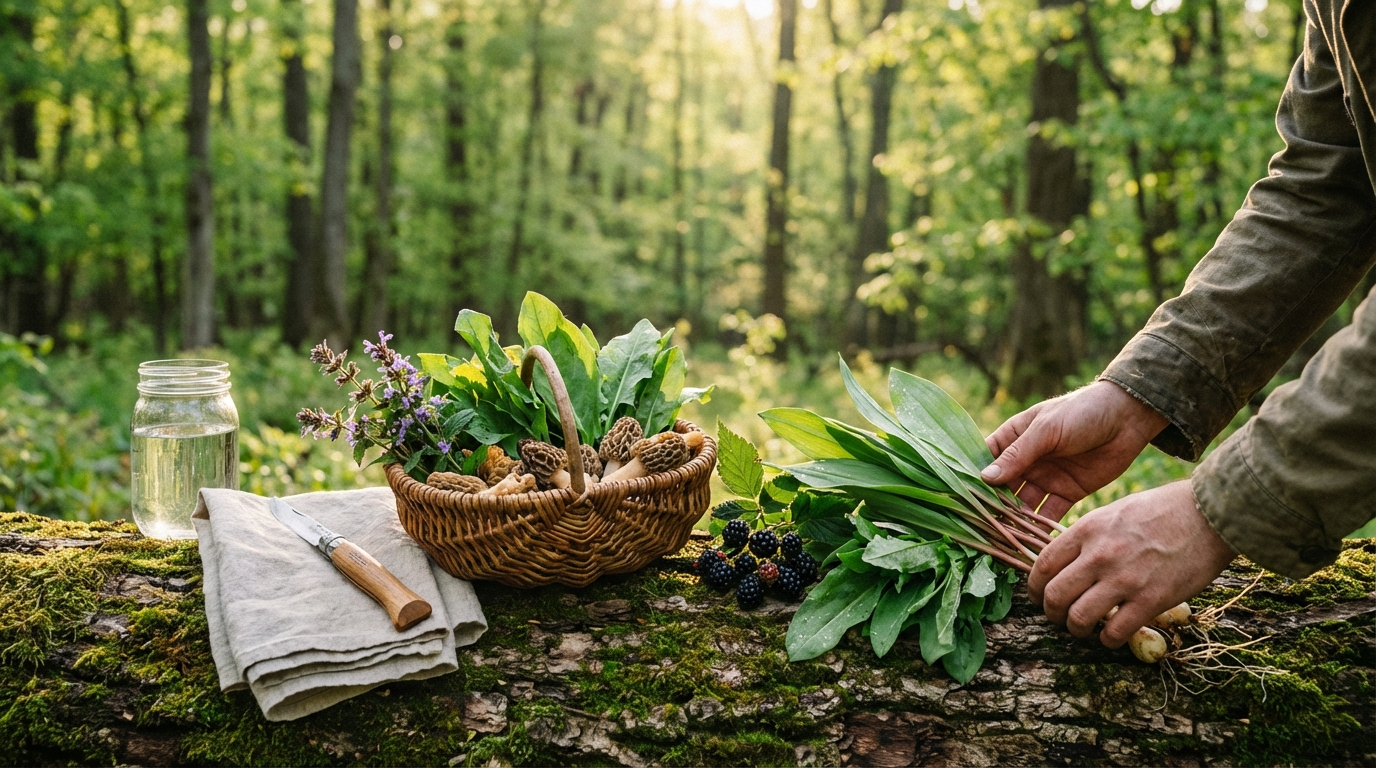
- Basic kit: knife or scissors, basket or mesh bag, gloves, camera or notebook, water, and a small first-aid kit.
Best practices before eating any plant
- Confirm identity with at least two trusted sources.
- Know exactly which part is edible and whether it requires cooking.
- Try a small portion first to check for allergic reactions.
- If you are not certain, do not eat it.
Top foraging wild edibles for beginners (quick reference)
| Common name | Scientific name | Key ID features | Edible parts | Notes / Safety flags |
|---|---|---|---|---|
| Dandelion | Taraxacum officinale | Toothed basal rosette, hollow flower stalk, yellow composite flowers | Leaves, flowers, roots | Young leaves are less bitter; avoid lawns treated with herbicides |
| Plantain | Plantago major, P. lanceolata | Low rosette, parallel leaf veins, tall seed spikes | Young leaves, seeds | Leaves can be used fresh or cooked; some species vary regionally |
| Clover | Trifolium spp. | Three leaflets, rounded flower heads | Leaves, flowers | Flowers make tea or add to salads; avoid treated lawns |
| Chickweed | Stellaria media | Opposite leaves, tiny white star-like flowers | Tender shoots and leaves | Mild flavor raw; check for local look-alikes |
| Blackberry / Raspberry | Rubus spp. | Thorny canes, compound leaves, aggregate berries | Berries (young shoots sometimes edible) | Excellent for jams and drying; avoid pesticide-sprayed plants |
| Cattail | Typha spp. | Tall wetland plant with flat leaves and a brown cylindrical seed head | Shoots, immature flower spikes, rhizomes, pollen | Harvest only from clean water; wetlands can accumulate pollutants |
| Wood sorrel | Oxalis spp. | Three heart-shaped leaflets, small flowers | Leaves, flowers | Tart flavor from oxalic acid; use sparingly and avoid with kidney conditions |
Species and look-alikes vary by region. Verify locally before eating.
Safety: avoiding toxic plants and other hazards
Identification rules
- Do not eat any plant unless you are certain of its identity.
- Use multiple ID features: leaf, flower, stem, habitat, and season.
- Cross-check with at least two trusted sources such as a regional guide and an extension service.
- Learn common poisonous plants in your area before you start foraging.
Other hazards
- Chemical contamination: avoid plants from pesticide-sprayed lawns, roadsides, or areas with runoff. Wetland plants can accumulate heavy metals; harvest only from known-clean sites.
- Biological contamination: discard moldy or insect-damaged portions.
- Allergies and sensitivities: always test a small amount first.
- Mushrooms: do not harvest unless you have expert training.
Emergency contacts and references
- U.S. Poison Control: 1-800-222-1222. Use the local equivalent if you are outside the U.S.
- Local extension services and Master Gardener programs.
- USDA Plants Database and reputable regional field guides.
Integrating foraged foods into your prepper diet
Practical uses
- Add wild greens to salads, omelets, soups, and sautés.
- Brew teas from blossoms or dried leaves.
- Preserve seasonal harvests: dehydrate greens, freeze berries, make jams or syrups.
Simple beginner recipe ideas
- Wild Greens Scramble: sauté chopped chickweed or young dandelion with onion, then add beaten eggs. Short cook time keeps leaves tender.
- Forager’s Salad: mixed greens with small amounts of dandelion, chickweed, clover blossoms, and fresh berries.
- Berry Camp Sauce: simmer blackberries with a splash of water and a little sweetener until saucy.
Use foraged foods in familiar recipes so your household accepts them and you gain experience.
Legal and ethical foraging practices
- Check land rules: respect park regulations, state and national forest policies, wildlife area rules, and private property rights.
- Take only what you need and avoid collecting rare or protected species.
- Harvest from abundant patches and avoid trampling.
- Leave food for wildlife and pollinators.
FAQ: beginner questions about foraging wild edibles
Q: What are safe starter plants? A: Dandelion, plantain, clover, chickweed, cattail from clean water, wood sorrel, and common brambles. Availability changes by region and season.
Q: How can I identify plants safely? A: Match several identifying features, cross-check at least two trusted sources, and refuse to eat anything you cannot identify with certainty.
Q: Are mushrooms a good beginner target? A: No. Mushroom identification carries high risk and requires separate, expert training.
Q: Can foraging sustain me in an emergency? A: No. Foraging supplements nutrition and variety. Combine it with stored staples, gardening, and water planning for preparedness.
Build skills, not overconfidence
Foraging wild edibles gives you fresh food options and practical outdoor skills when you practice responsibly. Start with a few species, use reliable local references, harvest ethically, and pair foraging with gardening and food storage to strengthen your preparedness plan.
Further learning and resources: local extension offices, Master Gardener programs, reputable foraging field guides, and accredited workshops.
See also: [INTERNAL_LINK: Becoming a Prepper: The Beginner’s Guide to Survival Readiness], [INTERNAL_LINK: Canned Goods and Other Edibles: Your First Steps to Stockpiling Food], [INTERNAL_LINK: From Garden to Table: Starting a Prepper Garden]