Emergency communication tools: Staying connected when the grid goes down
TL;DR
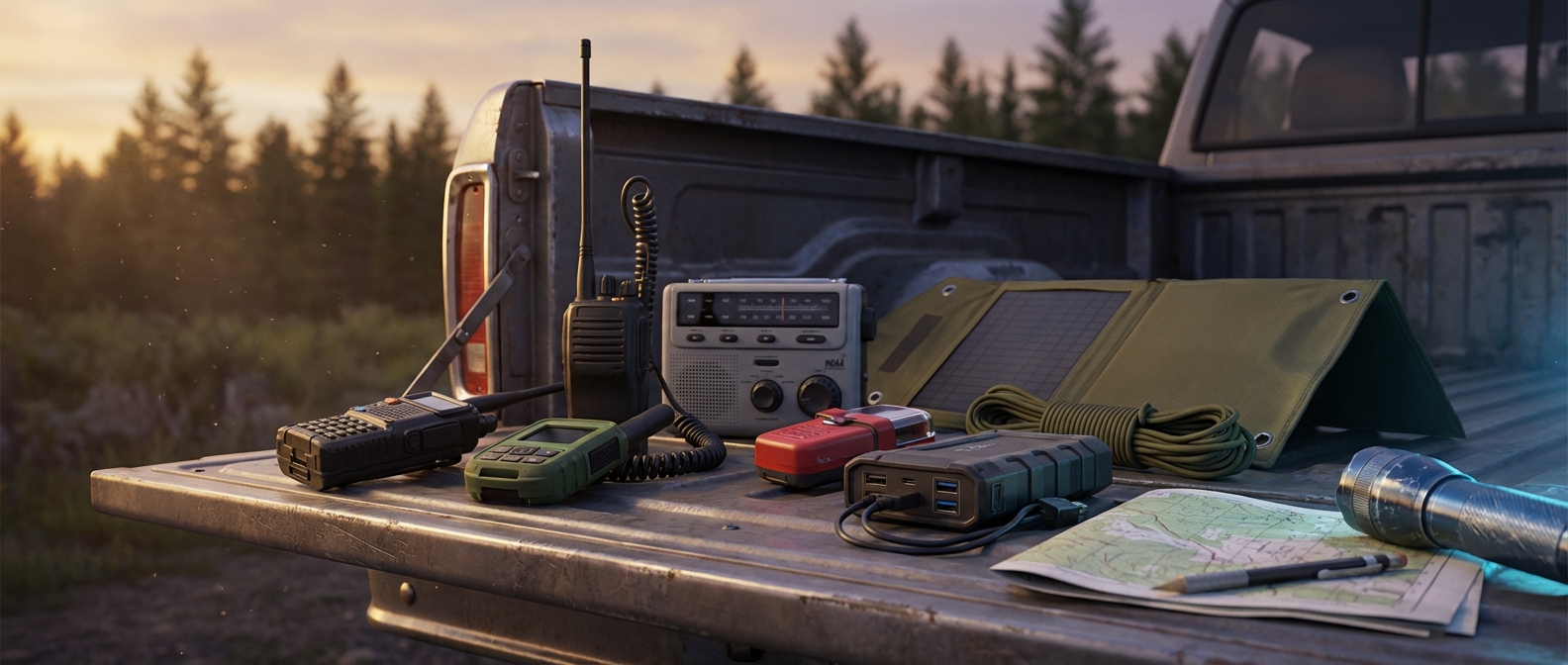
- The best emergency communication setup uses layers: smartphone with backup power, NOAA weather radio, short-range two-way radios (FRS/GMRS), and a satellite communicator or PLB as a last resort.
- Ham radio or a satellite phone add capability for larger-scale or long-range incidents.
- Test your plan, keep spare power, and run regular drills.
Answer-first summary
Emergency communication tools are the devices, apps, networks, and procedures you use when normal networks fail. Build a layered plan with practical options:
- Short-range person-to-person: FRS/GMRS radios and ham radio for neighborhoods and local teams.
- One-way public alerts: NOAA weather radio and Wireless Emergency Alerts for official warnings.
- Last-resort long-range: satellite communicators, PLBs, or satellite phones for remote SOS and messaging.
- Power solutions: high-capacity power banks, portable solar panels, and vehicle chargers.
Start with simple, easy-to-use tools. Add more technical options as needed. Practice with drills and keep written instructions and spare batteries.
Check FEMA, NOAA/NWS, FCC, ARRL, and COSPAS-SARSAT for the latest technical or regulatory details.
What emergency communication tools are
These tools help you receive warnings, exchange messages with family or responders, request assistance, and maintain situational awareness when systems are degraded. Key functions include:
- Receiving official alerts and forecasts.
- Person-to-person messaging and coordination.
- Sending location or SOS signals for search and rescue.
- Storing plans, contacts, and offline maps.
Layered starter kit for beginners
- Smartphone plus a charged power bank
- Uses: alerts, maps, SMS, messaging apps. Keep one or two power banks rated 10,000 mAh or higher.
- NOAA Weather Radio (battery, hand-crank, or solar model)
- Uses: official weather and hazard broadcasts.
- FRS or GMRS two-way radios (walkie-talkies)
- Uses: short-range coordination with family and neighbors.
- Offline-capable apps and pre-downloaded maps
- Uses: navigation and reference without internet.
- Satellite communicator or PLB as a last-resort tool
- Uses: SOS alerts, two-way text (sat communicators), or one-button distress (PLB).
Match your kit to where you live and how you travel.
Major tools: definitions and quick facts
-
Smartphone
- A familiar device for voice, text, apps, and maps. It depends on cell towers and battery life.
-
NOAA Weather Radio / weather radio receiver
- A dedicated receiver for National Weather Service broadcasts with SAME alerts. It provides reliable one-way warnings and often runs on batteries or solar.
-
FRS / GMRS radios
- Simple two-way radios for local use. GMRS may require an FCC license in the U.S. Range varies with terrain and buildings.
-
Ham (amateur) radio
- Licensed operators use many frequencies and modes for local and long-range communication. Volunteers often staff emergency nets.
-
Satellite communicator (for example Garmin inReach or SPOT)
- Handheld devices that send and receive messages via satellite networks. They provide tracking and SOS functions, but require a subscription and clear sky.
-
Satellite phone
- Provides voice calls via satellites. Good for extended voice use beyond cellular coverage. Expect higher device and airtime costs.
-
Personal Locator Beacon (PLB)
- A one-button distress beacon that transmits to COSPAS-SARSAT for search and rescue. Use it only for life-threatening situations.
-
Offline-capable apps and stored data
- Apps that keep maps, guides, and contacts locally. They are inexpensive and useful when the internet is down, but they still need power.
Pros and cons
- Smartphone: familiar and versatile, but depends on towers and battery.
- NOAA Weather Radio: dependable for official alerts, but not for person-to-person messaging.
- FRS/GMRS: low-cost and simple for local coordination, but range is limited and licensing may apply for GMRS.
- Satellite communicators and satellite phones: work beyond cell coverage and include SOS features, but require subscriptions, cost, and a clear view of the sky.
- Ham radio: flexible and supported by volunteer networks, but needs training and licensing.
- PLBs: extremely reliable for distress signaling, but provide one-way alerts and are reserved for emergencies.
How to choose the right tools
- Decide your likely scenarios: urban blackout, wildfire evacuation, remote hiking, or coastal storm.
- Match tools to scenarios:
- Local coordination: FRS/GMRS.
- Official alerts: NOAA radio and Wireless Emergency Alerts.
- Remote SOS: PLB or satellite communicator.
- Community resilience: ham radio.
- Plan for power: power banks, portable solar panels, and vehicle charging adapters.
- Factor in training and licensing: ham radio and GMRS in the U.S. may need exams or licenses.
- Budget for subscriptions when choosing satellite services.
Build and test your plan: concrete steps
- Inventory what you own: devices, battery types, chargers, and subscription details.
- Pick a primary, a backup, and a last-resort option for each communication need.
- Write a family plan: out-of-area contact, meeting points, and preferred channels such as a phone number, a radio channel, or a scheduled satellite check-in. Keep a printed copy.
- Create a power plan: store charged power banks, spare batteries, a compact solar charger, or a vehicle power solution.
- Test on a schedule: check batteries monthly, run communication drills quarterly, and perform a full equipment test once a year.
Start simple. Then add redundancy.
Practical FAQ
-
What are the best emergency communication tools for beginners?
- Smartphone with backup power, a NOAA weather radio, and FRS radios form a strong starter set.
-
Will corded landlines work during a power outage?
- Some older corded analog phones work without mains power. Many modern phone systems depend on powered equipment and can fail.
-
Are walkie-talkies enough?
- They are useful for local coordination but should be one layer in a broader plan.
-
Do I need a satellite phone?
- Most people do not. A satellite communicator or a PLB is usually a lower-cost, practical alternative unless you need sustained voice calls.
-
How often should I test my setup?
- A reasonable baseline is monthly battery checks, quarterly drills, and an annual full equipment exercise.
Action checklist
- Immediate: buy a NOAA weather radio and a reliable power bank. Program emergency contacts into your phone.
- Short-term: get FRS/GMRS radios, learn basic operation, and draft a family communication plan.
- Longer-term: add a satellite communicator or PLB if you travel remotely. Consider ham radio training for community resilience.
- Maintain: check batteries monthly, run quarterly drills, and update contacts annually or when circumstances change.
Suggested gear placement for quick packing or staging:
- Weather radio
- Power bank
- FRS/GMRS radios
- Satellite communicator or PLB if you own one
- Printed family plan
- Compact solar charger
For official guidance and the latest technical or regulatory details, consult FEMA, NOAA/NWS, FCC (U.S.), ARRL, and COSPAS-SARSAT documentation.