Everyday Carry for Preppers: Essentials for the Modern Prepper
Summary
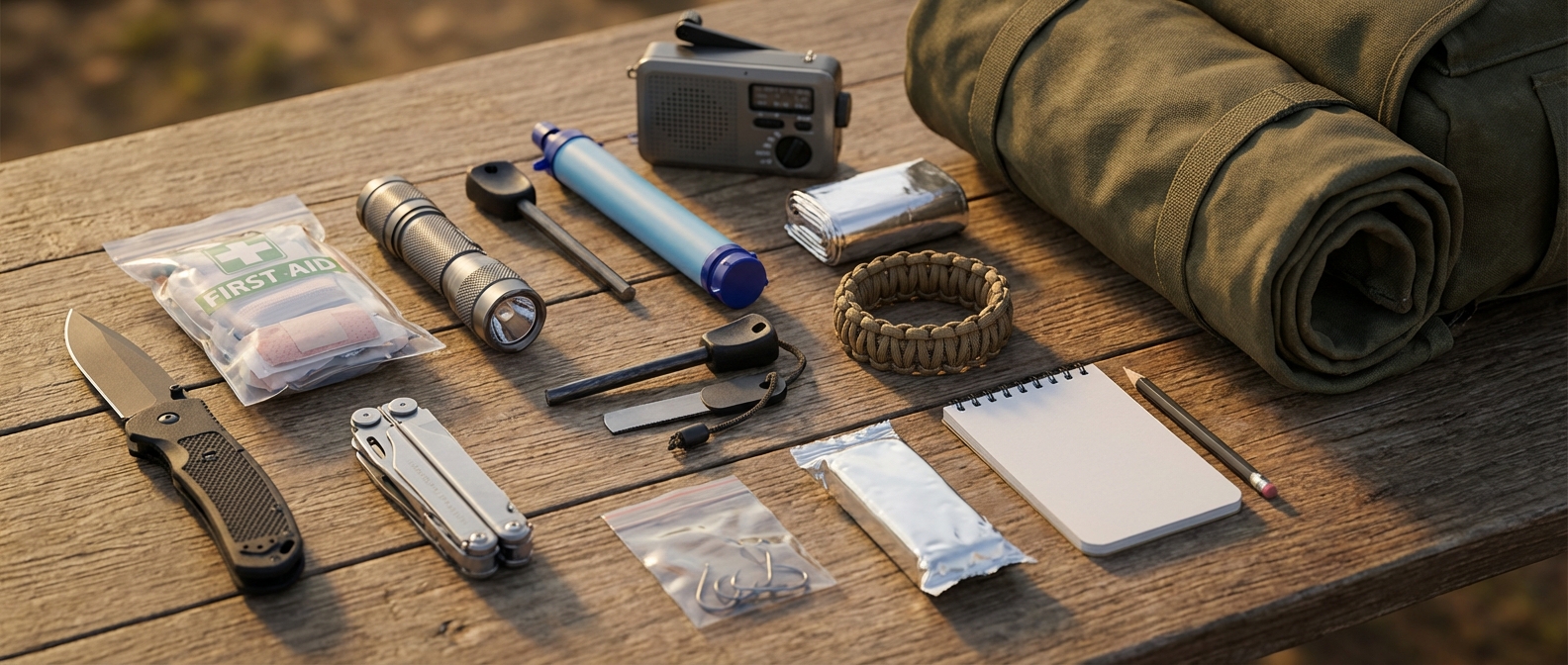
- A practical everyday carry for preppers includes: phone, wallet (ID and cash), keys, a pocket knife or multitool, compact flashlight, fire source, small first-aid items and personal meds, portable charger and cable, a hydration option, and a pen and small notebook.
- Keep EDC compact so you will actually carry it. Add a bag kit and a vehicle kit to expand capability.
What is everyday carry for preppers?
Everyday carry for preppers, or EDC, is the small set of items you carry every day to handle common problems and short-term emergencies. Examples: a phone for communication and navigation, a flashlight for finding your way at night, a bandage for a cut, or a multitool for a quick repair. Start small. Build from there.
Why build an everyday carry for preppers
- Handle immediate mishaps like flat tires, minor injuries, or lost power.
- Create a routine so preparedness becomes automatic.
- Use a layered approach. Pocket items cover short incidents. A bag or vehicle kit covers longer situations.
Core EDC items and selection tips
- Phone. Keep it charged. Use a sturdy case and store offline maps and emergency contacts.
- Wallet. Carry ID, a credit card, and a few small bills. Include an insurance card and a paper list of emergency contacts if needed.
- Keys. Remove extras you do not use. Add a small keylight or a tiny pill carrier if helpful.
- Multitool or pocket knife. Good for cutting, opening, and small repairs. Follow local laws and workplace rules.
- Compact flashlight. Look at lumen output, battery type, water resistance, and whether it charges by USB.
- Fire source. A lighter or ferro rod for warmth, light, and signaling. Practice safe use and obey local fire rules.
- Small first-aid items. Bandages, antiseptic wipes, gauze, pain reliever, and any prescriptions you need daily.
- Portable charger and cable. Match capacity to your phone and keep the cable that fits your device.
- Hydration option. A reusable bottle, a small filter, or water purification tablets for outdoor use.
- Pen and small notebook. Write down directions, names, or medical details when electronics fail.
- Personal medications and hygiene items. Examples: inhalers, EpiPens, glucose tablets, contact lens supplies, or feminine products.
Compact sample beginner EDC
- Phone
- Wallet with ID, a card, and small cash
- Keys
- Multitool or pocket knife
- Compact flashlight
- Lighter or ferrocerium rod
- Small first-aid kit plus meds
- Portable charger and cable
- Pen and small notebook
- Water bottle or compact hydration option
How to personalize your EDC
- Look at your daily routine: commute, work environment, and family needs.
- Identify local risks: frequent storms, wildfire season, flooding, extreme heat, or long rural drives.
- Follow laws and employer policies about blades, lighters, and batteries.
- Match gear to skills. Carry only what you know how to use. Train in basic first aid and safe fire starting.
EDC layering model
- Pocket EDC. Everyday items you wear or keep in your pocket: phone, wallet, keys, knife or multitool, flashlight.
- Bag EDC. Items in a backpack or purse: first aid, charger, extra water, snacks, a notepad, a compact poncho.
- Vehicle support. Larger items stored in your car: jumper cables, blanket, extra water, roadside kit, a larger first-aid kit.
Legal and safety guidance
- Check TSA and airline rules for batteries, lighters, power banks, and blades before you travel by air.
- Review state and local laws about carrying knives and tactical tools. Confirm your employer’s policy too.
- Obey local fire regulations when using fire-making tools in public spaces or in the backcountry.
- For medical and disaster planning guidance, consult FEMA, American Red Cross, and CDC resources.
Monthly maintenance checklist
- Recharge batteries and power banks.
- Inspect expiration dates and rotate consumables such as meds, bandages, and water treatment tablets.
- Test tools and electronics. Check flashlight function and cable condition. Clean and oil multitools if needed.
- Update contents when your life changes, for example a new job, a new child, or a health condition.
Buying and budgeting guidance
- Start with what you already carry. Add one or two well chosen items each month.
- Typical beginner budget: about $50 to $300 depending on quality and what you already own.
- Prioritize reliable manufacturers for critical items like first-aid supplies, lighting, and power banks. Read short, focused reviews before you buy.
FAQ
- What is everyday carry for preppers? The small set of items you carry daily to manage minor emergencies and practical needs.
- Why have an EDC kit? It raises your ability to solve problems on the spot and reduces dependence on others for simple tasks.
- How much should a beginner spend? Start small. Expect roughly $50 to $300 depending on choices and what you already have.
- Pocket or bag? Use your pocket for minimal daily essentials. Use a bag for extra water, chargers, and more extensive supplies.
Make EDC part of your routine
Carry only what you will actually use. Practice with each item until you feel confident. Check and update your kit regularly. Then add a bag kit and vehicle support as needed.
Sources and further reading
- Federal Emergency Management Agency (FEMA)
- American Red Cross
- Centers for Disease Control and Prevention (CDC)