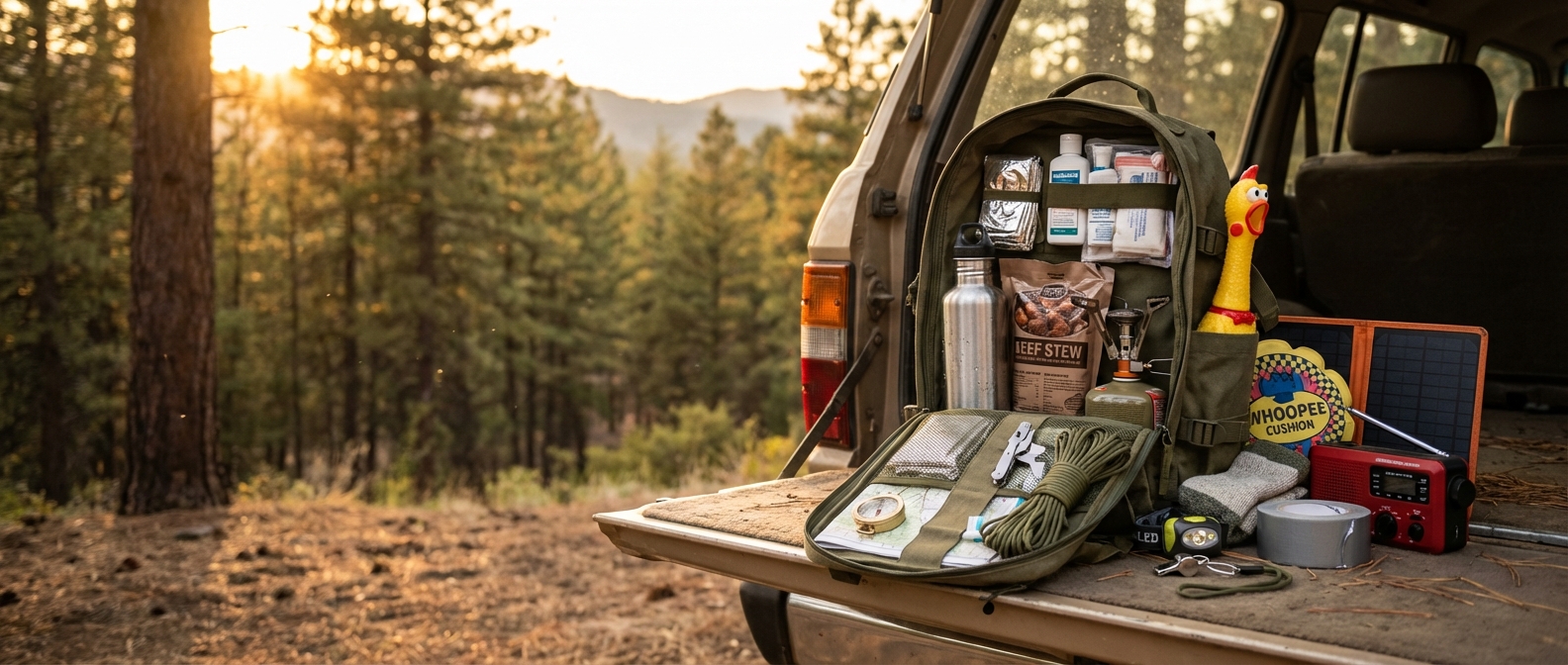
Bug-Out Bag Essentials: A Practical 72-Hour Kit Checklist for New Preppers
TL;DR: Bug-out bag essentials are the grab-and-go items that keep you safe and mobile for about 72 hours after an evacuation. Focus on water and purification, shelter and warmth, food, first aid and meds, light and fire, navigation and communication, a multitool, hygiene, documents and cash, plus personal items for children or pets.
Summary
A beginner bug-out bag should cover the first 72 hours after an evacuation. Prioritize items that meet basic survival needs: water, shelter and warmth, food, first aid, lighting and fire, navigation, and communication. Keep the pack light. Practice with it. Review contents regularly.
Plan for roughly 72 hours. Local guidance may differ. Check your emergency management office.
Definitions
- Bug-out bag (72-hour kit): a portable pack with essentials to survive and travel safely for roughly 72 hours after evacuation.
- Essential: an item or capability you cannot comfortably or safely do without in the first 72 hours, such as water, warmth, first aid, or reliable navigation.
At-a-glance checklist (copyable)
- Water plus purification: filter and tablets
- Compact 72-hour food: energy bars, MREs, or shelf-stable snacks
- Emergency shelter and warm layers
- First-aid kit and prescription meds
- Fire starters and headlamp with spare batteries
- Knife or multitool
- Map and compass and a whistle
- Power bank and emergency radio
- Hygiene and sanitation supplies
- Important documents in a waterproof pouch and cash
- Personal items for children or pets: meds, records, comfort items
Why a bug-out bag matters
A bug-out bag lets you evacuate quickly when staying put is unsafe, for example during a wildfire, flood, or major storm. It reduces last-minute decisions and protects health during the first critical hours. A pre-packed kit saves time, lowers stress, and supplies immediate needs.
Practical benefits and examples:
- You can leave fast and avoid forgetting a child’s medication or vital papers.
- You have water treatment to avoid drinking contaminated sources.
- You can shelter from cold and rain while you move or wait for help.
Keep weight manageable. Use 10 to 20 percent of body weight as a starting guideline and adjust for fitness, terrain, and distance.
Bug-out bag essentials (detailed)
Tailor quantities to climate, medical needs, and household size. Use compact, multipurpose items when possible.
Water and purification
- Carry at least 1 liter on your person. Aim for 2 to 4 liters if practical.
- Bring a compact filter, such as a straw filter or pump, and purification tablets as backup.
- Use a collapsible bottle or hydration bladder for refills.
Water tops the list. Filters let you refill from creeks and streams. Always carry a backup treatment.
Food
- Energy bars, nuts, jerky, and nut-butter packets
- Freeze-dried meals or MREs if you can heat them
- Electrolyte packets and a spork
Plan roughly 72 hours of calories. Choose foods you already eat so you rotate supplies regularly.
Shelter and warmth
- Emergency bivy or compact sleeping bag
- Mylar blanket and a lightweight tarp or poncho
- Extra socks, base layers, hat, gloves, and paracord
Protection from exposure prevents hypothermia and conserves energy.
First aid and medications
- Basic kit: bandages, gauze, tape, antiseptic wipes, blister care
- Pain relievers, tweezers, scissors
- Prescription meds for at least 72 hours and printed prescription copies
- Allergy supplies or epinephrine if needed
Include items specific to your medical needs. Only carry advanced trauma gear if you are trained to use it.
Fire and light
- Lighter and waterproof matches
- Ferrocerium rod as a reliable backup
- Headlamp for hands-free use and spare batteries
Fire provides warmth, a cooking source, sterilization, and a signaling method.
Tools and repair
- Knife or multitool
- Small roll of duct tape and cordage
- Optional compact folding shovel depending on environment
Choose multipurpose tools instead of single-use items.
Navigation and communication
- Local paper map or maps and a compass
- Fully charged power bank and charging cable
- Battery-powered or hand-crank emergency radio
- Whistle for signaling
Assume cell service may be unreliable and include paper backups.
Hygiene and sanitation
- Toilet paper or wipes and hand sanitizer
- Toothbrush, toothpaste, and biodegradable soap
- Small trash bags and feminine hygiene supplies
Good hygiene reduces infection risk and helps morale.
Documents, cash, and important info
- Copies of ID, insurance, medical info, and emergency contacts (paper and digital)
- Small bills in a waterproof pouch
Waterproof documents to avoid damage and delays when accessing services.
Personal and family items
- Glasses, spare keys, hearing-aid batteries
- Child items: diapers, formula, a comfort toy
- Pet items: leash, food, vaccination records
Customize each bag to the person carrying it.
Priorities and packing order
Pack by accessibility. Suggested order, most critical first:
- Water and treatment
- Shelter and warmth
- First aid and medications
- Food
- Light and fire
- Tools and navigation
- Hygiene and documents
Practical tips:
- Choose compact, multipurpose gear.
- Lay everything out and remove duplicates.
- Weigh the pack and test-carry it on a short hike.
- Rotate perishables, meds, and batteries every 6 to 12 months.
- Avoid overpacking. Mobility saves lives.
Common mistakes and quick fixes
- Too much gear: streamline to essentials and multiuse items.
- No water treatment: add both a filter and tablets.
- Ignoring personal needs: include prescriptions and eyewear.
- Buying gear you never practice with: train with your kit.
- Never updating the bag: schedule periodic reviews.
- Wrong backpack: pick a comfortable, durable pack with good straps.
FAQ
Q: How long should a bug-out bag last? A: Expect about 72 hours of self-sufficiency. Local conditions may require more.
Q: How much should my bag weigh? A: Start with 10 to 20 percent of body weight and adjust based on fitness and terrain.
Q: How much does a beginner bug-out bag cost? A: A modest, functional kit can often be built for roughly $150 to $300 depending on quality and what you already own.
Q: Should each family member have a bag? A: Yes. Every person should have a personalized bag with age-appropriate essentials.
Q: Where to find trusted guidance? A: FEMA and the American Red Cross publish recommended 72-hour kit checklists. Check your local emergency management office for specific recommendations.
Closing
A compact bug-out bag holds water and purification, shelter and warmth, food, first aid, light and fire, tools, navigation, hygiene, documents, and personal items. Practice with the kit and update it regularly. Preparedness focuses on practical, usable items.
Next steps
- Build or review your bug-out bag this week.
- Weigh it and test-carry it on a short hike.
- Replace expired food, meds, and batteries.
- Practice key skills: water treatment, shelter setup, radio use, and map navigation.
Pack smart. Stay ready.