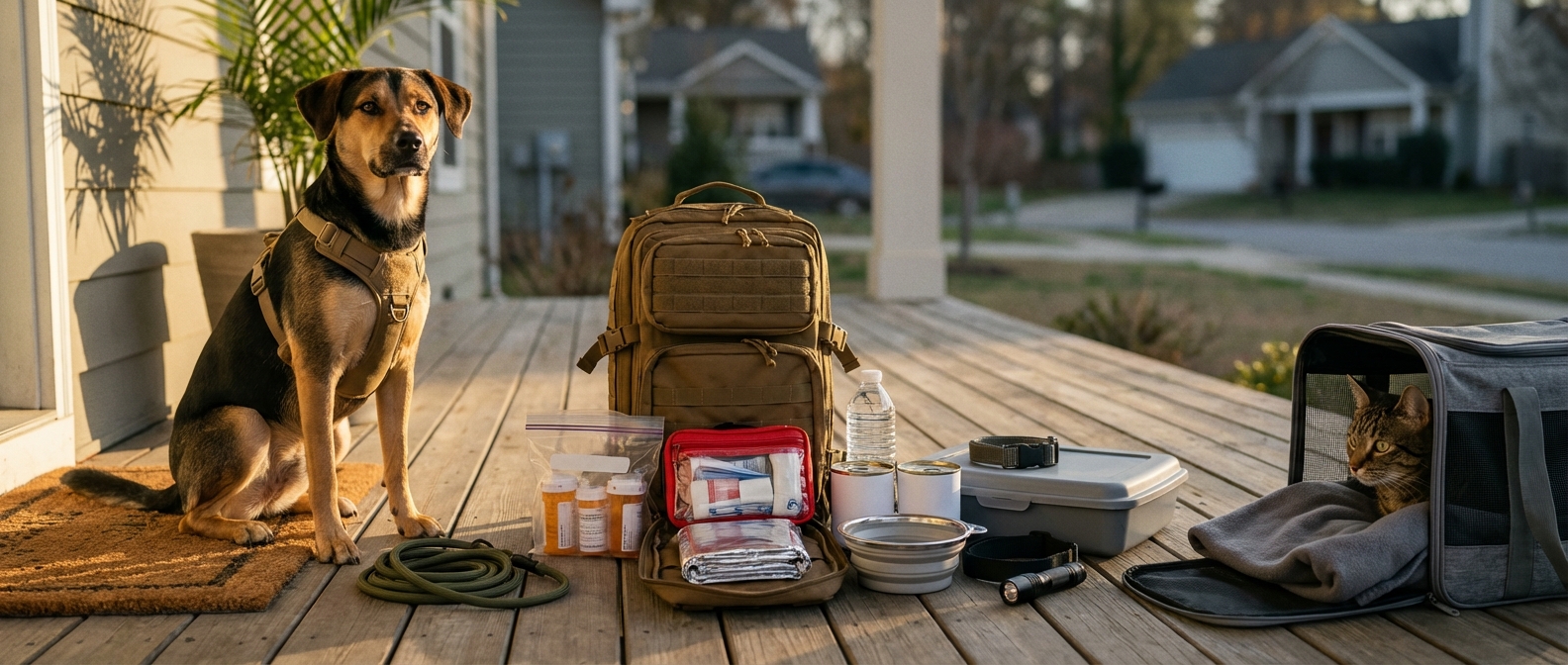
Pet Emergency Preparedness: Build a Pet Bug-Out Bag & Emergency Plan
Quick answer
Pet emergency preparedness means planning so your pet stays safe, identified, fed, medicated, and transportable during a disaster. Do three things now: assemble a pet bug-out bag, make a written pet emergency plan, and prepare a pet first-aid kit with records stored both on paper and in the cloud. Keep at least a 3-day supply on hand. Aim for 7 to 14 days when you can.
What is pet emergency preparedness?
Pet emergency preparedness is the practical work you do before a crisis. Examples: a grab-and-go bag with food and water, printed vaccination and medication records, a labeled carrier, a practiced plan for loading the pet into a car, and up-to-date microchip registration. These steps make evacuation, sheltering, and reunification far more likely.
Quick action checklist (do these now)
- Put a pet bug-out bag near an exit. Make it easy to grab.
- Print vet records and keep them in a waterproof pouch. Email or upload digital copies to cloud storage.
- Replace or update collars and ID tags. Confirm microchip registration and contact details.
- Identify at least one pet-friendly hotel, one boarding facility, and one emergency veterinary clinic.
- Practice using carriers and taking short car trips so your pet tolerates travel.
Why include pets in your household plan
Pets depend on you for food, medications, ID, and transport. Without a plan they can be left behind or separated from you. Planning increases the chance of reunion and reduces stress for both of you. FEMA, the Red Cross, and the ASPCA recommend including animals in household plans.
Core concept: What is a pet bug-out bag?
A pet bug-out bag is a compact, grab-and-go kit that lets you care for your pet for several days. Store enough supplies for at least 3 days. Store 7 to 14 days when possible.
Checklist: core items
- Essentials:
- Food in sealed bags or cans and a manual can opener if needed.
- Water for your pet for the same number of days you packed food.
- Collapsible food and water bowls.
- Medications for 7 days or more when possible, with dosing instructions and your vet’s contact details.
- Leash, harness, and a backup collar with current ID tags.
- Carrier or crate sized for your pet with your contact info on it.
- Documents and ID:
- A recent photo of you with your pet and a brief description of the pet.
- Printed vet records, vaccination certificates, and microchip number plus registration info in a waterproof pouch.
- Digital copies stored in email or cloud storage.
- Comfort and hygiene:
- A familiar blanket or favorite toy, waste bags, and for cats a small litter box and litter.
- Extra items for certain pets or climates:
- Cooling mat or warming pad, paw booties, flea and tick preventives.
- A muzzle only if the pet tolerates it and you have trained for it.
- A seatbelt harness or crash-tested crate for vehicle travel.
Storage and maintenance tips
Keep the kit labeled and easy to carry. Check it every 3 to 6 months. Rotate food. Replace expired medications. Update records. Consider a second kit for a caregiver or one kept in your car.
Creating a written pet emergency plan — step-by-step
- Evacuation and shelter options: list pet-friendly hotels, boarding facilities, friends and family who will take the pet, and nearby animal shelters. Note any crate or vaccine requirements.
- Roles and responsibilities: name who grabs the kit, who carries the pet, and who handles records and communication.
- Transport plan: decide primary and backup routes, where carriers live, and how you will secure pets in vehicles.
- Separation plan: register your microchip and keep an emergency contact on the collar. Store cloud-backed photos and records.
- Emergency contacts: list your vet, the nearest 24-hour veterinary clinic, local animal control, and the Pet Poison Helpline.
- Special needs: document chronic conditions, medication schedules, mobility aids, and any equipment required.
Practice the plan. Load carriers, take a practice car trip, and rehearse moving through a building with your pet.
Pet first-aid kit essentials
- Sterile gauze, self-adhesive wrap, and adhesive tape.
- Antiseptic wipes, saline solution, blunt-tip scissors, tweezers or a tick remover.
- Disposable gloves, a digital thermometer, an instant cold pack, and styptic powder.
- An oral syringe or medicine dropper, a towel, and an emergency blanket.
- A muzzle if appropriate, a flashlight with extra batteries.
- A pet first-aid manual and written notes on how to check breathing, pulse, and gum color.
- Emergency contact list: your veterinarian, the nearest 24-hour clinic, and the Pet Poison Helpline.
Do not give human medications to pets without veterinary direction. Take a pet first-aid course if one is available in your area.
Keeping pets calm during a crisis
Keep routines when you can. Feed and walk at familiar times. Offer familiar scents and items like a blanket, toy, or a worn T-shirt. Give the pet a covered carrier or quiet corner to retreat to. Move calmly yourself. Pets read your body language. For severe anxiety try pheromone sprays, an anxiety wrap, or vet-prescribed medication, and always test these in normal times first.
Practice handling and travel before an emergency to lower stress later.
Evacuation routes, transport, and shelter tips
Plan multiple routes and map rest stops for pet relief and rehydration. Confirm pet policies for hotels, campgrounds, and shelters before an emergency. Never let pets ride loose in a vehicle; use a carrier, crate, or crash-tested restraint. Pack extra food, water, medications, and bedding to cover delays. Brachycephalic breeds, senior pets, and medically fragile animals need special attention for heat, cold, and smoke.
Service animals have specific protections. Coordinate with shelters and authorities about those needs.
Special considerations by species and medical needs
- Dogs and cats: food, litter, carriers, microchips, and vaccines.
- Birds: secure travel cages, perches, temperature control, and minimal handling.
- Reptiles and amphibians: maintain species-appropriate temperatures and secure enclosures during travel.
- Small mammals: secure carriers, extra hay or species-specific food, and extra warmth.
- Exotic pets: consult your veterinarian for transport and care instructions.
- Chronic conditions: plan for insulin storage, extra prescriptions, and any specialty equipment.
Microchipping plus current ID tags improves the odds of reunion. Keep records printed and backed up online.
Helpful organizations and resources
- FEMA: household emergency planning resources.
- American Red Cross: pet preparedness guidance.
- ASPCA: disaster resources and animal welfare guidance.
- Pet Poison Helpline and ASPCA Animal Poison Control.
- Local animal shelters, veterinary clinics, and animal control offices. Verify local policies before disaster season.
FAQ: Quick answers
Q: How much food and water should I store? A: At least 3 to 7 days. Two weeks is better when space allows. Rotate supplies regularly.
Q: Is microchipping important? A: Yes. A registered microchip is one of the most reliable ways to reunite a lost pet with its owner.
Q: Can I bring my pet to an emergency shelter? A: Some shelters accept pets or run separate animal shelters. Many people use pet-friendly hotels, boarding facilities, or friends and family. Service animals have specific ADA protections.
Q: What matters most in a bug-out bag? A: Identification and containment: current ID tags, registered microchip information, and a secure leash or carrier.
Maintenance schedule (recommended)
- Monthly: quick check of water and food levels.
- Quarterly: rotate perishable supplies and check medication expiration dates.
- Annually: update vaccination records, microchip registration, and emergency contacts.
Start small. Put together a basic bug-out bag this week. Back up your pet’s records, update ID and microchip details, and identify one realistic evacuation option. Those simple actions make reunion and recovery much easier if a disaster happens.