Pets in Emergencies: How to Keep Your Pets Safe During Disasters
Quick action summary
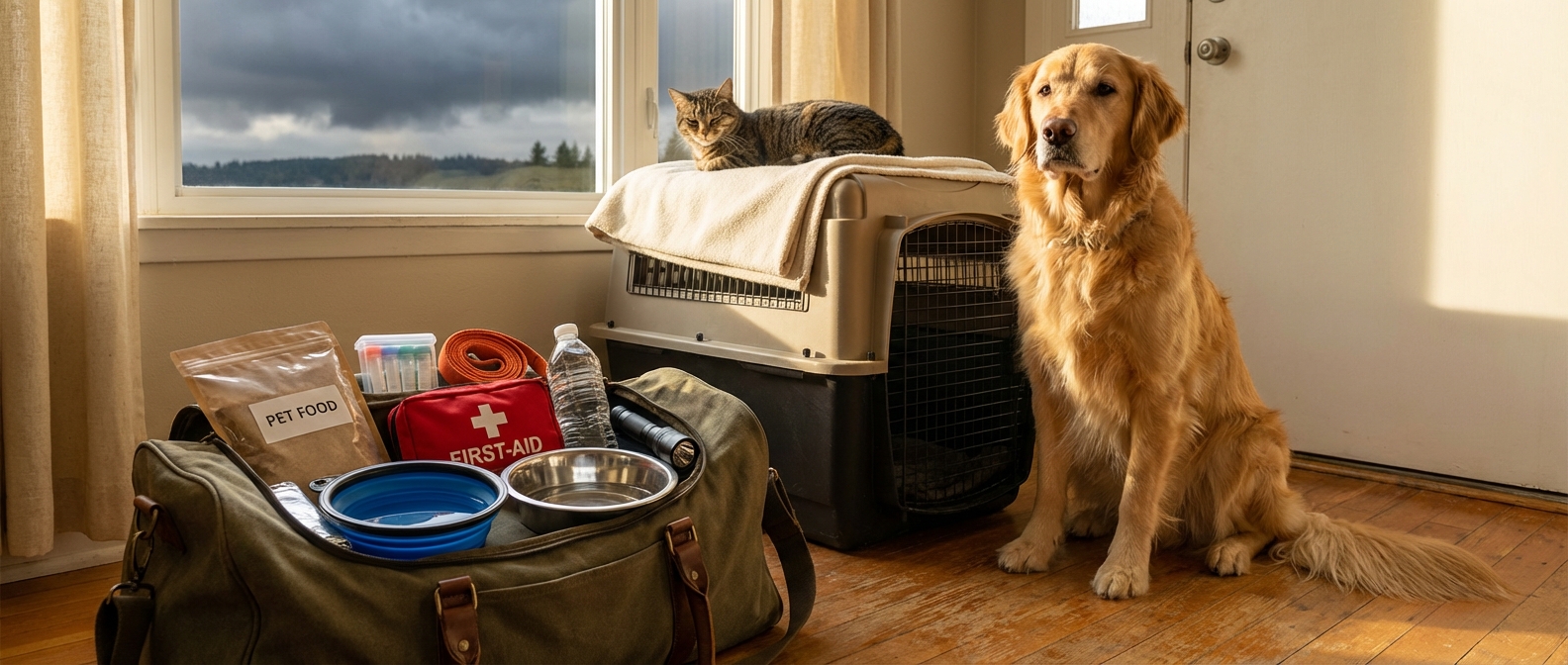
Build a pet emergency kit (3-7 days of food and water, medications, ID, carrier, waste supplies, and a comfort item). Update tags and microchip information. Plan and practice evacuation routes and pet-friendly destinations. Arrange a buddy or backup caregiver. Start now. Don’t wait until evacuation is imminent.
A household plan that covers food and flashlights but forgets the animals leaves a gap. Pets depend on you for food, water, transport, medications, and calm leadership during wildfires, floods, storms, power outages, and sudden evacuations.
Definitions
- Pet emergency kit: a container (a larger bin plus a portable bag) holding pet-specific survival items, sanitation supplies, ID, medications, and comfort items for several days.
- Evacuation plan (pets): documented decisions on where pets will go, how they will travel, who will care for them if you cannot, and where records are stored.
- Shelter-in-place (pets): staying at or near home during an event while keeping supplies and safety measures for you and your animals.
- Microchip: a tiny implant that stores an ID number linked to a registry with your contact details.
Quick steps to prepare pets in emergencies
- Assemble a pet emergency kit: 3-7 days of food and water, meds (1+ week), bowls, waste supplies, carrier or leash, ID, records, and a comfort item.
- Create a pet evacuation plan: plan transport, identify pet-friendly hotels and shelters, arrange backup caregivers, and practice loading carriers and routes.
- Keep identification current: update collar tags and microchip registry information.
- Practice and maintain: run drills, rotate supplies quarterly, and verify vet records after appointments.
Why pet preparedness matters
Include pets in your household emergency plan. Without planning, pets get left behind, flee and become lost, miss medications, or become harder to place in temporary housing. Prepared planning reduces those outcomes.
Quick action checklist
- Build a pet emergency kit (3-7 days): food, water, meds, bowls, leash/carrier, ID, records, waste supplies, comfort item
- Update collar tags and microchip registrations
- Identify two pet-friendly destinations and at least one backup caregiver
- Keep printed and digital copies of vet records and recent photos
- Practice placing pets in carriers and run a timed evacuation drill
Essential emergency supplies for pets in emergencies
Store a labeled bin near a main exit and a smaller go-bag in your vehicle.
Must-have supplies:
- Food (3-7 days minimum). Pre-portion and rotate.
- Water (3-7 days minimum). Keep a dedicated supply for pets.
- Collapsible bowls or a travel water bottle.
- Medications and supplements (1+ week). Include dosing instructions and vet contact.
- Leash, harness, and a backup leash.
- Carrier or crate for each animal.
- Waste supplies: poop bags, litter, disposable pans, paper towels, disinfecting wipes.
- Pet first aid kit: gauze, bandages, saline, tweezers, gloves, plus any prescriptions.
- Comfort item: a familiar blanket or toy.
- Records and ID copies: vaccination records, prescriptions, microchip numbers, recent photos.
- ID tags and carrier labels with owner name, phone number, and a secondary contact.
- Muzzle for dogs if there is a bite risk. Consult your vet.
Smart storage and maintenance:
- Store one larger kit near the main exit and one smaller kit in your vehicle.
- Protect documents with waterproof pouches and cloud backups.
- Rotate food and medications on a quarterly schedule.
- Inspect and replace worn gear after drills or vet visits.
(Affiliate mentions preserved for convenience: [AFFILIATE_OPPORTUNITY] emergency pet supply kits, portable carriers, pet first aid supplies.)
Creating a pet emergency plan
A good plan answers where your pet will go, how it will travel, who can help, and what to do if you are separated.
Update identification and records:
- Collar with current ID tags including name and two contact numbers.
- Microchip registered and up to date.
- Recent photos of the pet alone and with you.
- Printed and digital copies of vaccinations, prescriptions, and feeding and medical instructions.
Store one physical set in your kit and one digital set in secure cloud storage or on your phone.
Build a buddy system:
- Identify neighbors, friends, or family who can collect or care for pets if you cannot.
- Share access instructions, the kit location, and care needs.
- Give backups keys or entry codes if needed.
Plan for shelter-in-place and evacuation:
- Shelter-in-place: keep extra food, water, medications, lighting, and sanitation supplies.
- Evacuation: pack carriers, establish transport plans, list pet-friendly hotels and clinics, and prepare grab-and-go supplies.
- Check local emergency management, animal control, and humane societies for pet sheltering options.
Practice the plan:
- Drill getting each pet into its carrier and loading the vehicle.
- Time your route and verify pet-friendly stops.
- Run pickup drills with your buddy.
Evacuation tips for pet owners
If authorities order evacuation, take pets if it is safe. If you must leave them, post visible instructions and contact information and notify animal control.
Transportation logistics by species:
- Dogs: use a secure harness, leash, and crate if possible. Bring a travel water bowl.
- Cats: use a sturdy carrier with absorbent lining and a familiar blanket.
- Birds: use a travel cage, cover it partially during transport, and pack feed and water.
- Small mammals: use a ventilated carrier with bedding and food.
- Reptiles and exotics: plan for temperature control and a secure container; include lighting and humidity arrangements.
Label carriers with owner contact and medical notes.
Destination planning:
- Save phone numbers and addresses for pet-friendly hotels, boarding facilities, vet clinics outside your area, and local shelters. Verify policies before travel.
- Keep printed and phone copies of this list.
Keeping pets calm:
- Stay calm. Pets follow your cues.
- Bring familiar bedding and toys.
- Keep feeding and medication schedules when possible.
- Consider pheromones or vet-recommended calming aids.
If you become separated:
- Contact local shelters, animal control, and the microchip registry immediately.
- Share recent photos and detailed identifying information on social media and lost-pet databases.
Mistakes to avoid
- Waiting until a disaster is imminent. Start building kits now.
- Not rotating supplies. Set calendar reminders every three months.
- Assuming human supplies cover pet needs. Keep pet-specific items.
- Skipping evacuation practice. Crate-train pets early.
- Ignoring documentation. Keep hard copies and digital backups.
- Forgetting to update tags and microchip info after moving.
- Failing to plan for special medical or behavioral needs. Consult your vet.
Special considerations by pet type
- Dogs: bring extra leashes, muzzles if needed, and plan for exercise breaks to relieve stress.
- Cats: keep carriers accessible and bring litter supplies and items with home scent.
- Birds: shield from smoke and fumes and avoid sudden temperature changes.
- Small mammals: avoid extreme temperatures and provide appropriate bedding and food.
- Reptiles and exotics: plan for heat, lighting, and humidity; identify exotic vets in advance.
Key organizations and resources
- FEMA: household emergency planning and local alerts
- ASPCA and American Humane: animal disaster preparedness guidance
- AVMA: veterinary emergency recommendations
- Local animal control and humane societies: sheltering and reunification help
- Microchip registries (HomeAgain, AKC Reunite): keep contact info current
- Pet Poison Helpline and local emergency vet hospitals: 24/7 medical support
FAQ: Pet emergency preparedness for beginners
Q: How much food and water should I store? A: At least 3-7 days of food and water per pet. Store more for special diets or expected disruptions.
Q: Should indoor pets have ID tags and microchips? A: Yes. Indoor pets can escape during emergencies. Updated ID and microchip info improve reunification chances.
Q: Can I take my pet to an emergency shelter? A: Policies vary. Research pet-friendly shelters and hotels ahead of time and have backups.
Q: What belongs in a pet first aid kit? A: Gauze, nonstick bandages, saline, tweezers, gloves, antiseptic safe for animals, and any prescribed meds. Ask your vet for a species-specific checklist.
Q: How often should I update my pet emergency kit? A: Check every three months and after vet visits or changes in your pet’s needs.
Take action now
This week:
- Create a pet go-bag and place it near your main exit.
- Update microchip and tag information now.
- Identify and save contact details for two pet-friendly destinations.
Preparedness reduces chaos, protects animals that depend on you, and improves outcomes for everyone. Stay calm. Get organized. Your pets will do better when you are ready.
Notes:
- The statistic “About 70% of U.S. households own a pet, yet only 17% of pet owners have a plan” is commonly cited but needs verification from named sources such as APPA, FEMA, or CDC before publishing.
- Shelter acceptance and local policies vary. Verify current rules with local emergency management, hotels, and shelters.
Internal links and affiliate placeholders preserved: [INTERNAL_LINK], [AFFILIATE_OPPORTUNITY].