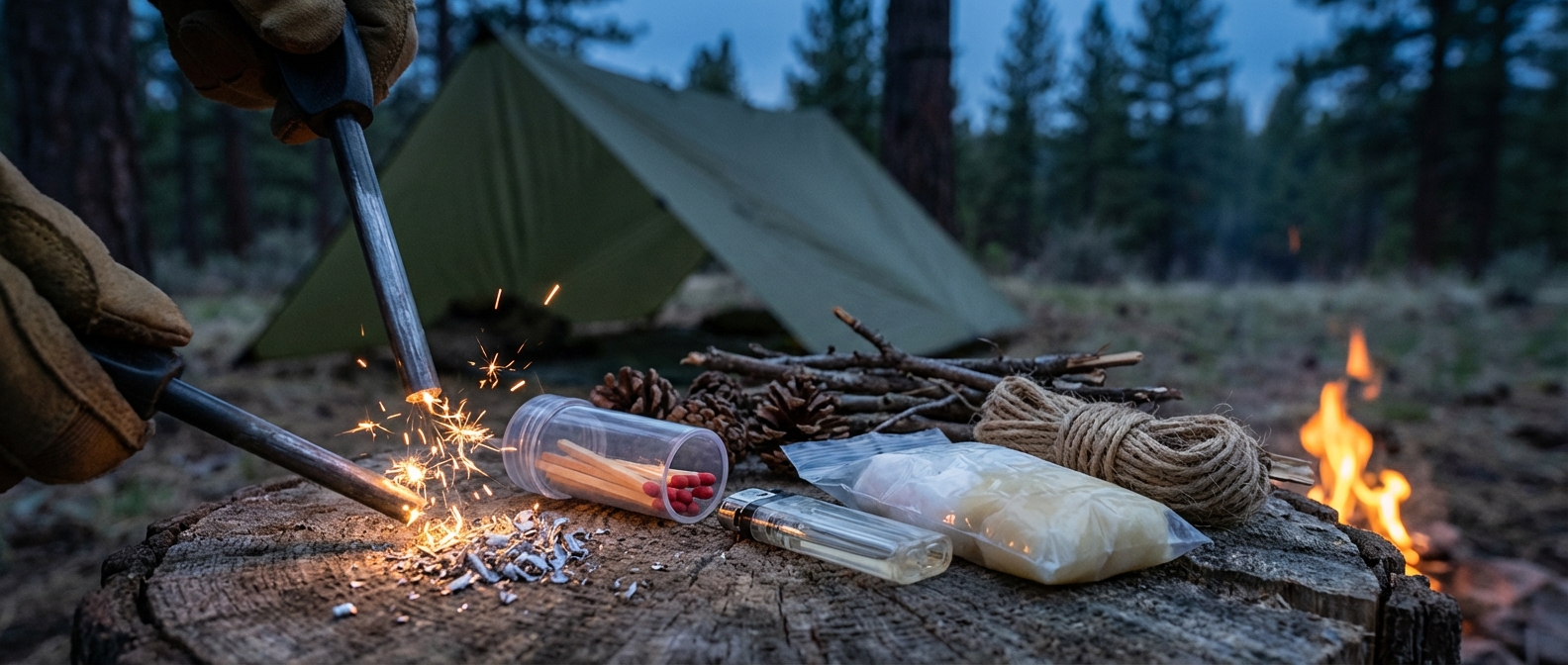
Best Fire Starters for Emergencies: Reliable Gear for Home, Car, and Outdoors
The best fire starters for emergencies combine a fast primary ignition, a weather-resistant backup, and a fuel-free long-term option. Bring a windproof butane lighter for speed, waterproof matches for backup, and a ferrocerium rod or magnesium block for fuel-free reliability. Add dedicated tinder, store everything in waterproof containers, and keep at least two independent ignition methods. Practice safe use.
Quick definitions
- Windproof butane lighter: fast and familiar, but it depends on fuel.
- Waterproof / storm matches: sealed matches that light in damp conditions; single-use.
- Ferrocerium (ferro) rod: scrapes hot sparks and works when wet; offers thousands of strikes.
- Magnesium fire starter: shave magnesium as fuel and use the striker to ignite kindling, which helps with damp materials.
- Solid fuel tablets (Esbit): stable fuel for cooking, burns steadily and stores well.
- Tinder (waxed cotton, waxed cotton balls, cotton balls dipped in wax, commercial tinder tabs): catches sparks or small flames easily.
- Specialty starters: fire pistons and chemical starters work, but they require more technique.
Why a fire starter matters in emergencies
A reliable ignition source provides warmth, lets you dry clothing to reduce hypothermia risk, and enables boiling water and cooking when utilities fail. Fire creates visible smoke and flame for signaling. It also steadies morale and supports clear decision making under stress. Add fire-starting gear to emergency kits and follow local emergency guidance.
Top picks: best fire starters for emergencies
Use a layered kit: a fast primary, a weather-resistant backup, a fuel-free mechanical option, plus reliable tinder.
Best overall for beginners - Windproof butane lighter
- Why this works: Quick flame and intuitive operation under stress.
- Best uses: Home kits, car kits, starting quick campfires.
- Pros: Immediate flame, simple to use.
- Cons: Runs out of fuel and can struggle in extreme cold.
Best backup - Waterproof / storm matches
- Why this works: Sealed matches still light after exposure if the seal stays intact.
- Best uses: Emergency pouches and bug-out bags.
- Pros: Very simple, no technique needed.
- Cons: Limited quantity and must remain dry.
Best long-term reliability - Ferrocerium (ferro) rod
- Why this works: Produces hot sparks without fuel and functions when wet.
- Best uses: Survival packs and long-term storage.
- Pros: Durable, compact, thousands of strikes per rod.
- Cons: Requires practice and dry tinder to catch sparks.
Best for wet conditions - Magnesium fire starter
- Why this works: Magnesium shavings burn hot and help ignite damp materials.
- Best uses: Wet climates and extended outdoor trips.
- Pros: Excellent performance in wet weather.
- Cons: Slower to prepare and requires technique.
Best companion item - Tinder tabs and fire cubes
- Why this works: They increase the chance that a spark or small flame becomes a working fire.
- Best uses: Include with any ignition method.
- Pros: Lightweight and easy to use.
- Cons: Consumable; rotate periodically.
Comparison at a glance
| Type | Ease of Use | Reliability | Wet Weather | Storage Life | Best Use |
|---|---|---|---|---|---|
| Windproof butane lighter | Excellent | High | Moderate | Moderate | Home, car, camping |
| Waterproof / storm matches | Excellent | High | Good if sealed | High when sealed | Backup, camping |
| Ferrocerium rod | Moderate | Very high | Excellent | Very high | Survival, bug-out bags |
| Magnesium fire starter | Moderate | High | Excellent | Very high | Wet outdoor conditions |
| Tinder tabs / cubes | Excellent | High as a support item | Good | High | Any kit |
Choosing the best fire starters for emergencies (by scenario)
- Home emergency kit: Windproof lighter, waterproof matches, and tinder tabs. Redundancy for short outages.
- Camping and general outdoors: Lighter, waterproof matches, tinder, and an optional ferro rod. Practice first.
- Bug-out and long-term: Ferro rod, magnesium block, waterproof matches, and dry tinder. Prioritize durability and fuel-free options.
- Vehicle kit: Storm matches in a waterproof case, a ferro rod, and tinder tabs. Compact and temperature-tolerant.
- New to fire-starting: Start with a lighter, a weather-resistant backup, and tinder. Practice once in a safe place.
Look for specific features: lighters that hold fuel after months in storage, match tubes with airtight seals, ferro rods rated for thousands of strikes, small tins for compact storage, and long-lasting tinder such as waxed cotton or commercial tinder tabs.
Safety and maintenance
- Store gear in waterproof containers or sealed pouches.
- Carry at least two independent ignition methods.
- Practice with your tools in safe, legal locations to build skill.
- Use staged kindling and dry tinder; sparks still need catchable material.
- Follow local fire regulations and avoid open flames during bans.
- Inspect and rotate consumables like tinder tabs and match packs. Check lighter fuel periodically.
- Keep fire tools out of reach of unsupervised children.
Frequently asked questions
Q: What is the most reliable fire starter for emergencies? A: For long-term reliability use a ferrocerium rod. For immediate ease and speed use a windproof lighter as your primary tool.
Q: What fire starter is best for beginners? A: A windproof butane lighter paired with waterproof matches and tinder tabs provides the simplest, most reliable setup for new users.
Q: Do ferro rods work in wet weather? A: Yes. Ferro rods produce hot sparks even when wet, but store dry tinder separately and waterproof it.
Q: What should be in a basic emergency fire kit? A: A lighter, waterproof matches, a ferro rod or magnesium block, tinder tabs or cubes, and waterproof storage.
Verify before you buy
- Check FEMA and the American Red Cross for current guidance and local recommendations.
- Confirm manufacturer claims about cold and wet performance, and field-test items before relying on them in an emergency.
The best fire starters for emergencies are the ones you can use when conditions are cold, wet, windy, or chaotic. Build a layered kit: a fast lighter, a weather-resistant backup, a fuel-free tool, and reliable tinder. Test your kit, store it waterproofed, and keep redundancy. Practical preparedness pays off.
Further reading: How to Build a Bug Out Bag, Water Storage Guide, Beginner’s Preparedness Guide