
Bartering is the exchange of goods or services without money, and it becomes important during emergencies when cash, stores, or payment systems fail. The best barter assets in a crisis are practical supplies like food, water, hygiene items, batteries, and tools, plus useful skills such as first aid, repairs, gardening, and childcare.
Key Takeaways
- Build a barter kit separate from core supplies — include AA/AAA batteries, water-purification tablets, and single-serving canned goods you won't miss.
- Inventory your skills and surplus goods now, clearly marking what you'll trade versus what stays in reserve no matter what.
- Practice at least one low-stakes trade with a neighbor or community group this month so you're not learning negotiation under real pressure.
- Learn one high-value repeatable skill like first aid or basic generator maintenance — skills never run out the way supplies do.
- Meet trading partners only in public, daylight locations and never advertise the size or location of your stockpiles.
Bartering in Emergencies: How to Trade Skills and Goods When Cash Stops Working
Money’s only worth something when everyone agrees it is. The moment a hurricane knocks out power for two weeks, or a supply-chain disruption empties store shelves, that agreement gets real shaky, real fast. During extended outages, it’s common for people to default to neighbor-to-neighbor trades within 48 hours because ATMs are down and credit card terminals are dead plastic.
Bartering in emergencies isn’t some post-apocalyptic fantasy. It’s a practical survival skill that kicks in anytime the normal flow of goods and services gets interrupted, even temporarily. And like any skill, you can — and should — practice it before you actually need it.
Quick Summary
- Bartering in emergencies means exchanging goods or services directly when cash or electronic payments aren’t available or accepted.
- Top barter assets include clean water and treatment supplies, shelf-stable food in small portions, basic medicine and hygiene items, batteries and power sources, fuel, tools, and repeatable skills like first aid and basic repairs.
- Small, divisible items trade far more easily than bulky or high-value single items.
- Start practicing now: inventory your skills, build a dedicated barter kit, do low-stakes trades with neighbors, and build trusted relationships in your community.
- Be discreet about stockpiles, stay safe during exchanges, and know that barter income can be taxable.
Why Bartering Matters in a Crisis
Here’s the scenario most people don’t think about until it’s too late.
A regional ice storm takes out power across four counties. Gas stations can’t pump fuel, grocery stores lock their doors, and ATMs are offline. Your neighbor has a generator but no fuel. You’ve got ten gallons of stabilized gas but your kid needs antibiotics you can’t buy. Someone three doors down is a retired nurse with a well-stocked medicine cabinet. Within 72 hours, you’re all trading — whether you planned for it or not.
Bartering in emergencies is the direct exchange of goods or services without money or electronic payment. It can look like a casual swap between neighbors (“I’ll trade you six eggs for a bag of rice”) or something more organized, like community time banks and mutual-aid networks.
The situations that make bartering crucial aren’t exotic. They’re predictable:
- Natural disasters — hurricanes, floods, earthquakes, wildfires, tornadoes
- Extended grid or telecom outages lasting more than a few days
- Regional shortages of fuel, medicine, food, or clean water
- Local banking failures or cash shortages
- Post-disaster recovery periods when supply chains are still rebuilding
You don’t need a total societal collapse for bartering to become your best option. A solid week without power in a rural area will do it.
What Makes Something Valuable in a Trade
This is where most people get it wrong. They think about what they value and stockpile accordingly. But barter value isn’t about you — it’s about what the person across from you desperately needs right now.
In a crisis, value isn’t what something cost you — it’s how badly someone else needs it today.
High-value barter assets fall into two categories: consumable goods and repeatable skills. You want both in your toolkit.
High-Value Goods
 The most in-demand trade goods ranked by crisis value
Food — Canned goods, rice, beans, pasta, oats, cooking oil, salt, sugar. The key here is packing things in single servings or small portions. Nobody wants to trade for a 25-pound bag of rice when they only need dinner tonight. Think divisibility.
Water and treatment — Bottled water, purification tablets, small portable filters, unscented bleach for purification, and storage containers. Clean water’s always the first thing that gets scarce.
Medical and hygiene — Bandages, antiseptic wipes, over-the-counter pain relievers, soap, toothpaste, feminine products, diapers. People underestimate hygiene items until they don’t have them.
Fuel and power — AA and AAA batteries, flashlights, lighters or matches stored in waterproof containers, propane canisters, solar chargers, and small power banks. When someone’s phone is their only connection to emergency updates and it’s at 3%, a charged power bank is worth more than cash.
Tools and repair supplies — Multi-tools, duct tape, paracord, tarps, nails, basic hand tools. The Leatherman Wave+ — around $100 — combines pliers, knives, screwdrivers, and other tools in one compact unit, making it a popular single-tool choice for both everyday carry and barter situations.
Morale items — Coffee, tea, chocolate, a deck of cards, hard candy. Don’t laugh. Small comforts go far when everything else feels bleak. Even a small bag of ground coffee can become one of the most sought-after items during an extended outage.
Pack barter goods in small, divisible units. Ten individual packets of instant coffee trade ten times. One big canister trades once.
High-Value Skills
Goods run out. Skills don’t. That’s their superpower in a barter economy.
- First aid and basic medical care — Stay within your training level. Basic first-aid skills are consistently among the most valuable barter assets, and they weigh nothing.
- Mechanical and electrical repairs — Generators, small engines, bicycles, basic plumbing. If you can get a generator running, you can write your own ticket.
- Food production and preservation — Gardening, canning, dehydrating, bread baking, seed saving. These matter most when disruptions stretch past a week.
- Shelter and firecraft — Safe fire starting, tarp setups, weatherproofing, camp cooking. If you’re in the Pacific Northwest or anywhere with wet, cold winters, this knowledge is gold.
- Communications and coordination — Ham radio operation, neighborhood organizing, route planning.
- Care services — Childcare, eldercare, pet care, meal prep, transportation. Unglamorous but always in demand.
The person who can fix a generator or dress a wound tends to be treated like royalty during extended outages. Supplies get you through days. Skills get you through weeks. If you’re going to invest time in one thing this month, take a basic first-aid class or learn small-engine maintenance. A single afternoon of generator repair work can be worth a week’s worth of meals and firewood in trade — a return on investment no amount of stockpiled goods can match.
Building Your Barter Kit
 A dedicated barter kit packed with small, divisible trade goods
So what should you actually set aside? Your barter kit needs to be separate from your core emergency supplies. This is stuff you’re willing to trade, not stuff you need to survive.
- Water-treatment tablets or a small personal filter
- Individual AA/AAA batteries or a compact power bank
- Single-serving canned goods and protein bars
- Basic hygiene items: soap, toothpaste, feminine products, diapers
- Lighters or matches in a waterproof container
- Multi-tool or small hand tool
- Basic first-aid supplies: bandages, antiseptic wipes, OTC pain relief
- Work gloves and extra pairs of socks
A common mistake is building elaborate barter stockpiles by pulling from the main emergency kit. Don’t do that. Buy barter supplies separately. If you can’t afford to lose it in a trade, it doesn’t belong in your barter kit.
How big should your kit be? Start small. A shoebox-sized container with a dozen trade items is plenty to get started. You can scale up over time as you learn what your specific community tends to need.
If you’re in a humid Gulf Coast climate, lean heavier on water treatment and hygiene items — those get scarce fast when flooding hits. High desert areas? Prioritize water storage and shade-making materials. Think about your region’s most likely emergency scenario and stock accordingly.
How to Practice Before a Crisis Hits
 Neighbors practicing a low-stakes barter exchange on a sunny afternoon
Don’t wait for a disaster to make your first trade. That’s like learning to swim after you’ve fallen in the river.
- Inventory your surplus goods and skills — write down everything you could trade and everything you’d want to keep no matter what
- Build your starter barter kit from items purchased separately from your emergency supplies
- Make one low-stakes trade with a neighbor this month — offer surplus garden produce, eggs, homemade bread, or a small repair service
- Watch what your community actually needs during minor disruptions and adjust your kit accordingly
- Join or start a local mutual-aid group, neighborhood exchange, or community resilience network
A common beginner mistake when practicing bartering is overvaluing goods while undervaluing labor — for example, offering several meals’ worth of food for a single hour of physical work like splitting firewood. Working through these mismatches in low-stakes trades teaches negotiation skills that become essential when stakes are high.
Common Bartering Mistakes That’ll Cost You
Let’s talk about what goes wrong, because these mistakes play out in real situations again and again.
Trading away core survival supplies. Your water filter, your first-aid kit, your family’s food reserve — these aren’t barter items. Ever. Only trade surplus.
Overvaluing items based on personal attachment. That fancy multi-tool you spent $120 on? If the person across from you doesn’t need it, it’s worth nothing to them. Value is local and context-dependent, always.
Undervaluing your skills. If you’re the only person on your block who can suture a wound or restart a flooded generator, your time is incredibly valuable. Don’t trade an hour of skilled labor for a can of beans.
Ignoring safety. Meet in public, daylight locations. Don’t go alone to trades with strangers. And never — I can’t stress this enough — never broadcast the size or location of your stockpiles.
Trading prohibited items. Prescription medication, controlled substances, regulated goods — don’t go there. The legal and safety risks aren’t worth it, even in a crisis.
Getting emotional during negotiation. Know your minimums before you start talking. Stay calm. Be genuinely prepared to walk away. The person who can walk away holds the power.
Staying Safe and Building Trust
 A safe, public barter exchange in a well-lit community meeting point
Bartering in emergencies works best when it’s built on relationships, not desperation. One-off trades with strangers are risky. Repeated exchanges with people you know and trust create a functioning local economy.
Here’s how to keep things safe and fair:
- Build relationships now, before any emergency. Know your neighbors’ names. Know what they’re good at. Let them know what you bring to the table.
- Use neutral, public meeting spots in daylight whenever possible. A church parking lot, a community center, a busy intersection.
- Keep trades discreet. Don’t post on social media that you’ve got 200 cans of food in your garage. Tell the people you trust. That’s it.
- For ongoing relationships, keep simple records. A notebook with dates, items exchanged, and rough values helps prevent misunderstandings.
- Inspect everything before you trade. Check expiration dates, seals, and overall condition. Don’t accept a “sealed” container that’s been repackaged.
- Coordinate with community organizations — CERT teams, neighborhood associations, faith groups — for safer, larger-scale exchanges when they make sense.
Community Emergency Response Team (CERT) trainers often point to pre-existing relationships as the single biggest difference between neighborhoods that handle disruptions well and those that fall apart. Bartering happens naturally when people already know each other. If you haven’t introduced yourself to the folks on your street yet, that’s one of the most valuable prep moves you can make this week — and it doesn’t cost a dime.
Legal Realities You Should Know
Is bartering legal? Yes, in most places. But there are nuances you shouldn’t ignore.
Bartered goods and services may count as taxable income in many jurisdictions, including the United States. The IRS considers the fair market value of items or services you receive through barter as potentially reportable income. During a short-term emergency, nobody’s filing 1099-Bs. But if you’re doing regular, ongoing barter exchanges — especially through organized barter networks — you’ll want to understand your reporting obligations.
Beyond taxes, don’t trade anything that’s illegal to sell or transfer. Prescription medications, unlicensed firearms, and regulated substances are off the table. The fact that cash isn’t involved doesn’t change the law.
For medical and preparedness guidance beyond what’s covered here, follow the American Red Cross and FEMA. Original reports from organizations like the IFRC also offer community resilience research relevant to bartering and mutual aid.
Your Action Plan for This Month
Don’t just read this and file it away. Pick three things from this list and do them before the month’s over:
- Build a shoebox-sized barter kit from the checklist above, using items purchased separately from your emergency supplies.
- Write down your top five tradeable skills and your top five “never trade” essentials.
- Make one low-stakes trade with a neighbor — garden produce, a small repair, a plate of food for a favor.
- Enroll in a basic first-aid class, a small-engine repair workshop, or pick up another high-value skill.
- Introduce yourself to three neighbors you don’t know yet. Learn their names. Tell them yours.
The best time to learn bartering in emergencies was years ago. The second best time is right now, before you actually need it.
The Complete
Prepper's Reference.
149 articles synthesized into one comprehensive PDF — twelve chapters covering water, food, shelter, first aid, comms, and scenario-specific preparedness. Free with your email.
Unsubscribe anytime · We never share your email
You're in. Check your inbox.
Keep Reading
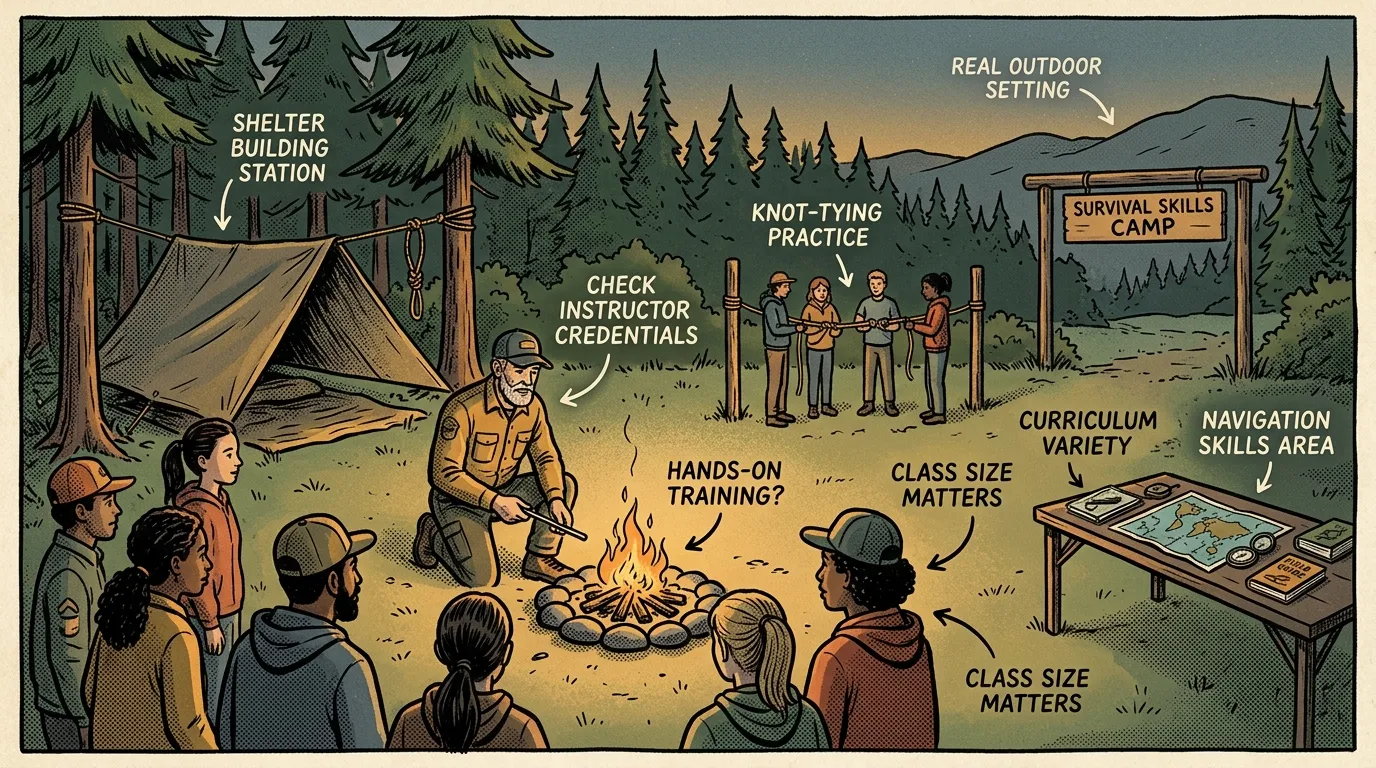
Survival Skills Camp: How to Choose the Right One
Choosing a survival skills camp? Here's what to look for, red flags to avoid, and what real training teaches you.
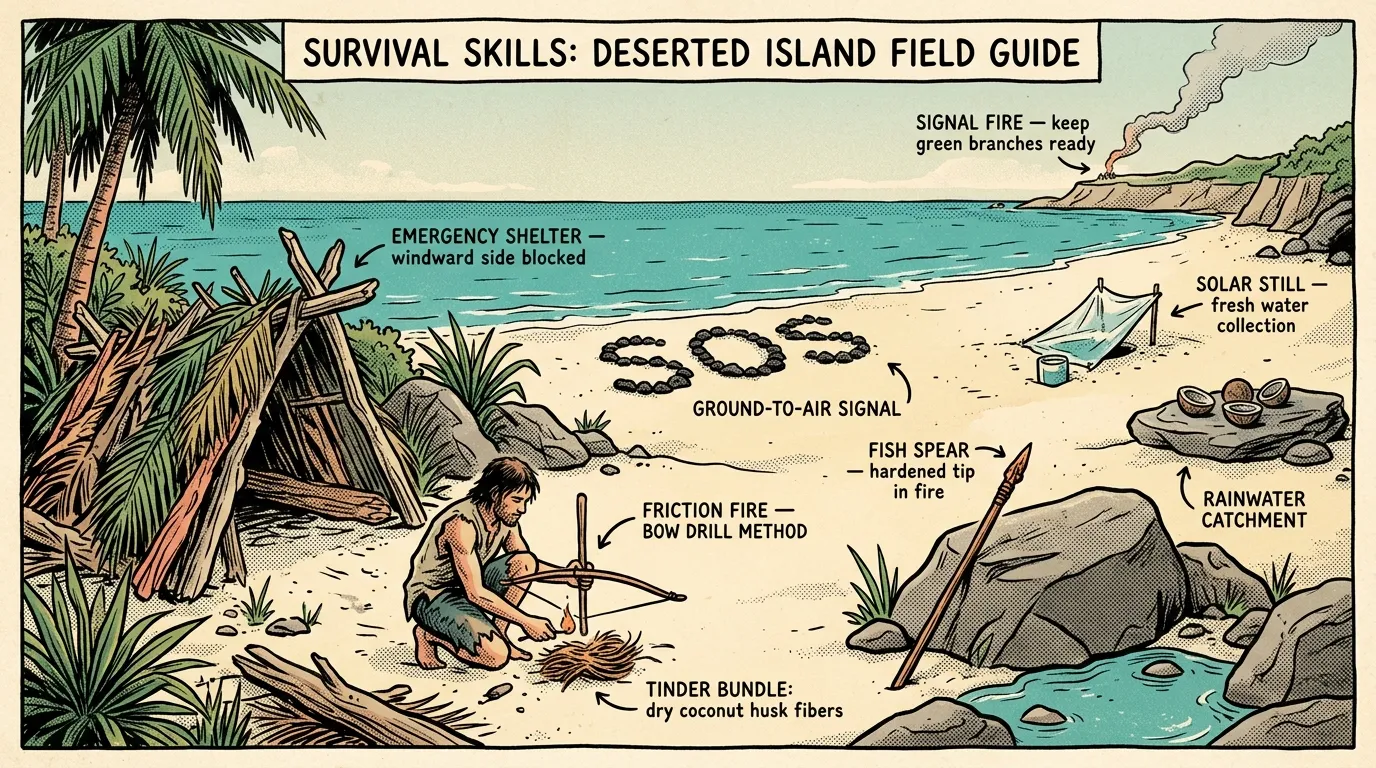
Survival Skills on a Deserted Island: Field Guide
Master survival skills on a deserted island — water, shelter, fire, food, and rescue signaling. Start learning now.
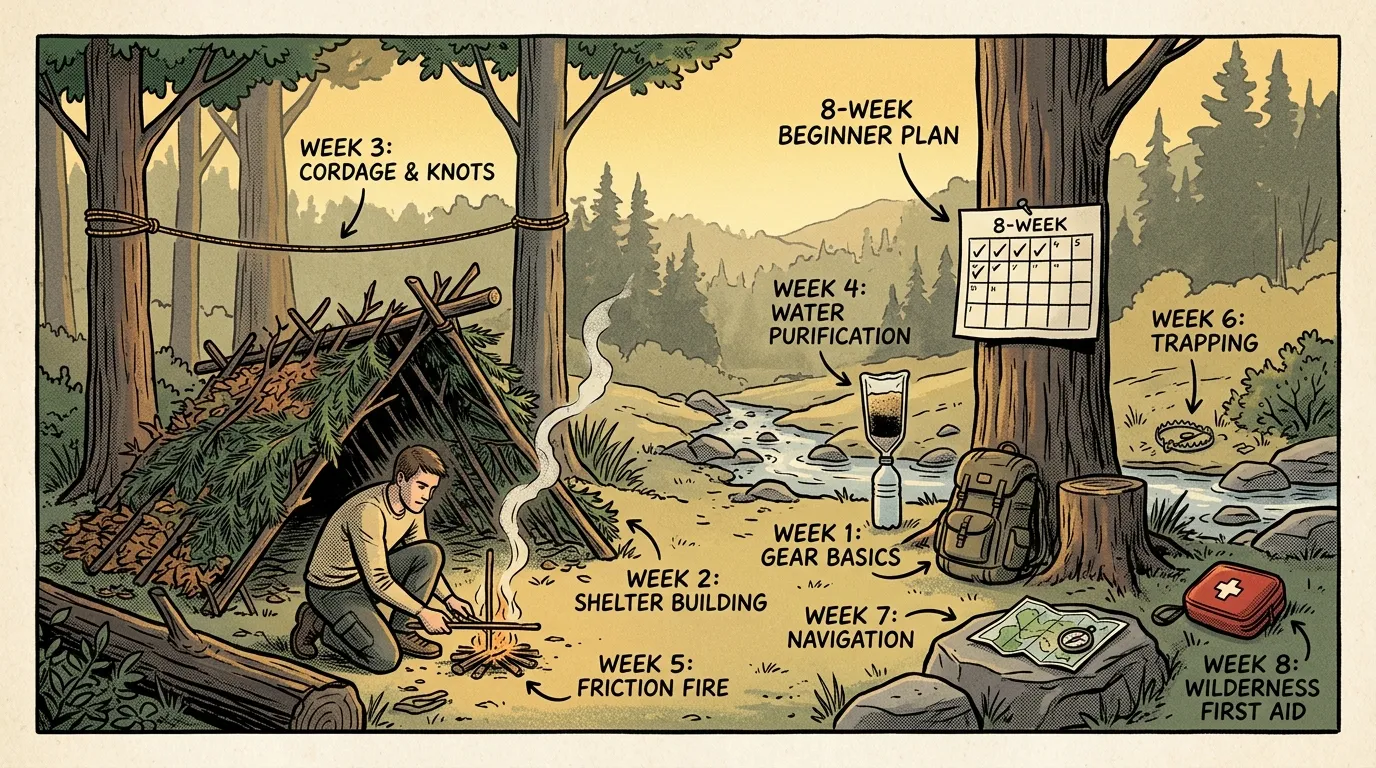
Survival Skills Training: 8-Week Plan for Beginners
Follow this 8-week survival skills training plan to master shelter, fire, water, navigation & first aid. Start this weekend.