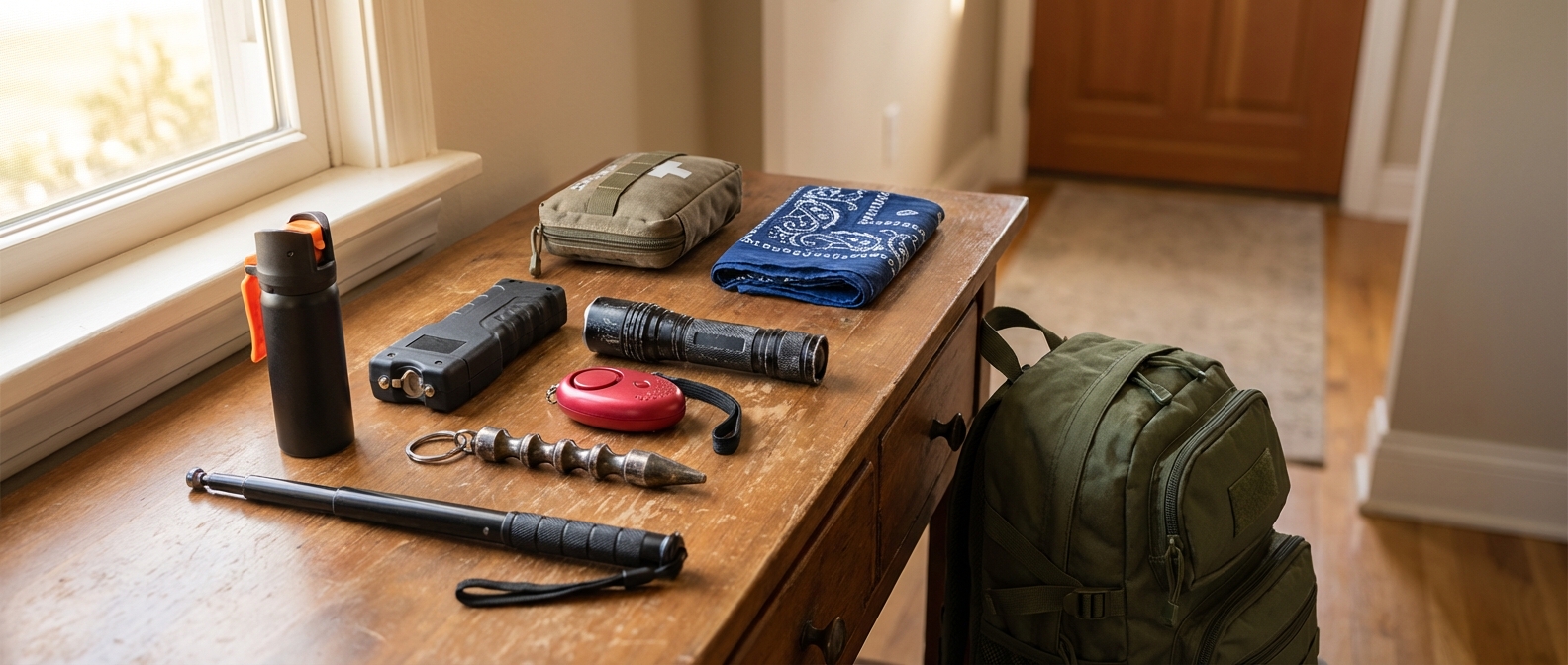
The best non-lethal self-defense weapons for most beginners are pepper spray, personal alarms, stun guns, and tactical flashlights. Pepper spray is usually the top choice because it offers distance, strong stopping power, and ease of carry, while alarms and flashlights add practical layers to a prepper security plan.
Best Non-Lethal Self-Defense Weapons: Practical Tools for Preppers
Quick summary: best non-lethal self-defense weapons
- Starter item: pepper spray or pepper gel for portability and stand-off protection
- Complementary kit: personal alarm, tactical flashlight, and a phone with emergency contacts
- Use stun guns or CEWs only after training and confirming local law
- Test inert trainers where available and prioritize escape and calling for help
Quick checklist: legal to carry? easy to access under stress? practiced with it? maintained (batteries and expiration)? If yes, the item may fit your kit.
Definitions
- Non-lethal or less-lethal: tools meant to deter, distract, or temporarily incapacitate without intent to kill. These tools still carry risk.
- OC (oleoresin capsicum): the active chemical in pepper spray that causes intense eye pain and tearing.
- Pepper gel: a thicker OC formulation that reduces drift and blowback compared with aerosols.
- Stun gun: a handheld device that requires direct contact to deliver an electric shock.
- CEW (conducted electrical weapon): a probe-firing device that can incapacitate at a distance if the probes make good contact.
Legal and medical risks vary by device and location. Check local rules.
Top recommended non-lethal self-defense weapons (quick reference)
-
Pepper spray and pepper gel
- Effect: causes eye pain, tearing, and difficulty breathing for many people, creating a window to escape
- Pros: stand-off range, compact, many everyday-carry formats such as keychain or pocket canisters
- Cons: wind and aim can affect performance; users can contaminate themselves; canisters expire
- Best for: commuters, joggers, everyday carry
-
Personal alarm or wearable panic button
- Effect: loud siren and sometimes location alerts to contacts or services
- Pros: no physical contact required, easy to activate, generally legal
- Cons: depends on responders or bystanders; limited in isolated areas
- Best for: teens, seniors, travelers, backup layer
-
Tactical flashlight
- Effect: reveals threats, lights escape routes, and can disorient with high-lumen beams or a strobe
- Pros: multiuse tool for everyday tasks and safety; many models run for hours
- Cons: not always a stopping tool by itself; practice needed for retention and strobe use
- Best for: low-light environments, home and vehicle carry
-
Stun gun
- Effect: delivers a painful shock on contact to disrupt an attacker briefly
- Pros: immediate disruptive effect and a visible deterrent
- Cons: requires close contact; effectiveness drops through heavy clothing; often regulated
- Best for: trained users who accept close-range engagement
-
CEW (TASER-style)
- Effect: fires probes to deliver neuromuscular pulses at range when probes make contact
- Pros: stand-off range and strong incapacitation when probes connect well
- Cons: expensive, regulated, and less reliable through thick clothing or when probes miss
- Best for: legally permitted, trained users
-
Impact tools (expandable baton, kubotan)
- Effect: applies force to control or break contact
- Pros: reach and stopping potential when used by someone with training
- Cons: heavily restricted in many areas; requires regular training
- Best for: trained practitioners in jurisdictions where they are legal
Other notes: bear spray is designed for animals and is not ideal for use against people. Inert trainers and dummy devices let you rehearse safely.
Choosing the right tool
- Check law at city, county, state or provincial, campus, and workplace levels.
- Match the tool to your environment: running, urban commute, home defense, vehicle carry, or bug-out scenarios.
- Match engagement distance: stand-off options such as spray or CEW versus close-contact options such as a stun gun or baton.
- Consider training needs: alarms and sprays need minimal practice; CEWs and impact tools need regular training.
- Plan maintenance: track expiration dates, battery health, and carry readiness.
- Layer your kit. For example: pepper spray, personal alarm, tactical flashlight, plus a phone with emergency contacts.
Using non-lethal weapons effectively
- Train with inert trainers where possible. Practice draw, activation, retention, movement, and malfunction drills.
- The goal is escape and calling for help, not winning a fight.
- Use situational awareness and de-escalation to avoid confrontation.
- After an incident, get medical help if needed, preserve evidence safely, and report to authorities.
- Maintain gear: rotate expired canisters, charge batteries, and inspect devices for wear.
Technical and legal facts
- Alarm decibel levels vary by model; check manufacturer specifications.
- Pepper spray effects depend on formulation, dose, and individual physiology; severe or prolonged reactions are possible.
- CEW effectiveness depends on probe spread, clothing, and device model; medical and legal issues apply.
- Laws change. Confirm current rules with local statutes or legal counsel.
Quick FAQ
-
What counts as a non-lethal self-defense weapon?
- Tools that deter or temporarily incapacitate without intent to kill, such as pepper spray, alarms, flashlights, stun guns, and CEWs.
-
Which option is best for beginners?
- Pepper spray is the common starter choice. It offers range, portability, and reliable stopping potential when used correctly.
-
Are stun guns effective?
- They can be at close range but require contact and training. CEWs that deploy probes can work at range but are more regulated.
-
How long does pepper spray incapacitate someone?
- Duration varies. Use it as a short window to escape and get help. Effects differ by person and formulation.
Practical starter kit
A practical starter kit for most preppers and everyday users:
- Quality pepper spray or pepper gel, rotated before expiration
- Personal alarm or wearable panic device
- Tactical flashlight with secure carry
- Phone with emergency contacts and practiced escape routes
Add stun guns, CEWs, or impact tools only after confirming legality and completing proper training. Avoid confrontation where possible. Leave the scene and get help.
Follow all local laws and manufacturer instructions. This is general information and not legal or medical advice.
The Complete
Prepper's Reference.
149 articles synthesized into one comprehensive PDF — twelve chapters covering water, food, shelter, first aid, comms, and scenario-specific preparedness. Free with your email.
Unsubscribe anytime · We never share your email
You're in. Check your inbox.
Keep Reading
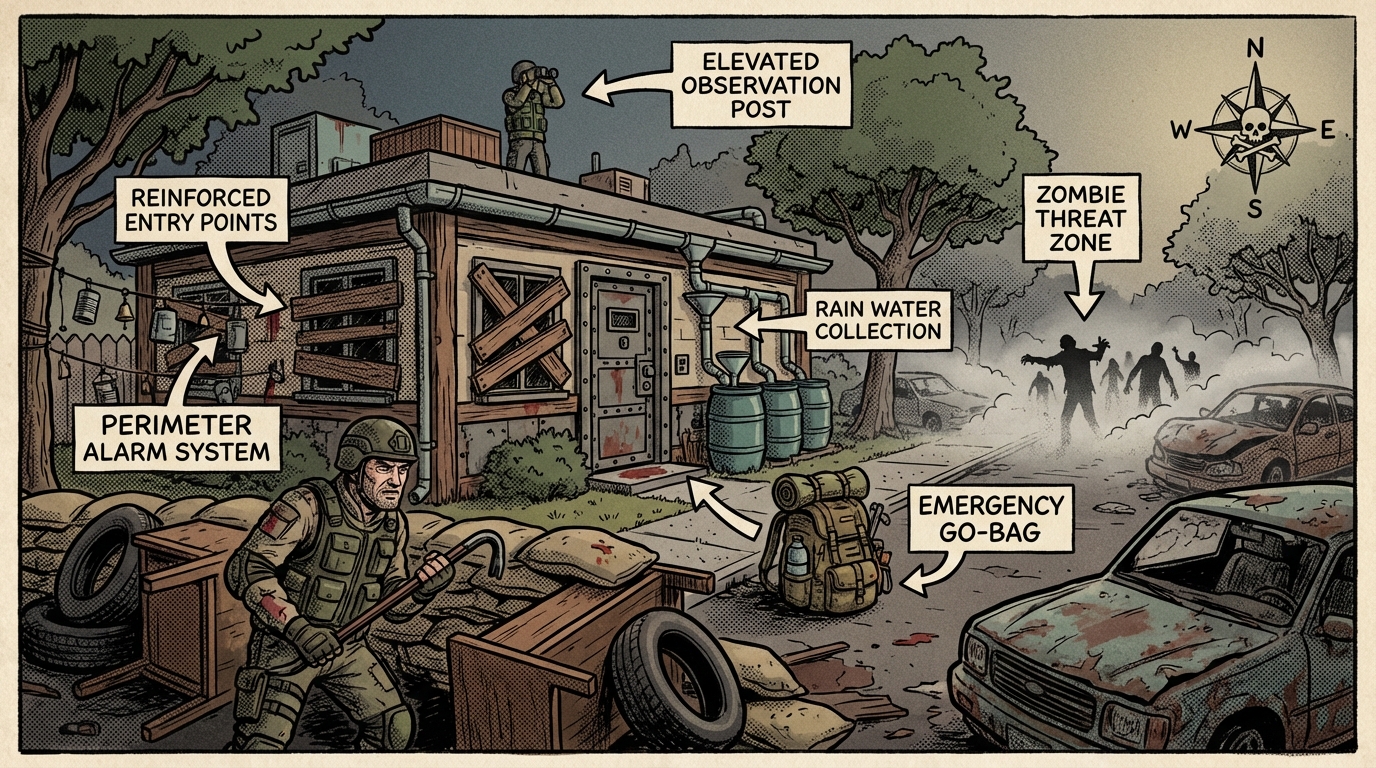
Zombie Apocalypse Survival Preparedness: FEMA Pro's Guide
Zombie apocalypse survival preparedness teaches real disaster skills. A FEMA-trained Wilderness First Responder breaks down the exact steps. Start today.
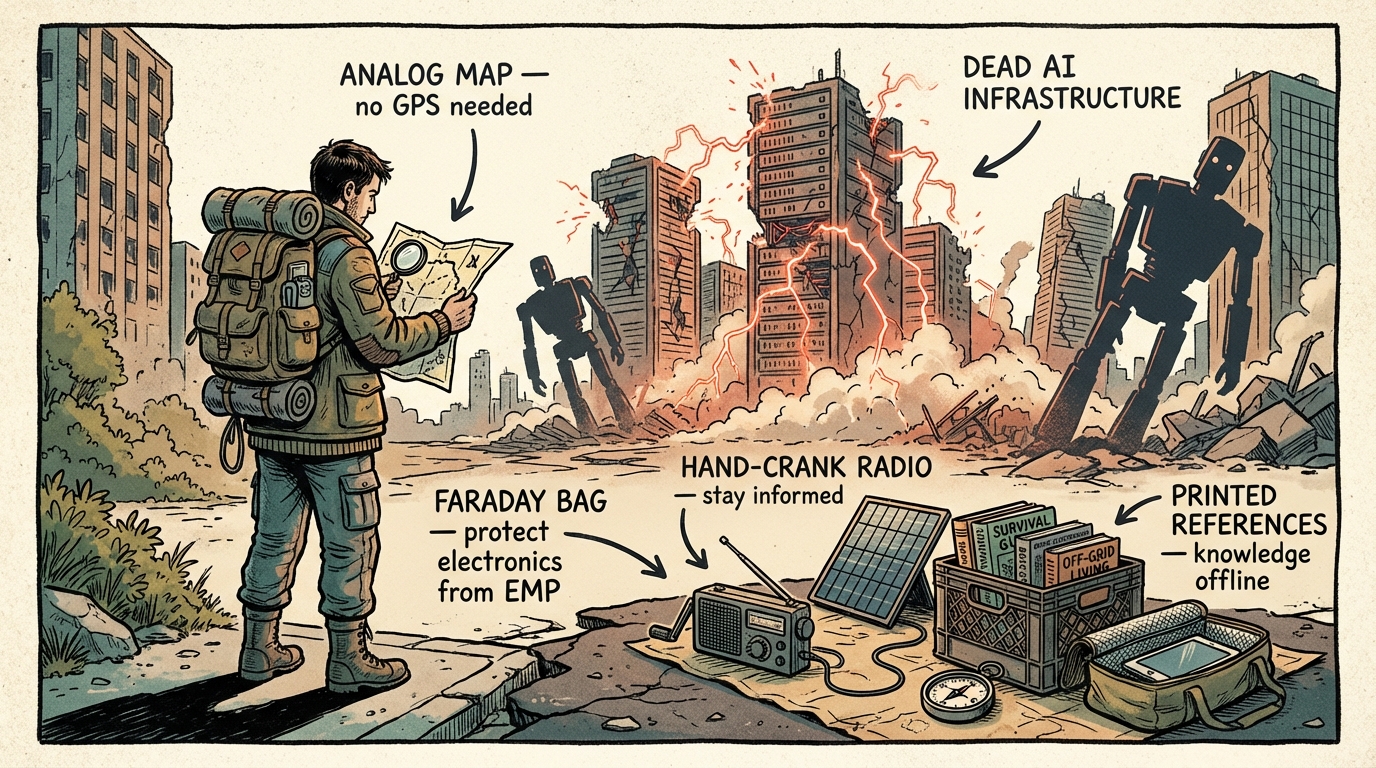
AI Apocalypse Preparedness: Your Practical Survival Guide
AI apocalypse preparedness is real risk management, not sci-fi. Learn practical steps to protect your career, family, and infrastructure from AI disruption.

Emergency Preparedness Plan: 7-Step Family Guide
Build a complete emergency preparedness plan with evacuation routes, role assignments, and supply checklists. Step-by-step guide from a FEMA-trained responder.